

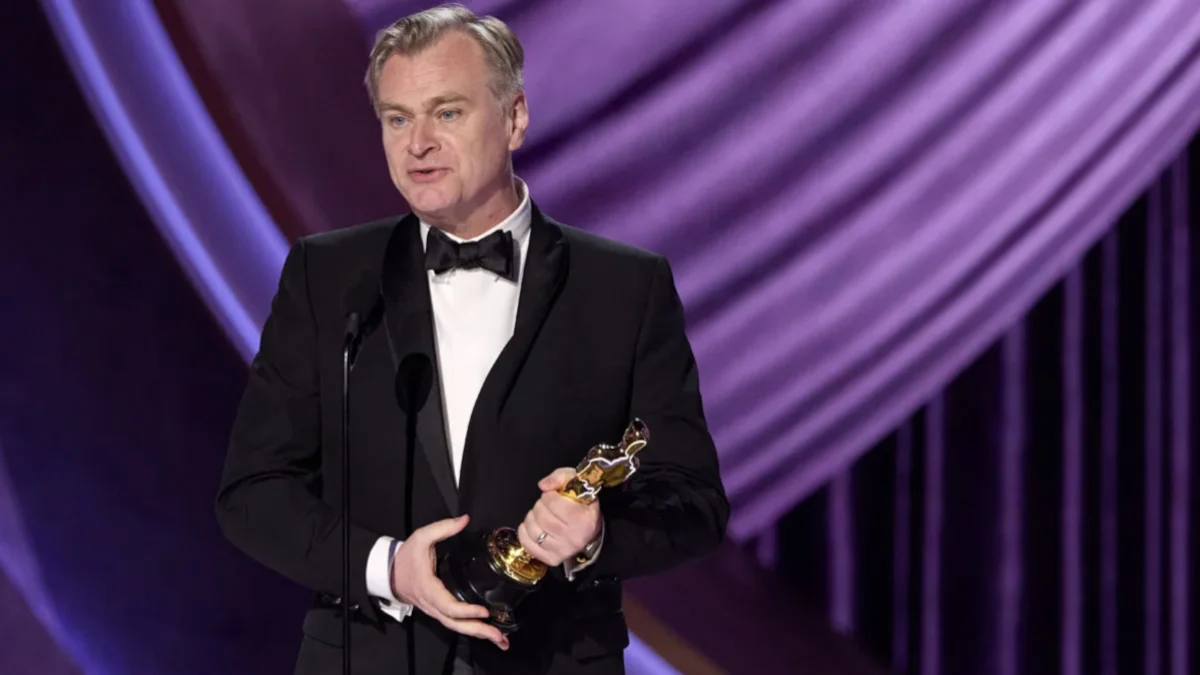
Christopher Nolan, the architect of mind-bending blockbusters and the man who turned the historical biopic into a global cultural phenomenon with Oppenheimer, is currently riding a wave of unprecedented success. His latest project, The Odyssey, has not only dominated the box office but has garnered the kind of near-unanimous critical acclaim that defines an auteur at the absolute zenith of their powers. Yet, in the restless ecosystem of Hollywood, the question of "what’s next?" is never far behind.
For years, a persistent chorus of fans and critics has lobbied the director to pivot toward the horror genre. While Nolan has flirted with elements of psychological dread, suspense, and existential terror in films like Memento, The Prestige, and Inception, he has never fully committed to a dedicated horror feature. In a recent, wide-ranging interview with The Hollywood Reporter, the director finally broke his silence on the prospect, revealing that while his appetite has been whetted, he remains bound by his own rigorous creative philosophy: he is waiting for the one "amazing idea" that justifies the leap.
The Genesis of the Speculation: Why Horror?
The conversation surrounding a potential Nolan horror film did not emerge in a vacuum. For decades, the director has displayed a masterful command of tension. His narratives are frequently built on the foundations of dread—the fear of memory loss, the paranoia of unseen technology, or the crushing weight of impending global annihilation.
The Odyssey, his current record-setting theatrical triumph, has inadvertently fanned the flames of this speculation. The film incorporates several distinct horror sub-genres, utilizing claustrophobic pacing and visceral, high-stakes environments that push characters to the brink of psychological disintegration. When pressed by The Hollywood Reporter on whether these sequences served as a test run or a gateway to a full-length foray into the genre, Nolan was characteristically candid.
"It very much whets my appetite for more," Nolan admitted. However, he was quick to temper the excitement of his fanbase with his trademark intellectual caution. "But I’ve always believed that horror as a genre has to be approached very carefully from a conceptual point of view."
The Philosophy of the "Amazing Idea"
For a filmmaker of Nolan’s stature, the allure of a genre isn’t found in the technical toys at his disposal—the IMAX cameras, the practical effects, or the massive budgets. Instead, it is rooted in the purity of the premise. Nolan’s career has been defined by high-concept narrative hooks that serve as the "engine" for his films.
When asked about the horror landscape, Nolan pointed toward the work of independent filmmaker Curry Barker. Specifically, Nolan highlighted Barker’s recent hit, Obsession, praising it with rare, unvarnished enthusiasm: "It’s an amazing idea, and it works like a motherfucker."
This distinction is vital to understanding why Nolan hasn’t made a horror movie yet. To him, the genre is not a repository for jump scares or slasher tropes. It is a structural challenge. "It’s not about what technical itches I would have to scratch," Nolan explained. "It’s about story. So I’m always looking."
This implies that for Nolan, a horror film must possess a conceptual "North Star"—a central, undeniable conceit that sustains a feature-length experience. He isn’t interested in simply "doing" horror; he is interested in reinventing the way an audience perceives fear, much like he reinvented the way they perceive time or historical memory.
Chronology of Nolan’s Genre Proximity
To understand why the world is so eager for a Nolan-directed horror film, one must look at the trajectory of his filmography. Each project has acted as a stepping stone toward the darker, more visceral territory of horror:
- The Early Years (2000–2002): Memento introduced the concept of psychological destabilization. The film’s structure forced the audience into the shoes of a man who could not trust his own reality—a core component of psychological horror.
- The Mid-Career Shift (2006–2010): The Prestige served as a darker, more obsessive character study, while Inception toyed with the horror of being trapped in one’s own subconscious.
- The Expansion (2014–2020): Interstellar touched upon the cosmic horror of an uncaring, infinite universe, and Tenet utilized the "time-inversion" mechanic to create a sense of unrelenting, non-linear dread.
- The Current Era (2023–2026): Oppenheimer and The Odyssey have stripped away the high-concept sci-fi veneer, focusing instead on the raw, human consequences of catastrophic events. The Odyssey has been widely cited as his most atmospheric and disturbing work to date, signaling a shift toward a more mature, darker aesthetic.
The "Pattinson Factor": A Literary Link?
The interview took a lighter, albeit intriguing, turn when discussing the influence of Robert Pattinson. As fans recall, it was a gift from Pattinson—a book of J. Robert Oppenheimer’s speeches—that served as the catalyst for the development of Oppenheimer.
Given the success of that collaboration, The Hollywood Reporter probed whether a similar exchange had occurred following the completion of The Odyssey. Specifically, they asked if Pattinson had handed over a horror novel by the master of the genre, Stephen King, which might serve as the next "domino" in Nolan’s career.
Nolan laughed off the suggestion, though he did not dismiss the medium of literature as a source of inspiration. "Did Rob hand me some horror novel by Stephen King that’ll make an excellent adaptation? Sadly, no, that is not the case," he noted.
While the direct link to a King adaptation remains a speculative fantasy, the mere mention of it highlights the high expectations surrounding Nolan’s next move. If he were to adapt a literary work, it would likely need to be a text with a deep, philosophical undercurrent—something that challenges the boundaries of human perception, much like his previous work.
Supporting Data: Why Horror Needs a Nolan Shift
The horror genre is currently enjoying a "Golden Age," characterized by "elevated horror" films that prioritize atmosphere, character, and social commentary. Data from the last decade of box office returns indicates that horror is one of the most profitable and reliable genres in cinema.
However, there is a recurring critique that the genre often relies on repetitive structures. By bringing his signature style—non-linear storytelling, massive practical scale, and meticulous sound design—Nolan could potentially elevate the horror genre to a level of prestige and box office dominance rarely seen since the days of The Exorcist or The Shining.
Nolan’s commitment to the theatrical experience also aligns perfectly with the "event horror" trend. In an era where streaming dominates, the communal, terrifying experience of a big-screen horror film remains one of the few things capable of filling theaters. If anyone has the cultural capital to turn a "conceptual" horror movie into a billion-dollar global event, it is Christopher Nolan.
Implications: What a Nolan Horror Film Would Look Like
If Christopher Nolan were to find that "amazing idea," what would the resulting film look like? Based on his past work and his comments, we can extrapolate several key elements:
- Practicality Over CGI: Expect a film that eschews digital monsters in favor of tangible, physical threats. Nolan’s commitment to real-world locations and practical effects would ground the horror in a reality that makes it significantly more unsettling.
- Non-Linear Fear: Nolan would likely experiment with the structure of fear. Imagine a horror film where the threat is revealed out of order, or where the protagonist’s descent into madness is reflected in the film’s editing.
- The Intellectual Hook: The film would likely revolve around a scientific or philosophical concept. Perhaps a story about the psychological horror of quantum entanglement, or the existential terror of a reality where cause and effect are reversed.
- The Soundscape: Collaborating once again with a master of atmosphere (such as Ludwig Göransson), the film would likely feature a score that is not just background music, but an active participant in the audience’s anxiety.
Final Thoughts: The Wait Continues
For now, the cinematic world must wait. Christopher Nolan is a director who refuses to be rushed. He has built a career on the belief that a film should only be made when the idea is fully formed, the script is airtight, and the vision is uncompromising.
The fact that he is actively looking for that "amazing idea" in the horror genre is a massive development in itself. He is no longer dismissing the genre as a curiosity; he is treating it as the next frontier for his creative exploration. Whether that leads to a haunted house story, a cosmic nightmare, or something entirely new, the prospect of a Nolan-directed horror film is arguably the most exciting "what if" in modern cinema.
As The Odyssey continues to dominate the cultural conversation, the director remains a man in pursuit of his next obsession. The horror community has every reason to be optimistic—Nolan doesn’t just make movies; he crafts experiences that stay with the audience long after the credits roll. If he finds that idea, the result will likely be nothing short of a masterpiece of terror.
 Asro
Asro
 Lina Irawan
 rifanmuazin
