

The podcasting industry stands at a critical juncture. For years, creators and advertisers alike have operated in a measurement "danger zone," struggling to bridge the gap between creative audio storytelling and tangible marketing return on investment (ROI). As listeners increasingly weave podcasts into their daily routines—often while multitasking, commuting, or exercising—the challenge of capturing genuine attention has never been more complex.
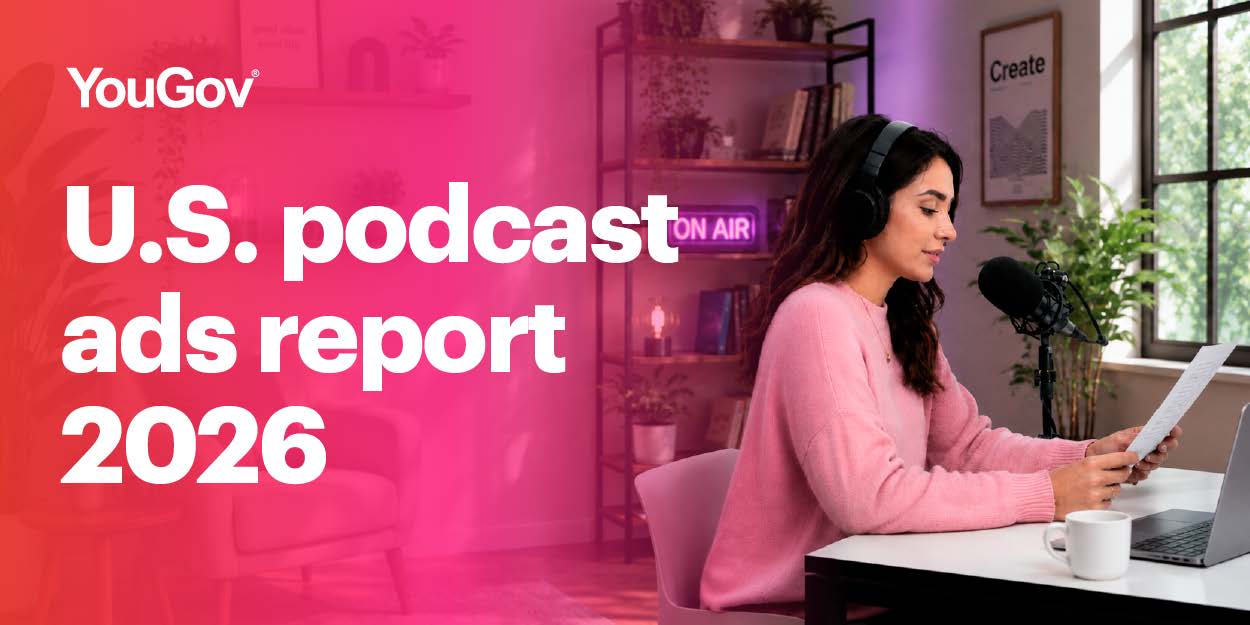
A newly released report, the U.S. Podcast Ads Report 2026 by YouGov, attempts to demystify this space. By analyzing data from over 1,300 U.S. adults, the study moves beyond simple metrics like the "skip button" to explore the psychological triggers and behavioral patterns that define modern podcast engagement.
Main Facts: Moving Beyond the Skip Button
The primary challenge identified in the 2026 report is the elusive nature of podcast engagement. Unlike visual media, where attention can be tracked via eye-movement or click-through rates on a screen, audio advertising often fades into the background of a listener’s life.
YouGov’s research suggests that the traditional preoccupation with skip rates is misplaced. Instead, the focus is shifting toward "attentional resonance." The study highlights that effectiveness is no longer just about whether an ad is played, but how the audience interacts with the brand following the listening experience. Key drivers of success include:
- Trust-Building Formats: Host-read ads continue to outperform automated or pre-produced spots, as they leverage the parasocial relationship between the host and the audience.
- Active vs. Passive Consumption: The report distinguishes between listeners who use podcasts as "background noise" and those who treat them as an educational or entertainment primary activity.
- Real-World Conversion: The path from hearing an ad to searching for a product or completing a purchase is non-linear. The report identifies "search-intent" as the most critical bridge between audio exposure and final sale.
Chronology: The Evolution of Podcast Metrics
To understand the current state of podcast advertising, one must look at the historical trajectory of the medium:
- 2015–2018: The Wild West. Advertisers relied heavily on vanity metrics such as total downloads. Many campaigns were untracked, with attribution relying on simple vanity URLs or promo codes.
- 2019–2021: The Rise of Dynamic Insertion. Technology evolved, allowing for dynamic ad insertion (DAI). This period brought improved targeting capabilities, but also introduced the "skip" problem as listeners became more adept at fast-forwarding through blocks of ads.
- 2022–2024: The Video Pivot. The emergence of "video podcasts" (or vodcasts) on platforms like YouTube and Spotify began to fundamentally alter the medium. Advertisers could now see the listener, track retention, and integrate visual brand assets.
- 2025–2026: The Holistic Approach. The current landscape, as defined by the YouGov 2026 report, focuses on multi-channel attribution. Advertisers are now mapping audio exposure to broader digital footprints, recognizing that a podcast ad may not result in an immediate click, but rather a delayed "brand lift" or future Google search.
Supporting Data: Understanding the Audience
The YouGov survey included a robust sample of 800+ dedicated podcast listeners, providing a granular look at the demographic and behavioral habits of the modern American listener.

Audio vs. Video Consumption
The rise of video podcasts has created a bifurcation in the market. While purists argue that audio is the core strength of the medium, the data shows that video integration drastically improves ad recall. Listeners who consume video versions of podcasts are 35% more likely to remember the advertised brand compared to those who listen to audio-only files.
The Trust Gap
Trust remains the most valuable currency in podcasting. The study finds that 62% of listeners are more likely to consider a brand if it is endorsed by a host they trust. This "trust factor" is the primary reason why host-read ads command a premium in the market. Conversely, intrusive or loud pre-produced spots saw a 40% higher skip rate, suggesting that listeners are increasingly protective of the production quality of their favorite shows.

Behavioral Drivers
What prompts a listener to act? The report outlines three distinct phases of engagement:
- Auditory Recognition: The initial exposure during the podcast.
- Contextual Validation: The listener mentally links the brand to the values or topics of the show.
- Actionable Search: The final step, often occurring hours after the episode concludes, where the user visits a search engine or retail site.
Official Responses and Industry Sentiment
Industry leaders have welcomed the YouGov findings, noting that the data validates what many have long suspected: podcasting is a top-of-funnel powerhouse that is often mismeasured by bottom-of-funnel metrics.

"For too long, we’ve tried to force podcast advertising into a direct-response box," says one marketing analyst involved in the report’s dissemination. "This data proves that the medium is inherently more about affinity and brand building. When you treat the podcast ad as a conversation rather than a billboard, the engagement numbers follow."
However, some in the industry caution that these findings are not a panacea. Critics point out that "brand lift" is notoriously difficult to monetize for smaller independent podcasters who rely on immediate, performance-based revenue to keep their shows afloat. The industry-wide challenge, therefore, remains: how to provide the deep, nuanced data the brand marketers want, without alienating the independent creators who provide the content’s soul.

Implications: The Future of the Industry
The implications of the 2026 report are far-reaching. As the industry matures, we are likely to see several shifts in strategy:
1. The Death of the "Spray and Pray" Strategy
Advertisers will move away from wide-net buys and toward highly curated, context-aware placements. If a podcast is about "Millennial Moodboard" nostalgia, for instance, advertisers will focus on products that align with the specific generational aesthetics discussed on the show, rather than generic broad-market goods.

2. A Hybrid Future
The distinction between "audio" and "video" will continue to blur. Future podcast production will likely prioritize "video-first" or "video-companion" workflows, as advertisers demand the higher retention rates that visual assets provide.
3. Ethical Measurement
With the increased ability to track listener intent, the industry will also face pressure regarding privacy. As advertisers seek more data, they will have to balance the need for attribution with the growing consumer demand for digital privacy. The most successful platforms will be those that provide granular insights while maintaining user anonymity.

4. Innovation in Creativity
The report highlights that the "skip button" is a reaction to poor creative. Consequently, we can expect a surge in investment toward creative agencies that specialize specifically in the audio-first ad format. Expect more narrative-driven, sound-designed ads that feel like a natural extension of the podcast content rather than an interruption.
Industry Snapshot: Current Trends
While the industry grapples with these shifts, the content landscape remains as vibrant as ever. From the continued dominance of powerhouses like The Daily and The Joe Rogan Experience to the emergence of niche hits like Her Health and Volley Talk, the diversity of the medium remains its greatest strength.

The successful podcasters of 2026 are those who manage to leverage the intimacy of the audio format while embracing the data-driven realities of the modern digital marketplace. Whether it is a show about the randomness of creativity like Curated by Chance, or a retrospective dive into pop culture like Millennial Moodboard, the key to success lies in maintaining a loyal, engaged audience—the very audience that advertisers are now learning to understand with newfound precision.
Conclusion
The "danger zone" that podcasting has inhabited for years is finally being mapped. Through rigorous research and a better understanding of how human beings interact with spoken-word content, the industry is transitioning from a period of experimental growth to one of professional maturity.

For brands, the message is clear: podcast advertising is not a numbers game to be won through brute force or high-volume repetition. It is a relationship-driven channel that rewards patience, creative empathy, and a deep understanding of the listener’s journey. As we look toward the remainder of 2026 and beyond, the brands that succeed will be those that view every ad not as a hurdle for the listener to skip, but as an opportunity to add value to the listening experience.
The data provided by the YouGov report serves as a roadmap for this transition. By moving beyond the binary of "skip" versus "listen," we open the door to a more sophisticated, effective, and human-centric approach to audio marketing. The future of the medium is not just in the numbers, but in the trust—and that is a metric that, finally, we are beginning to measure with accuracy.
 Asep Darmawan
 Jia Lissa
 Neng Nana
