

By Brian VanHooker
Published September 17, 2026
Main Facts
For over half a century, Charles Schulz’s Peanuts has served as an enduring cultural mirror, capturing the sweet sorrows, micro-tragedies, and quiet triumphs of everyday life. Among the comic strip’s massive catalog of iconic dialogue, many of the most celebrated lines are characterized by accidental brilliance—words penned with intentional insight by Schulz, yet uttered by his youthful creations with innocent unawareness.
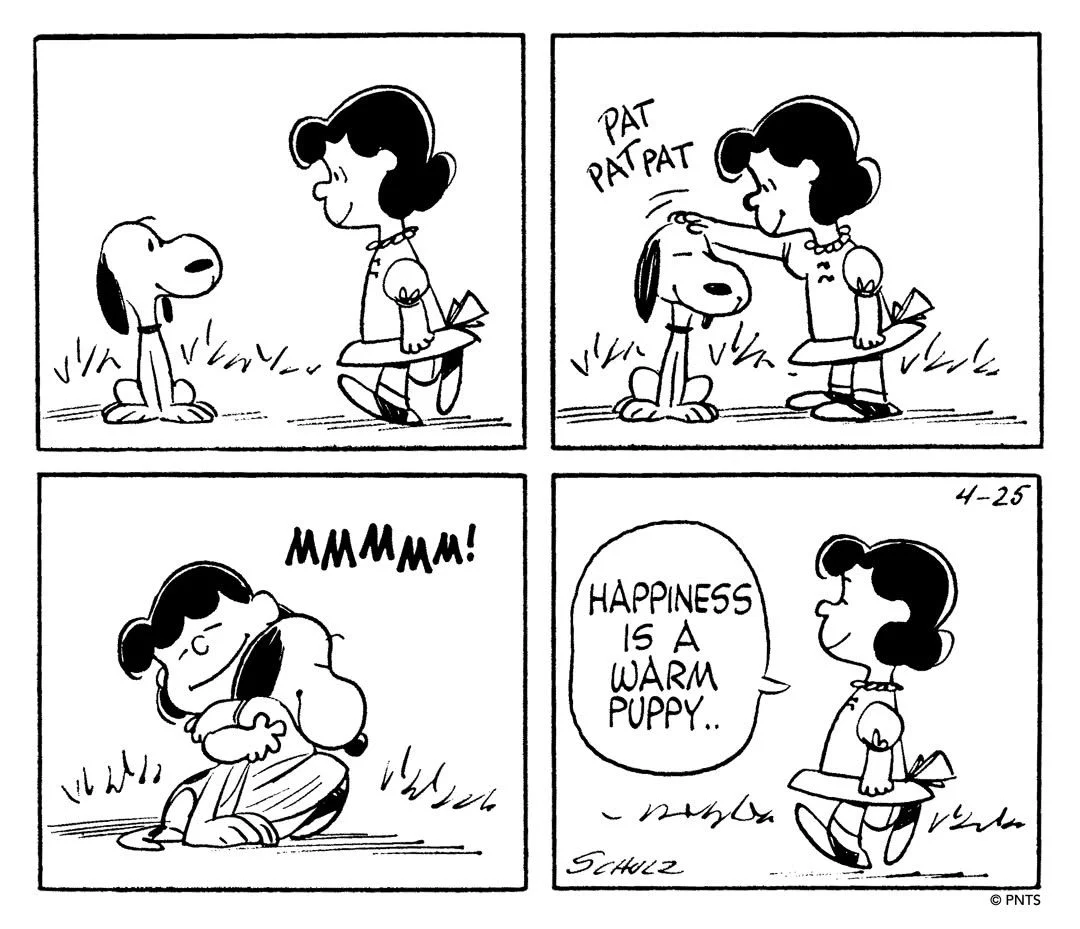
Consider, for instance, the quintessential exploration of heartbreak: "Nothing takes the taste out of peanut butter like unrequited love!" While the sentiment accurately deconstructs the physiological hollowness of romantic rejection, Charlie Brown delivers it merely as a surface-level reaction to his immediate misery. Similarly, Lucy van Pelt’s famous declaration, "Happiness is a warm puppy," approaches life’s simple comforts with profound, unexpected weight.
However, a deeper inquiry into the psychology of Peanuts yields a different class of quote: one where the central character speaks with absolute, unshielded self-awareness. To uncover the true ethos of Charlie Brown requires distinguishing between a brilliant line written about him and a brilliant declaration delivered by him with total comprehension of his own tragicomic reality.

When searching for the definitive encapsulation of Charlie Brown’s character—his bleak outlook, his unyielding resilience, and his eternal status as pop culture’s most lovable underdog—one particular strip from 1966 stands entirely alone. Leaning against a familiar brick wall alongside his friend Linus, Charlie Brown responds to a bleak observation about existence with a line that has resonated for generations:
"I only dread one day at a time."
Chronology
To understand how this defining philosophy developed within the narrative universe of Peanuts, one must trace the evolution of Charles Schulz’s writing and the specific milestones that cemented Charlie Brown’s worldview:
- October–November 1950: Peanuts debuts in syndication, initially focusing on a more cynical, deadpan Charlie Brown who frequently engages in dry, philosophical observations well beyond his years.
- November 1951: The foundational "football gag" is introduced, establishing the cyclical nature of Charlie Brown’s misplaced optimism—a dynamic where Lucy pulls the ball away just as he attempts to kick it, setting the template for his perpetual misfortune.
- November 1966: A daily comic strip is published featuring Charlie Brown and Linus leaning against a brick wall. Linus observes, "Life is difficult, isn’t it, Charlie Brown?" To which Charlie Brown replies affirmatively before delivering his masterpiece: "I’ve developed a new philosophy… I only dread one day at a time."
- December 1969: The animated feature film A Boy Named Charlie Brown hits theaters. Written by Charles Schulz himself, the movie incorporates the exact 1966 brick wall conversation, proving the phrase left a lasting impression on its creator years after its initial print run.
- 1973: Schulz revisits a similar theme in a later strip where Charlie Brown notes, "I used to try to take each day as it came… My philosophy has changed. I’m down to half-a-day at a time!" While humorous, this later iteration risks sounding like a misinterpreted "live life to the fullest" mantra without the visual misery of the original.
- September 2026: Cultural retrospectives continue to dissect the psychological framework of Schulz’s work, re-evaluating the 1966 quote as the definitive philosophical statement of the strip’s 50+ year run.
Supporting Data and Context: Who is Charlie Brown?
To evaluate why "I only dread one day at a time" is the ultimate Charlie Brown quote, one must first deconstruct the anatomy of the character.

Charlie Brown is, by almost every traditional metric of success, a loser. He is perpetually unlucky in romance—frequently haunted by the image of the Little Red-Haired Girl—a mediocre student, and an abysmal baseball manager whose team suffers historic, lopsided defeats. He rarely "wins" at anything. Yet, these exact qualities are precisely what make him so universally relatable. Very few people glide through life experiencing uninterrupted triumph; most walk around with a persistent, nagging sense that they are falling just short of expectations. Charlie Brown is the avatar for everyone who has ever felt like they were running up a down escalator.
Yet, characterizing him purely as a "sad sack" misses a vital component of his makeup: persistence. Charlie Brown is fundamentally hopeful, even if that hope is entirely unwarranted and systematically punished. He falls for Lucy’s football trick time and time again because deep down, he genuinely believes, "This time I’ll get it."
This dichotomy—between catastrophic reality and stubborn, tragic optimism—is neatly captured in his philosophy on life. When contrasted with his 1973 quip about being down to "half-a-day at a time," the 1966 quote strikes a far more accurate balance. The 1973 line can occasionally be misconstrued as an ironic spin on modern mindfulness or hustle-culture productivity. Conversely, "I only dread one day at a time" offers no false hopes. It acknowledges that the future holds inevitable misery, but commits to facing that misery with grim, unbroken endurance.
Official Responses and Creator Intent
While Charles Schulz rarely gave exhaustive academic lectures on the existential underpinnings of his strips, his creative choices speak volumes. The fact that Schulz personally adapted the 1966 brick wall dialogue for A Boy Named Charlie Brown in 1969 indicates that the line held a special resonance for its author.

Animation historians and comic scholars have frequently noted that Schulz imbued his child characters with adult anxieties, transforming the funny pages into a medium for mid-century modern neurosis, philosophy, and gentle melancholy. Where characters like Linus sought solace in blankets and theological security, and Snoopy escaped into elaborate flights of literary fancy, Charlie Brown confronted the void directly—armed with nothing more than a zig-zag shirt, a round head, and an unshakeable refusal to stay down permanently, no matter how many times the football was yanked away.
Implications
The enduring cultural footprint of Peanuts relies heavily on its ability to articulate the quiet, unglamorous aspects of the human condition. In an era saturated with performative positivity and toxic optimism, Charlie Brown’s 1966 confession feels remarkably modern and therapeutic.
By framing dread not as an insurmountable paralysis, but as a manageable, 24-hour administrative task ("I only dread one day at a time"), Charlie Brown redefines resilience. He does not beat the system; he does not win the game; he does not kick the football. Instead, he wakes up, walks back out onto the field, accepts that life is fundamentally difficult, and decides to face the upcoming twenty-four hours anyway.
That is not just the best quote Charlie Brown ever uttered—it is a masterclass in survival disguised as a Sunday funnies punchline.
 Basiran
 Suro Senen
