


As the gaming community eagerly looks toward the horizon for the eventual arrival of Persona 6, and whispers circulate regarding potential remakes like Persona 4 Revival, it is easy to take the current powerhouse status of Atlus’s flagship role-playing game franchise for granted. Today, Persona stands shoulder-to-shoulder with the absolute titans of the genre. Yet, the foundational steps of this phenomenon trace back decades, born from a risky thematic pivot that forever changed the trajectory of Japanese role-playing games.
While Persona 3—which originally launched in Japan on July 13, 2006—is widely recognized as the watershed moment that propelled the series into mainstream international success, its existence would have been impossible without the rocky, pioneering groundwork laid by Revelations: Persona on the original PlayStation.
Main Facts: The Genesis of a Phenomenon
The Persona series, as contemporary players know it, is actually a spin-off of Atlus’s much older, deeply esoteric Megami Tensei franchise. Long before Shin Megami Tensei: Nocturne finally brought the core series to North American shores in 2004, Megami Tensei had established a robust following in Japan across the Famicom and Super Famicom eras.

However, by the mid-1990s, the creative minds at Atlus sought a stylistic and narrative departure. They wanted to move away from sprawling, apocalyptic demon-hunting scenarios that threatened entire worlds, opting instead for something far more grounded, deeply psychological, and intimate.
This conceptual shift birthed Megami Ibunroku Persona (released in Japan on September 20, 1996) and its eventual North American counterpart, Revelations: Persona. Rather than battling generic forces of darkness across ruined cities, the protagonists were everyday high school students exploring the fragile boundaries of their own inner psyches. By playing a harmless-looking fortune-telling game, these teenagers inadvertently unlocked the power to summon "Personas"—manifestations of their true personalities—to combat demons infiltrating their hometown of Mikage-cho.
Chronology: From Super Famicom Experiments to PlayStation Breakthroughs
Understanding the birth of Persona requires examining the stepping stones laid by Atlus in the years immediately preceding its release:

- October 28, 1994: Atlus releases Shin Megami Tensei If… for the Super Famicom. This title serves as the direct spiritual blueprint for Persona. Set within the confined, claustrophobic halls of Karukozaka High School—which has been physically dragged into the demon realm due to a bullied student named Ideo Hazama summoning a demon for revenge—it introduces the concept of teenage protagonists grappling with supernatural terror in an institutional setting.
- September 20, 1996: Megami Ibunroku Persona launches in Japan for the original PlayStation. It takes the high school concept of If… and expands it into a fully realized, standalone sub-series featuring approachable combat, psychological depth, and branching narrative paths.
- 1996–1997: Facing strict localization and censorship hurdles from North American publishers regarding religious symbolism and dark thematic elements, Atlus USA heavily sanitizes the game for Western audiences, resulting in Revelations: Persona. Significant content, including the alternative "Snow Queen" storyline, is omitted due to strict localization deadlines.
- July 13, 2006: Persona 3 debuts in Japan, introducing the revolutionary "Social Links" system and modern aesthetic styling that transforms the franchise into a global commercial juggernaut.
- September 22, 2009: Capitalizing on the immense success of Persona 3, Atlus releases an updated, definitive version of the original game for the PlayStation Portable (PSP) titled Shin Megami Tensei: Persona. This release finally restores the cut "Snow Queen" route and rectifies the localization flaws of the 1996 original.
Supporting Data: Evolution of Design and Localization Hurdles
The transition of Persona from a niche Japanese experiment to a global sensation highlights fascinating data regarding game development cycles and cultural translation in the late 1990s:
- The Difficulty Curve: Traditional Megami Tensei titles of the early ’90s were infamous for punishing difficulty spikes, alienating casual or mainstream RPG fans. Persona deliberately smoothed out this progression curve, focusing heavily on elemental exploitation, demon negotiation, and character-driven progression.
- The Localization Crunch: When Revelations: Persona was brought to the West, the localization team faced immense pressure to make the game palatable to an audience raised on Final Fantasy and Dragon Warrior. Characters’ names, appearances, and cultural references were altered (such as changing the protagonist’s name and altering supporting characters’ designs) to fit Western sensibilities—a practice that would become unthinkable in the modern era of faithful localizations.
- Platform Transition: The original PlayStation release relied heavily on a first-person dungeon-crawling perspective coupled with third-person isometric combat maps. The 2009 PSP remaster streamlined these interfaces, proving that the core narrative and mechanics possessed timeless appeal when freed from archaic technical limitations.
Official Responses and Industry Perspectives
Atlus executives and developers have frequently spoken about the immense risk involved in shifting away from the core Megami Tensei formula during the mid-’90s. In retrospective interviews, team members noted that while the company was confident in Japanese players’ willingness to embrace darker, psychologically driven school settings, the reception in international markets remained a massive uncertainty.
Nintendo of America’s rigorous content policies during the Super Famicom era effectively blocked games like Shin Megami Tensei If… from ever seeing a Western release. Parents and watch-dog groups frequently targeted occult themes in video games, meaning Atlus had to tread carefully.
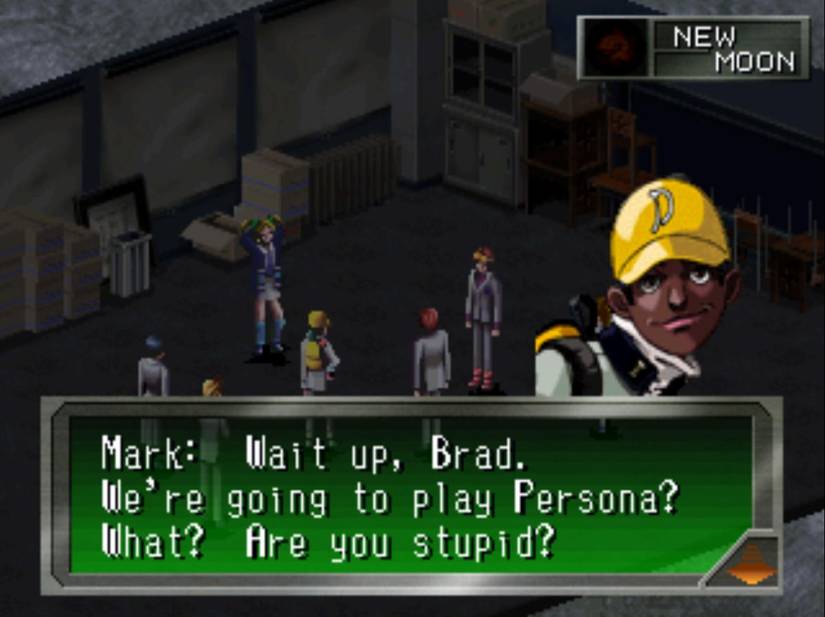
However, the gamble paid off domestically. Japanese fans embraced the blend of youthful urban fantasy and Jungian psychology. Decades later, company statements and promotional cycles surrounding modern entries—such as Persona 6 and various remakes—frequently pay homage to these humble, experimental roots, acknowledging that the franchise’s deep emotional resonance began the moment those teenagers flipped over tarot cards in a high school classroom.
Implications: A Legacy Built on Faltering Steps
Today, playing the original 1996 Persona—or even its 2009 PSP iteration—can feel like navigating a rough draft. By the standards of modern RPG design, its pacing is uneven, its random encounter rates can test the patience of even dedicated veterans, and its interface reflects the awkward growing pains of a genre in transition.
Yet, the historical implications of the game are monumental. Without Atlus’s willingness to step outside the comfort zone of apocalyptic wasteland settings to explore the teenage mind, the gaming landscape would be devoid of some of the most celebrated character writing in history. Persona 3 may have perfected the formula with its calendar systems and Social Links, but it stood squarely on the shoulders of Mikage-cho’s original heroes.

As fans look forward to future installments and potential revivals of earlier classics, the original Persona remains a fascinating monument to creative bravery—proving that sometimes, the most terrifying monsters a hero can face are the ones hiding deep within themselves.
 Nana Muazin
 Layla Zulfa
 Basiran
