

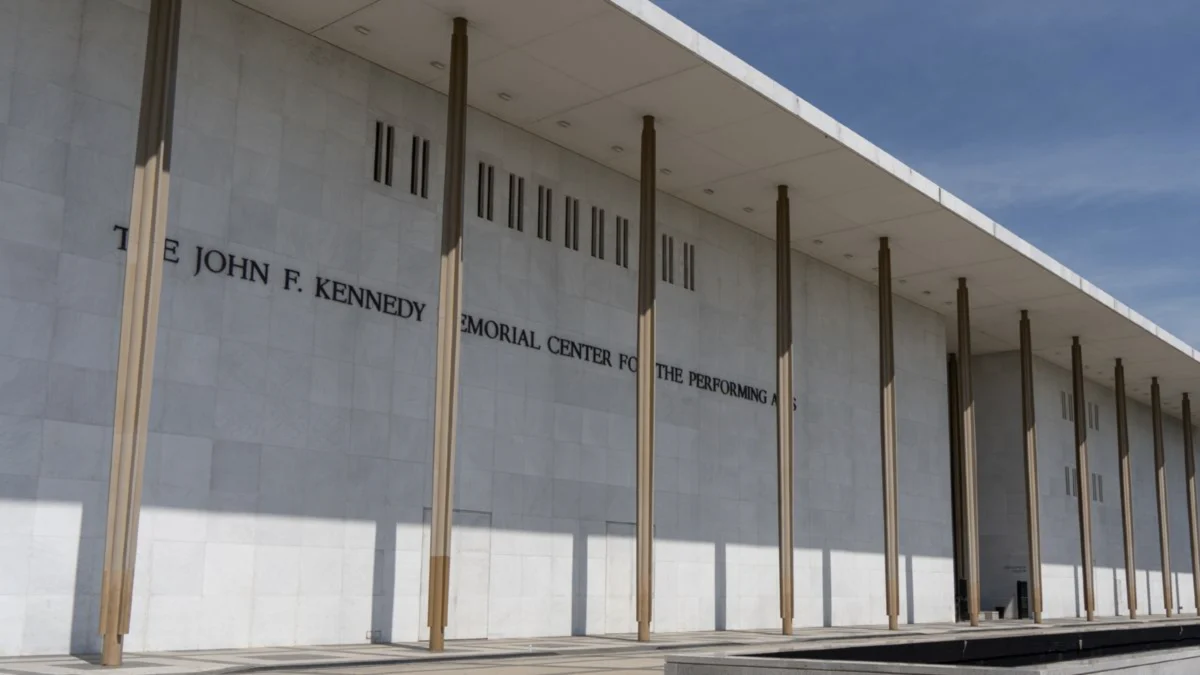
WASHINGTON — A federal judge has intervened in the rapidly escalating, high-stakes standoff between the federal judiciary, congressional watchdogs, and the Trump-led administration governing the John F. Kennedy Center for the Performing Arts.
U.S. District Judge Christopher Cooper issued a strict judicial order on Thursday requiring the leadership of the historic cultural institution to provide a formal 30-day advance notice before undertaking any major structural alterations, significant renovations, or demolition activities at the iconic Washington, D.C. venue.
The emergency ruling is designed to put a temporary brake on an administration-led campaign that has seen the facility plunged into chaos, closed abruptly to the public, and threatened with total destruction. According to court transcripts, Judge Cooper stated that he implemented the directive to “avoid any confusion on that score given more recent events,” referring directly to public threats made by President Donald Trump regarding the physical demolition of the complex.
The injunction represents the latest volatile chapter in a turbulent week for the nation’s memorial to President John F. Kennedy—a week characterized by emergency board votes, abrupt facility closures, congressional intervention, and unprecedented public ultimatums from the executive branch.
Main Facts
The ongoing legal and political crisis centers on the governance, physical integrity, and financial management of the Kennedy Center, which has increasingly become a battleground for executive overreach and congressional pushback.
- The Judicial Injunction: Under Judge Cooper’s Thursday order, the Kennedy Center leadership and its board of trustees cannot implement any major changes to the building’s physical plant without giving the court and opposing legal counsel at least 30 days of prior notice. The order was issued specifically to prevent secret or sudden demolition maneuvers.
- The Demolition Threats: President Trump shocked preservationists and lawmakers alike on Wednesday evening by declaring that the Kennedy Center could “end up being ripped down” if his administration is not granted full authority and recognition over the venue. Photographic evidence emerged showing the president reviewing architectural demolition schematics while aboard Air Force One.
- The Board-Ordered Closure: On Tuesday, the Kennedy Center’s board of trustees—chaired by President Trump and populated heavily by his political allies—voted to shutter the venue entirely. This action followed Judge Cooper’s rejection of a controversial proposal by the board to physically add Trump’s name to the exterior of the federal monument.
- The Fiscal Pretext: While the board justified the closure by citing “certain fiscal collapse,” critics and congressional opponents have exposed the narrative as a manufactured pretense designed to force compliance with the president’s branding demands.
- Congressional Funding Contingency: The facility is currently tied to a massive $257 million congressional allocation earmarked for essential infrastructural renovations. President Trump has publicly conditioned the disbursement and execution of these federal funds on whether his name is prominently displayed on the building.
Chronology of a Crisis: A Timeline of Events
The breakdown of operations at the Kennedy Center did not happen overnight, but the pace of events accelerated dramatically over a chaotic 96-hour period, shifting from boardroom maneuvers to federal courtrooms and perimeter fencing.
Monday: The Rejection and the Prelude
The legal friction intensified at the start of the week when U.S. District Judge Christopher Cooper formally rejected a push by the Kennedy Center’s pro-Trump board to rename or brand the federal building with the current president’s moniker. Legal experts noted that altering the name of a federally designated memorial requires congressional approval rather than a simple trustee vote, setting the stage for a confrontation between the executive branch and the judicial system.
Tuesday: The Retaliatory Closure Vote
In direct response to the court’s rejection of the naming proposal, the Kennedy Center board of trustees convened an emergency meeting. Stacking the agenda with claims that the performing arts center was facing immediate and catastrophic financial ruin—dubbed “certain fiscal collapse”—the board voted to close the institution to the public indefinitely.
Wednesday: Congressional Action and Demolition Plans
The backlash was swift. On Wednesday, Rep. Joyce Beatty (D-OH), an ex officio member of the Kennedy Center board who has spearheaded legislative efforts to block the administration’s takeover, filed an emergency motion in federal court asking a judge to invalidate the closure.
Meanwhile, the situation took a surreal and alarming turn when President Trump addressed reporters and public supporters, suggesting that the entire cultural monument might be “ripped down.” Compounding the public statements, photographs surfaced showing the president examining physical demolition blueprints while in transit on Air Force One.
Thursday: Fencing, Spin, and the Judicial Hammer
By Thursday morning, the physical reality of the closure materialized on the ground. Heavy security fencing was erected around the perimeter of the Kennedy Center complex. Executive Director Matt Floca attempted to downplay the developments, claiming to the press that the fencing and closure were merely temporary measures required to execute overdue, necessary building repairs.
However, legal representatives for Rep. Beatty countered in court filings that the so-called "short-term shuttering" was entirely a pretext meant to mask a permanent, retaliatory shutdown and lay the groundwork for physical alterations.
Recognizing the gravity of the threat, Judge Cooper stepped in later Thursday afternoon, issuing the landmark order requiring 30 days’ notice for any major building changes. The judge made it clear that the directive was established “to make crystal clear” that the federal landmark could not be leveled or drastically modified without judicial oversight.
Supporting Data and Financial Realities
Behind the political posturing and culture-war rhetoric lies a complex financial reality involving millions of taxpayer dollars, federal mandates, and historic maintenance backlogs.
- The $257 Million Stake: Congress has previously appropriated $257 million specifically designated for critical infrastructure repairs, capital improvements, and facility modernization at the Kennedy Center.
- The Branding Quid Pro Quo: President Trump has repeatedly linked the release and utilization of these federal funds to his personal demands for administrative recognition and the physical addition of his name to the structure, turning congressionally approved maintenance money into a political leverage point.
- Maintenance vs. Demolition: While executive director Matt Floca cited emergency repairs to justify the rapid installation of perimeter fencing, structural engineers and arts advocates have pointed out that standard capital improvement projects do not require the total closure of the facility, nor do they align with the demolition schematics reviewed by the president on Air Force One.
- Statutory Oversight: As a national cultural center established by federal statute in 1958, the Kennedy Center operates under a unique hybrid model involving both federal funding and private endowment support, making unilateral executive actions regarding its physical existence legally questionable.
Official Responses and Stakeholder Positions
The unfolding crisis has drawn sharp condemnation from lawmakers, legal scholars, and arts advocates, while the administration has defended its posture as a necessary intervention against financial mismanagement.
Congressional Pushback
Rep. Joyce Beatty and her congressional allies have framed the administration’s actions as a direct assault on a premier American institution. In legal filings, Beatty’s counsel argued that the Trump-led board was weaponizing manufactured financial distress to bypass federal preservation laws and achieve through administrative fiat what it could not accomplish legally or legislatively.
“We cannot allow a federally protected cultural landmark, built to honor a martyred president, to be held hostage or reduced to rubble simply because of an ego-driven demand for personal branding,” congressional sources noted in background statements regarding the ongoing litigation.
The Administration’s Defense
President Trump and his appointed loyalists on the board have maintained that the venue is functionally insolvent under its current operational model. By painting the center as being on the brink of fiscal collapse, the board attempted to justify both the emergency closure and the need for radical restructuring. The administration contends that without direct executive oversight—and the prominent branding requested by the president—the facility cannot sustainably operate, thereby rationalizing drastic measures, up to and including razing the structure.
Broader Implications for Federal Cultural Institutions
The legal battle over the Kennedy Center transcends local Washington politics, raising profound questions about the bounds of executive authority over federal monuments, cultural properties, and independent boards of trustees.
- The Precedent of Executive Retaliation: Legal scholars warn that if an administration can manufacture a financial crisis to close a federal institution simply because a court blocks a naming request, the independence of all federal boards and cultural commissions is compromised.
- The Weaponization of Maintenance Funding: Tying congressionally appropriated repair funds to personal political demands sets a dangerous precedent for the executive branch’s management of public infrastructure. The withholding of the $257 million in renovation funds effectively punishes the institution and the public it serves to extract personal concessions.
- The Role of the Federal Judiciary: Judge Cooper’s intervention highlights the judiciary’s willingness to act as a backstop against sudden, unilateral executive actions. However, the necessity of emergency 30-day notice orders demonstrates how precarious the protection of national monuments has become in an era of heightened political polarization.
As the legal proceedings continue to unfold in federal court, the immediate physical security of the Kennedy Center remains temporarily assured by Judge Cooper’s injunction. Yet, with millions in renovation funds frozen, perimeter fencing enclosing the grounds, and a president openly musing about tearing down the structure, the long-term future of America’s living memorial to John F. Kennedy hangs delicately in the balance.
 Pevita Pearce
 Asro
Asro
 Lina Irawan
