

Introduction: A Precarious Improvement
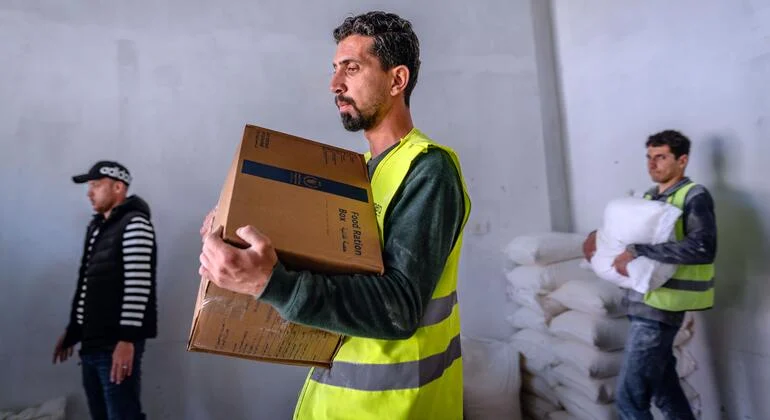
The humanitarian landscape in the Gaza Strip, long defined by catastrophic levels of hunger and systemic collapse, has witnessed a tentative, yet fragile, improvement in recent months. A joint report issued by the Food and Agriculture Organization (FAO), UNICEF, and the World Food Programme (WFP) indicates that the surge in humanitarian assistance and the resumption of limited commercial traffic have successfully staved off the absolute worst-case scenarios of famine.
However, leading officials from these international bodies are sounding an urgent alarm: these gains are not permanent. Without sustained, increased, and unhindered access to aid, along with the restoration of local infrastructure, the progress made since late 2025 could be swiftly reversed. While the immediate threat of widespread starvation has been mitigated by a massive influx of aid, the underlying "brutal" reality of the war-torn enclave—characterized by a lack of clean water, decimated sanitation systems, and a near-total collapse of local livelihoods—remains unchanged.
The Chronology of Crisis and Response
The trajectory of Gaza’s food security over the past year highlights the direct correlation between geopolitical stability and human survival.
Late 2025: The Nadir of Hunger
At the conclusion of 2025, the humanitarian situation in Gaza was described as apocalyptic. Approximately 1.6 million people—roughly 77% of the total population—were classified under IPC Phase 3 or higher, signifying a state of acute food insecurity. During this period, the systemic blockage of aid and the intensity of the conflict meant that less than 1% of children under the age of five were receiving adequate nutritional coverage, and a mere 500,000 individuals were receiving any form of food assistance.
The October 2025 Ceasefire and Scaling Up
The turning point for the current "fragile gains" began following the October 2025 ceasefire agreement between Israel and Hamas. The cessation of major hostilities allowed for a significant expansion of aid logistics. By May 2026, the statistics reflected a dramatic change in operational capacity:
- Food Parcels: Reached 1.5 million people.
- Cash Assistance: Supported 700,000 people, providing families the dignity of choice and the ability to purchase essential supplies.
- Nutrition Support: Reached 60% of children under five, a stark contrast to the near-zero coverage seen just months prior.
This shift underscores a singular, vital lesson: humanitarian aid, when allowed to flow without obstruction, is the most effective tool in preventing mass mortality. Yet, the current reliance on aid is a symptom of a broken society, not a solution to its recovery.
Supporting Data: The IPC Analysis
The Integrated Food Security Phase Classification (IPC) provides the analytical backbone for the UN’s assessment. According to the latest data, 1.4 million people (67% of the population) remain in crisis or worse levels of acute food insecurity.
While the reduction from 1.6 million is statistically significant, it hides the severity of the remaining emergency. Approximately 212,000 people are currently classified as IPC Phase 4 (Emergency). These individuals are living on the knife-edge of survival. Much of this vulnerable population is concentrated near the Israeli-controlled "Yellow Line," a geography that serves as a bottleneck for aid. In these areas, the proximity to conflict zones and the strict security parameters make the delivery of essential health and food services inconsistent and often impossible.
The malnutrition crisis, while improved, remains a generational threat. The UN projects that in the coming year, 74,000 children will require intensive treatment for acute malnutrition. Furthermore, 25,000 pregnant and breastfeeding women are in immediate need of specialized nutrition support. As UNICEF Executive Director Catherine Russell aptly noted, while the prevalence of acute malnutrition has dropped, the long-term biological damage to children who have endured months of deprivation may be irreversible.
Official Responses and Strategic Perspectives
The heads of the UN’s leading food and development agencies have issued a unified call for a paradigm shift from emergency response to sustainable recovery.
The WFP Perspective
Carl Skau, WFP Acting Executive Director, emphasized the instability of the current situation. "There is progress on food security in Gaza, but it is fragile and can easily be reversed," Skau warned. He highlighted that while the hunger numbers have dipped, the "brutal" humanitarian conditions—specifically the lack of water, sanitation, and medical care—continue to negate the nutritional benefits of the food being provided. Without water and sanitation, food consumption alone cannot prevent disease outbreaks that further exacerbate malnutrition.
The FAO Vision for Recovery
Dongyu Qu, Director-General of the FAO, focused on the necessity of revitalizing local production. "Food security in Gaza cannot recover unless local food production starts again," Qu stated. The current reliance on external aid is not only costly but unsustainable. The FAO’s data shows that when farmers and herders are given even minimal access to their land, the results are immediate. For instance, in areas where support has been sustained, sheep inventories have increased by 33%.
However, this recovery is being stifled by the inaccessibility of land. Currently, over 70% of Gaza’s cropland is inaccessible to farmers, and only 3% is considered usable. Without the ability to access irrigation, seeds, tools, and markets, the local economy remains dormant.
Implications: The Road to Sustainability
The path forward for Gaza is fraught with obstacles, primarily driven by the limitations of the current aid infrastructure and the persistence of restrictive border policies.
The Bottleneck of Aid
The reliance on the Kerem Shalom/Abu Salem border crossing as the primary gateway for aid into southern Gaza creates an inherent vulnerability. When the logistics of a two-million-person enclave depend on a single entry point, any disruption—whether due to security concerns, bureaucratic delays, or infrastructure damage—threatens to plunge the population back into an emergency state within days. The UN agencies are calling for the opening of additional crossings and the streamlining of commercial imports, particularly of fresh produce and proteins, which are currently entering in insufficient quantities.
The "Yellow Line" and Regional Inaccessibility
The "Yellow Line" areas present a specific challenge for international monitors and aid workers. During the latest survey period, these areas remained largely inaccessible to analysts, leaving a gap in data that masks the true extent of the misery faced by those living in the shadow of the conflict. The lack of reliable, real-time data from these areas means that aid planning remains speculative, leaving thousands in a state of chronic, unaddressed need.
The Economic Imperative
Recovery is not merely about calories; it is about dignity and self-sufficiency. The current state of Gaza is one of total aid dependency. For the enclave to move toward stability, there must be a move toward allowing the private sector to function. This requires the entry of fuel for irrigation, the repair of electrical grids, and the rehabilitation of damaged water systems. Without these, the food aid currently being provided acts as a temporary patch on a gaping wound.
Conclusion: A Call for Stability
The situation in Gaza stands at a critical juncture. The international community has proven that it has the capacity to prevent a famine, as demonstrated by the improvements observed between late 2025 and mid-2026. However, the fragility of these gains serves as a sobering reminder that humanitarian aid is not a substitute for peace, infrastructure, or economic agency.
The UN agencies have laid out a clear roadmap:
- Sustained Access: The continuous and unhindered operation of all possible border crossings.
- Funding Stability: A commitment from the international donor community to maintain the current levels of funding for both food and nutrition programs.
- Local Empowerment: Allowing the restoration of agricultural, fishing, and livestock sectors by providing access to land and essential inputs.
If these requirements are not met, the progress achieved through the dedication of aid workers and the resilience of the Gazan people will dissolve. The world is watching a population that is currently surviving, but far from thriving. The difference between continued recovery and a return to catastrophe lies entirely in the willingness of stakeholders to move beyond emergency logistics and toward the restoration of human dignity and local viability. The time for sustained, stable intervention is not next month, or next year—it is now.
 Lina Hope
 Asro
Asro
 Layla Zulfa
