

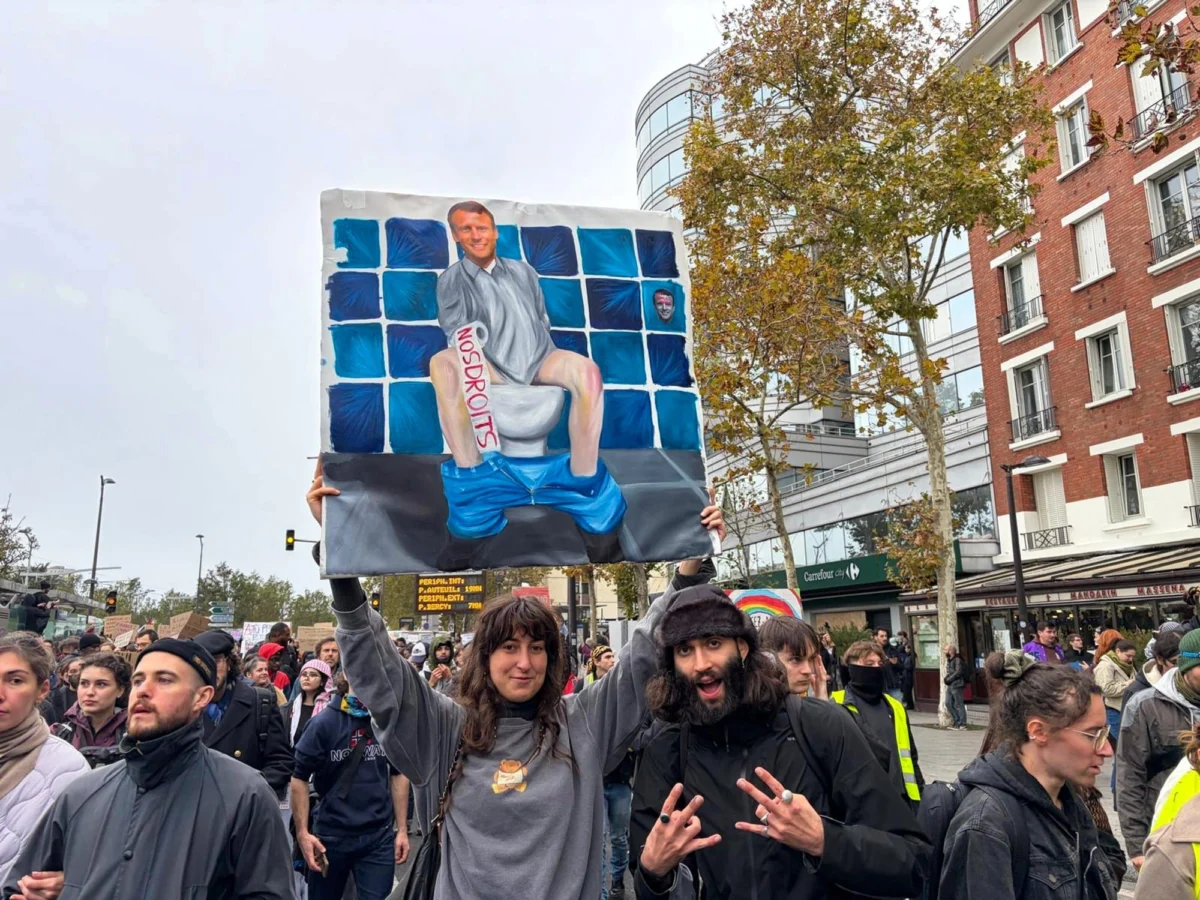
PARIS — On Saturday, October 24, 2026, the French capital witnessed yet another day of profound societal friction as tens of thousands of artists, cultural workers, and art students marched through the southern districts of Paris. Gathering at the Porte d’Italie, the demonstrators defied heavy government warnings, a towering security apparatus, and the closure of major cultural institutions.
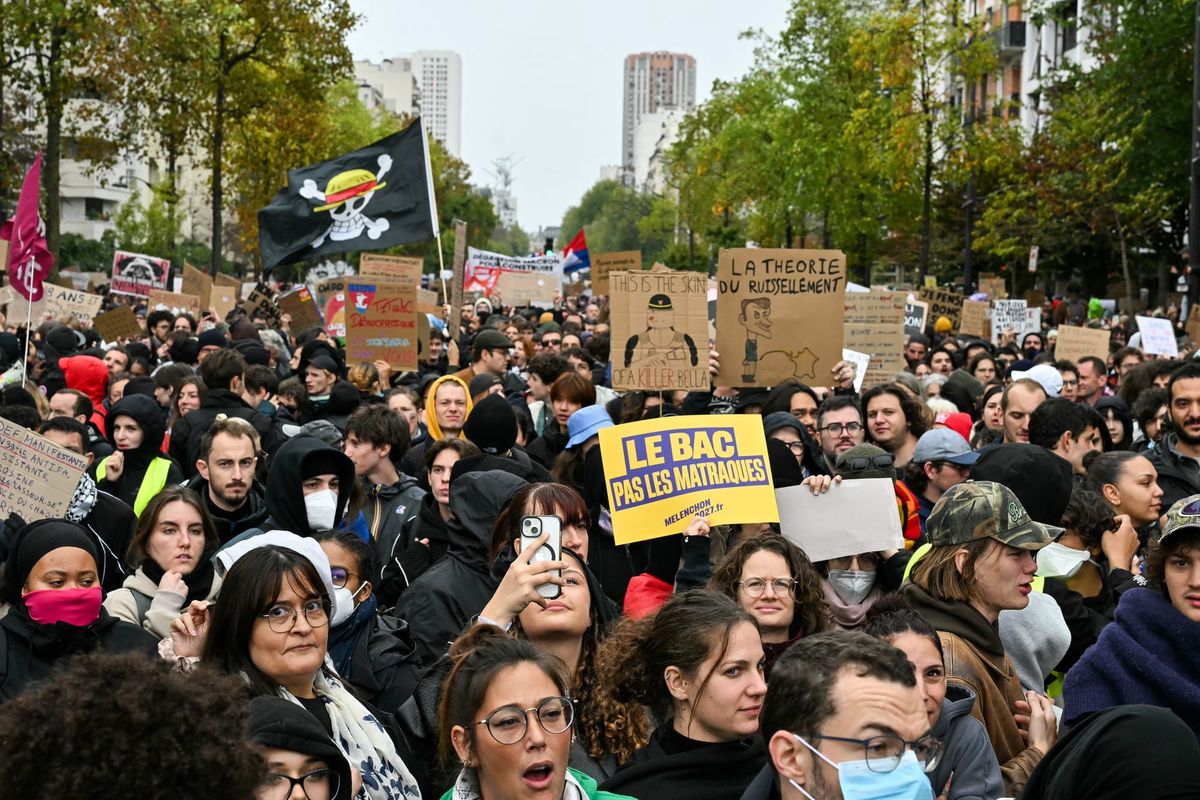
The mobilization—spearheaded by Cultures en Lutte, a powerful network of culture-sector coalitions, alongside the National Union of Visual Artists (SNAP-CGT)—formed part of a broader, wave-like national movement that has gripped France since mid-September. Standing shoulder-to-shoulder with labor confederations and student unions, the arts community transformed the streets of Paris into a canvas of dissent, demanding systemic economic reform, greater protections for creators, and an urgent overhaul of cultural funding policies.
The demonstrations unfolded against a surreal backdrop for the global art world. Just days prior, the city’s premier cultural events and landmarks—including Art Basel Paris and the Louvre—were forced into preemptive, early closures due to mounting civil unrest. What began as a localized socioeconomic grievance has metastasized into a nationwide showdown between the French state and a united front of workers, students, and creators.
Main Facts
The protests on October 24 represented one of the most volatile days of public demonstration in France in recent years. Key highlights of the mobilization include:
- Massive Turnout: Despite explicit government warnings and threats of heavy-handed policing, estimates place the number of demonstrators at over 250,000 in Paris alone, with upwards of 800,000 to one million protesters turning out nationwide.
- The Cultural Vanguard: Artists, actors, museum staff, and fine art students played a visible leadership role. Contingents from Cultures en Lutte and SNAP-CGT marched with banners addressing socioeconomic precarity, the unchecked commercialization of the arts, and the existential threat posed by generative artificial intelligence.
- Unprecedented Security Measures: In anticipation of widespread violence following clashes on October 17, the French Ministry of the Interior deployed a "massive" security grid. This included elite Sentinelle anti-terror military units, helicopters, armored personnel carriers, and water cannons.
- Mass Arrests: Law enforcement operations resulted in approximately 1,000 arrests in Paris by the end of the day, as clashes erupted between radical factions and riot police.
- Institutional Paralyzation: The ongoing civil unrest has directly impacted France’s tourism and cultural economy. Major fixtures like Art Basel Paris truncated their schedules by two days, while world-renowned museums such as the Louvre shuttered their doors to safeguard staff, visitors, and priceless antiquities.
Chronology of the Crisis
To understand the scale of the October 24 marches, it is necessary to trace the rapid escalation of the French labor and cultural crisis over the autumn of 2026.
Mid-September: Seeds of Discontent
The movement originated quietly in mid-September as a series of localized strikes and assemblies organized by regional theater workers, independent visual artists, and university art faculties. Frustrated by rising inflation, soaring studio rents, and diminishing state subsidies, groups like Cultures en Lutte began coordinating cross-sector meetings to draft a unified platform of demands.
Early October: Integration with Labor Confederations
By early October, the cultural sector’s grievances aligned with broader national discontent surrounding labor laws, pension reforms, and the high cost of living. Major labor confederations—traditionally focused on industrial and transit workers—welcomed cultural unions into the fold. Joint strategy sessions laid the groundwork for coordinated national days of action.
October 17: The Turning Point
A national day of protest on October 17 descended into severe property damage and clashes in several major French cities. While the vast majority of protesters marched peacefully, militant splinter groups engaged in running battles with police. The resulting destruction alarmed the French government, prompting an aggressive reassessment of public safety protocols and setting the stage for a high-stakes standoff the following week.
October 20–22: Preemptive Closures
As intelligence reports warned of renewed violence for the upcoming weekend, the economic and cultural fallout became immediate. Organizers of Art Basel Paris announced they would truncate their multi-day international fair by two days. Simultaneously, management at the Louvre, the Musée d’Orsay, and several other state-run Parisian museums announced preemptive closures for Saturday, October 24, citing an inability to guarantee staff safety or manage perimeter security.
October 24: The March at Porte d’Italie
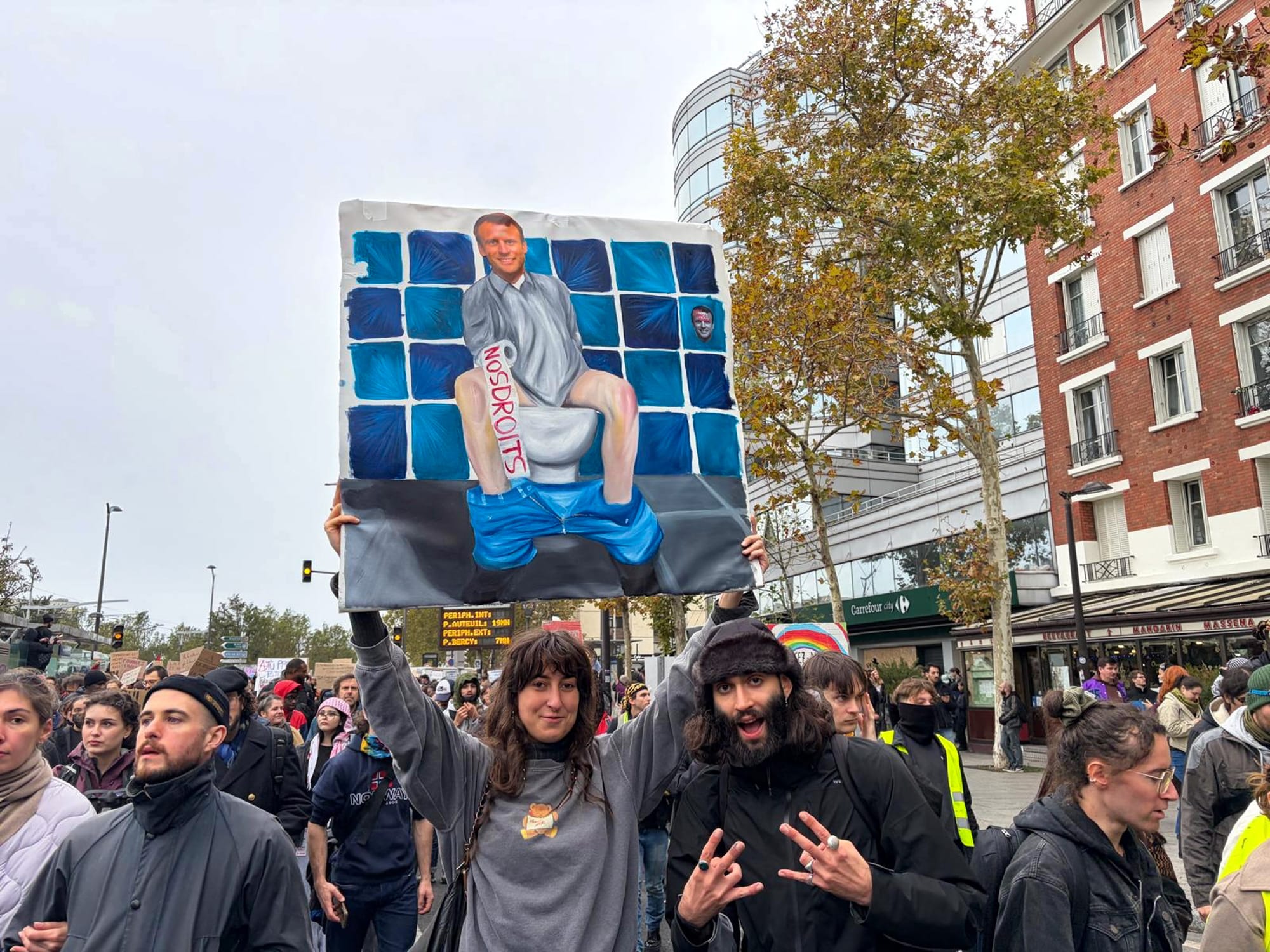
Despite state-imposed restrictions, route bans, and unprecedented security warnings, tens of thousands gathered at Porte d’Italie on Saturday morning. Marching under vibrant banners and carrying satirical effigies, the cultural bloc made its voice heard. As the afternoon progressed, peaceful demonstrations near the fringes of the march gave way to tear gas, projectiles, and mass detentions, bringing the total number of arrests for the day to roughly 1,000.
Supporting Data and Statistics
The gravity of the current situation is underscored by data compiled from labor groups, municipal authorities, and international news agencies:
- 800,000+: The combined minimum estimate of protesters across France on October 24, according to independent labor organizations such as Union Syndicale Solidaires.
- 250,000: The estimated turnout in Paris alone, despite government discouragement and transit disruptions.
- ~1,000: The staggering number of individuals detained by French law enforcement during Saturday’s operations, making it one of the highest single-day arrest totals in recent French protest history.
- 48 Hours: The duration by which Art Basel Paris cut its fair short, resulting in millions of euros in lost sales, canceled gallery exhibitions, and disrupted travel plans for international collectors and curators.
- Generational Grievances: Polling and sign-analysis from the art student contingents reveal that economic precarity is compounded by technological anxiety, with over 70% of surveyed student artwork placards highlighting the threat of uncompensated AI scraping and digital displacement.
Official Responses
The collision between mass civil disobedience and state authority has drawn sharp, polarized reactions from political leaders, cultural institutions, and labor representatives.

The Government Perspective
The administration of President Emmanuel Macron has adopted a zero-tolerance stance toward public disorder while attempting to acknowledge underlying economic anxieties. Interior Ministry officials defended the massive deployment of police, anti-terror soldiers, and heavy machinery, arguing that public safety and the protection of private and public property outweigh the right to assemble when protests risk turning violent.
In a public address following the events of October 17 and October 24, government spokespeople condemned the "unacceptable levels of violence and vandalism" perpetrated by radical fringe elements, asserting that rioters—not peaceful artists or union members—were responsible for the heavy-handed police response and subsequent mass arrests. Regarding the cultural sector specifically, government representatives maintained that state subsidies remain among the highest in Europe, though they acknowledged that structural reforms in how funds are distributed may be necessary.
The Culture Sector and Union Response
Coalitions like Cultures en Lutte and SNAP-CGT issued fiery rebukes of the state’s heavy security posture, accusing the government of attempting to muzzle legitimate democratic dissent under the guise of public security.
"When the state deploys armored vehicles, water cannons, and anti-terror troops against students, painters, actors, and museum workers, it reveals a profound fear of its own populace," stated a spokesperson for Cultures en Lutte. "We are not asking for charity; we are demanding the right to live with dignity in the country that prides itself on being the cradle of art and culture."
Union leaders emphasized that the closure of international art fairs and historic museums like the Louvre should serve as a wake-up call to political leaders. They argue that a society that starves its creative class while subsidizing corporate wealth is a society in terminal decline.
Broader Implications for the Art World and Society
The October 24 protests and their precursors carry profound, long-term implications that extend far beyond the immediate political crisis in France.
1. The Vulnerability of the Global Art Market
Paris has spent the post-Brexit years aggressively positioning itself as the undisputed capital of the European art market, successfully luring galleries, collectors, and international prestige away from London. However, the forced early closure of Art Basel Paris and the shuttering of major museums expose the fragility of this status. International collectors and investors rely heavily on political and civil stability; frequent, volatile disruptions threaten to drive high-net-worth capital and mega-galleries toward more predictable jurisdictions.
2. The Intersection of Labor Rights and Creative Labor
For decades, artists and cultural workers have struggled to unionize effectively due to the solitary, freelance nature of their work. The prominent role played by SNAP-CGT and Cultures en Lutte in this autumn’s uprisings signals a historic shift. Cultural labor is increasingly viewing itself not as an exceptional, elite class, but as an integral component of the broader working class. This solidarity could permanently reshape how creative professions negotiate fair pay, healthcare, and state protections.
3. Artificial Intelligence and Economic Precarity
A recurring theme among the student and artist placards on October 24 was the existential threat of generative artificial intelligence. As digital tools threaten to devalue visual art, design, writing, and performance, young creators are demanding legal frameworks that protect human labor from algorithmic displacement. The protests have thus elevated technological regulation from a niche tech-policy debate into a central pillar of labor agitation.
4. A Nation at a Crossroads
Ultimately, the events in Paris reflect a deeper identity crisis within modern France. As the Macron administration pushes forward with contested economic policies, the collision between the state and its cultural vanguard demonstrates that the soul of the nation is heavily contested. Whether the government chooses to heed the demands of the hundreds of thousands who marched on October 24—or instead doubles down on securitization—will determine the future of French democracy, civil liberties, and its legendary cultural heritage for years to come.
 Sagoh
 Muslim
 Dwi Wanna
