

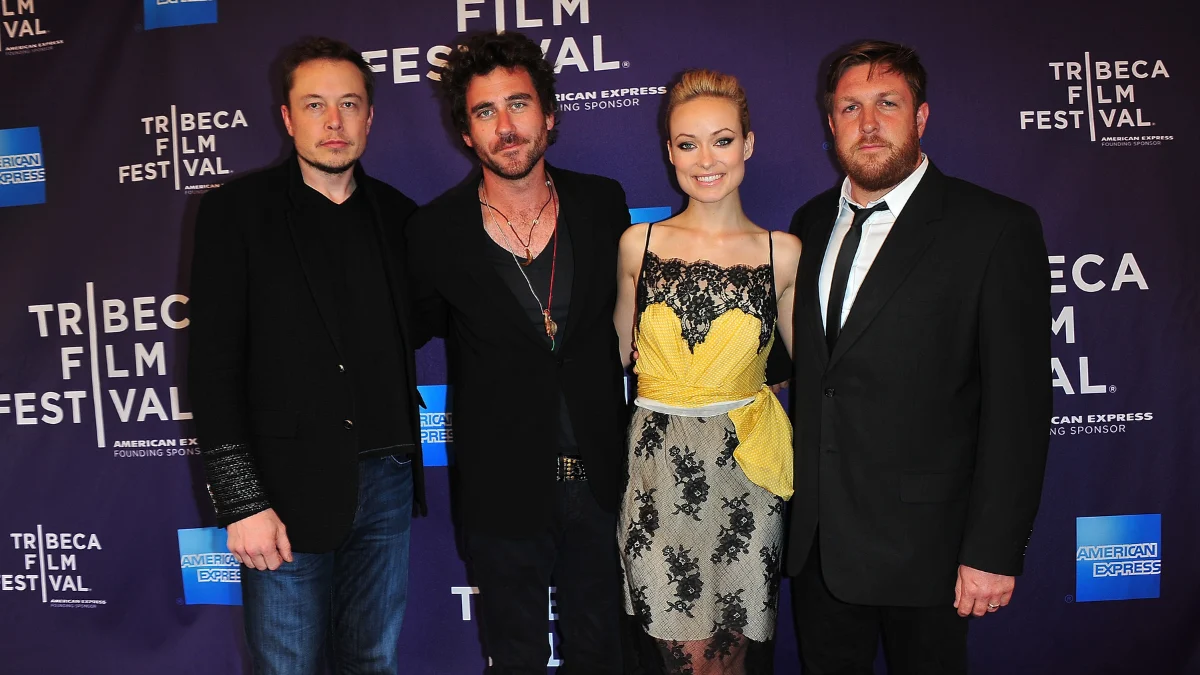
In a candid and wide-ranging conversation that has sparked significant discourse across social media and entertainment circles, director and actress Olivia Wilde recently articulated a profound shift in her perception of tech mogul Elon Musk. Once viewing the SpaceX founder as a visionary entrepreneur committed to global humanitarian efforts, Wilde now characterizes him as a divisive figure whose public transformation has left her feeling deeply disillusioned.
Speaking on The Louis Theroux Podcast, Wilde laid bare the trajectory of her relationship with Musk—a connection that began in the corridors of philanthropy and evolved into a cautionary tale about the intersection of tech, culture, and public influence.
The Genesis of an Acquaintance: A Philanthropic Origin Story
To understand the depth of Wilde’s current resentment, one must examine the context of their initial meeting. Years ago, long before Musk became the dominant, often polarizing, force in global discourse that he is today, their paths crossed through the world of international aid.
Wilde, who has long been active in humanitarian efforts, was involved with a nonprofit organization working in Haiti to construct hospitals and schools following the country’s devastating natural disasters. During this period, Musk—still primarily known for his early successes in engineering and space exploration—expressed interest in supporting the charity. According to reports, Musk provided a financial contribution to the initiative, a gesture that Wilde at the time interpreted as evidence of a genuine desire to leverage his wealth for the betterment of society.
Wilde recalls visiting the SpaceX headquarters in Los Angeles during this era. At that time, her impression of Musk was that of a brilliant, focused, and forward-thinking innovator. She viewed him as a man driven by a desire to solve complex problems—a "smart businessman" who possessed the capacity to help people on a global scale. There was no indication, she noted, of the controversial public persona that would eventually emerge.
The Turning Point: The Emergence of a "Creature"
The narrative arc Wilde describes is one of profound alienation. In her interview with Theroux, she confessed to feeling "confused" by the trajectory Musk has taken over the last several years. "I really resent him now," she stated firmly. "I really deeply resent him."
When pressed on why her admiration curdled into resentment, Wilde pointed to the stark contrast between the man she met in the context of charity and the public figure who now commands the platform formerly known as Twitter (now X). She went so far as to describe his current iteration as "this creature," suggesting that the person he has become is fundamentally different from the one she encountered in the past.
The Catalyst of Public Discourse
The shift in Wilde’s perspective is anchored in the specific rhetoric Musk has championed during his tenure as a global public figure. For Wilde, the pivot occurred when Musk began using his massive digital megaphone to promote ideas that she views as inherently misogynistic and damaging to the fabric of modern society.
Wilde specifically identified Musk’s frequent commentary on birth rates as a primary source of her concern. Musk has, on numerous occasions, argued that declining global fertility rates pose an existential threat to human civilization. While some economists and demographers view this as a legitimate, albeit complex, societal issue, Wilde argues that the framing of this topic—often tied to regressive views on gender roles—has fostered a climate of division and hostility toward women.
A Broader Context: Intellectualism and Misogyny
The conversation on The Louis Theroux Podcast did not exist in a vacuum. It touched upon a recurring theme in Wilde’s recent career: her public opposition to figures she identifies as peddlers of "pseudo-intellectual" misogyny.
Theroux challenged Wilde on her previous comments regarding psychologist and author Jordan Peterson. In 2022, following the release of her film Don’t Worry Darling—a movie that served as a critique of patriarchal structures—Wilde publicly dismissed Peterson as a "pseudo-intellectual." During her recent interview, she walked back the harshness of that label, acknowledging that Peterson "obviously thinks about things deeply." However, she was quick to clarify that her concession did not equate to an endorsement of his views.
By connecting her assessment of Musk to her earlier critiques of figures like Peterson, Wilde is signaling a broader ideological battle. She perceives a modern "intellectual" movement, often centered in Silicon Valley and amplified by social media algorithms, that she believes is actively working to dismantle the progress made toward gender equality. To Wilde, Musk represents the apex of this trend: a man with unparalleled influence who uses that power to validate and mainstream ideas that she finds deeply regressive.
The Societal Implications of Public Influence
The rift between Wilde and Musk raises critical questions about the responsibility of high-profile figures in an era of extreme digital connectivity. When an individual like Musk, who commands the attention of millions and controls a major global communication platform, shifts his ideological focus, the ripple effects are significant.
The Polarization of the Tech Elite
Wilde’s disillusionment reflects a growing trend among Hollywood creatives and public figures who once saw the "tech bro" archetype as a force for good. In the early 2010s, Silicon Valley was frequently lauded as a progressive engine of social change. Today, that relationship is increasingly fractured. As tech moguls have moved into the realms of political activism and cultural commentary, the "smart businessman" archetype has been replaced by the "ideological warrior," leading to a widening chasm between the entertainment industry and the tech sector.
The Role of Corporate Social Responsibility
Critics of Musk often point to the dichotomy between his early philanthropic efforts—such as the donation to Haiti mentioned by Wilde—and his current public statements. The implication is that financial support for charity does not grant a "pass" for the promotion of divisive or harmful rhetoric. Wilde’s account serves as a case study in how public figures are increasingly expected to align their personal ideologies with their public actions.
Analyzing the Impact of the Controversy
As of this writing, there has been no official response from Elon Musk regarding Olivia Wilde’s recent comments. Musk, known for his penchant for engaging in digital debates, has remained characteristically silent on this specific critique, perhaps viewing it as outside the scope of his current priorities.
However, the implications of this exchange are clear. For supporters of Musk, his focus on demographic decline and his skepticism of "woke" cultural narratives are seen as courageous stances against groupthink. For critics, including Wilde, these same stances are evidence of a dangerous slide into toxic masculinity and a betrayal of the humanitarian ideals he once seemed to represent.
Conclusion: A Reflective Moment for Public Discourse
Olivia Wilde’s decision to speak out on The Louis Theroux Podcast serves as more than just a personal grievance; it acts as a mirror for a divided public. The transformation of Elon Musk from an enigmatic innovator into a central figure of the culture wars has left many of his former admirers grappling with the same questions as Wilde: Can we separate the creator from the creator’s politics? Is it possible to respect the technological advancements of an individual while simultaneously condemning their social ideology?
Wilde’s answer is a resounding "no." Her deep resentment is not a momentary reaction to a single headline, but a cumulative response to a long-term shift in the public landscape. Whether one agrees with her assessment or views Musk’s current trajectory as a necessary disruption, the conversation highlights a fundamental truth about our current era: in the age of global platforms, personal ideology has become as significant as professional achievement. As the lines between tech, culture, and politics continue to blur, the public’s relationship with its most influential figures will only grow more complex, more personal, and perhaps, more contentious.
 Neng Nana
 Azzam Bilal Chamdy
 Nana
Nana
