

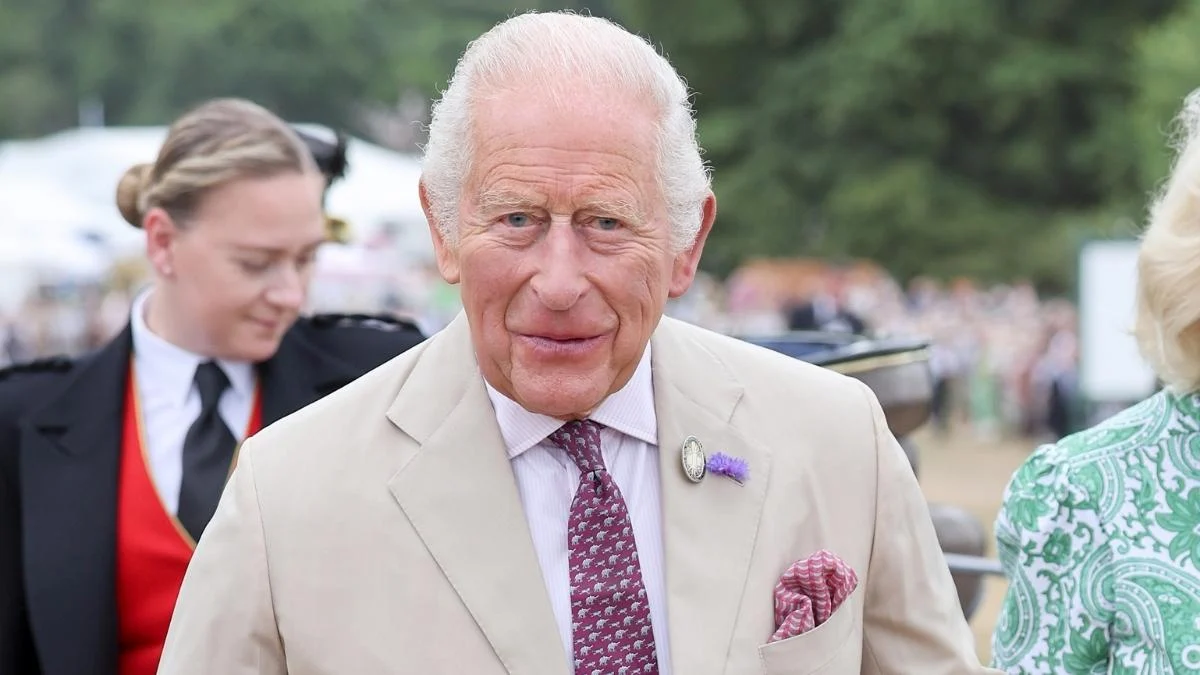
Main Facts: A Royal Interaction at Sandringham
King Charles III, currently navigating the complexities of his reign and personal health, recently offered a glimpse into his resilient character during a public appearance at the Sandringham Flower Show. Accompanied by Queen Camilla, the 77-year-old monarch spent the day engaging with members of the public, touring elaborate floral installations, and presiding over the presentation of awards.
The highlight of the outing occurred when a fellow 77-year-old attendee complimented the King on his youthful appearance. The monarch’s response—a dry, self-deprecating, six-word quip: "It gets much harder, doesn’t it?"—has since resonated with the public and media alike. This brief exchange, characterized by the King’s trademark British humor, served to humanize a figurehead who often operates under the rigid constraints of royal protocol.
Chronology of a Busy Summer
The appearance at the Sandringham Flower Show is part of a broader, carefully curated schedule that the King has maintained throughout the summer of 2026.
- Mid-July 2026: The King and Queen maintain a high profile, balancing administrative duties with public-facing events designed to foster community spirit.
- Early July 2026: During a visit to the Isle of Man, the King met with 104-year-old veteran James Fenton. Their interaction—where the King remarked, "It’s bad enough at my age"—set a precedent for his current approach to public discourse regarding his own aging process.
- February 2024: The pivotal moment in the King’s recent history, marked by the official announcement from Buckingham Palace regarding his cancer diagnosis.
- Late 2025: A significant milestone in his recovery, where the King confirmed on Channel 4’s Stand Up To Cancer campaign that his medical treatment schedule could be adjusted due to positive responses to his care.
Supporting Data: The King’s Health and Resilience
The lighthearted nature of the King’s recent interactions stands in sharp contrast to the gravity of his ongoing health challenges. Since the announcement of his diagnosis in February 2024, the King has remained remarkably transparent about his commitment to medical guidance while maintaining a degree of privacy regarding specific clinical details.
His statement regarding his treatment schedule—attributed to "early diagnosis, effective intervention, and adherence to doctors’ orders"—has become a rallying cry for awareness. By choosing to use his personal experience as a platform to encourage others to prioritize their health, King Charles has adopted a role as a public advocate for cancer screening and proactive medical care.
Data from the Royal Household suggests that the King’s recent schedule, while rigorous, is intentionally balanced. The inclusion of community-focused events like the Sandringham Flower Show allows the King to fulfill his constitutional duties while engaging in activities that are, by his own admission, therapeutic.
Official Responses and Public Sentiment
The reaction to the King’s "six-word reply" has been overwhelmingly positive. Royal commentators suggest that such moments are essential for the modern monarchy. By acknowledging the universal challenges of aging, the King bridges the gap between his position of privilege and the lived experience of the average citizen.
When a well-wisher at Sandringham remarked on his resemblance to his late mother, Queen Elizabeth II, the King’s quiet laugh and graceful reaction highlighted a shift in the monarchy’s tone. He is increasingly seen not just as a symbol of tradition, but as an individual navigating the same human milestones—aging, health struggles, and the pressure of public perception—as his subjects.
Implications for the Monarchy
The King’s recent behavior carries significant implications for the future of the institution. As Charles enters his late 70s, the public is observing a monarch who is comfortable with his own vulnerability.
The Evolution of the Royal Persona
For decades, the British monarchy was defined by a stoic, "never complain, never explain" ethos. King Charles III is actively rewriting this script. By using humor to discuss his age and health, he is creating a more relatable brand of kingship. This strategy is essential for maintaining the relevance of the monarchy in a digital age where the public demands authenticity.
Managing Expectations
The transparency regarding his health—while limited—has been masterfully managed. By signaling that his treatment is effective and that his workload is being managed, he has successfully mitigated speculation regarding his ability to reign. The "Sandringham moment" proves that even in the face of serious illness, the King remains sharp, engaged, and capable of connecting with his people.
Community Engagement as a Stabilizing Force
Events like the Sandringham Flower Show serve a dual purpose. For the public, it provides a sense of continuity and tradition. For the King, it provides a venue to perform the "soft power" of the monarchy—bringing people together, celebrating community achievements, and offering a moment of joy. The upcycled toilet floral display, which drew genuine laughter from the King and Queen, is a testament to his willingness to engage in the whimsical, further endearing him to a diverse audience.
Contextualizing the "Harder" Reality
While the King’s joke about the difficulties of being 77 was delivered with a smile, it touches upon a profound reality. Serving as the Head of State is an unrelenting task. Doing so while undergoing cancer treatment is an unprecedented challenge in modern royal history.
The King’s ability to "keep calm and carry on" is not merely a trope; it is his survival mechanism. By framing his age as a challenge that everyone shares, he minimizes the "otherness" of the monarchy. He is no longer just the King on a throne; he is the man in the beige suit and maroon tie, leaning on a cane, who knows exactly how difficult it can be to get through the day.
Conclusion: A Reign of Relatability
As the King continues to balance his royal duties with his recovery, his sense of humor remains one of his most valuable assets. Whether he is joking with a 104-year-old veteran or chatting with a peer at a flower show, Charles III is proving that a monarch’s strength does not come solely from his crown, but from his capacity for empathy and his ability to laugh at the universal human condition.
The Sandringham incident, while seemingly minor, serves as a significant marker in the King’s journey. It reflects a man who is at peace with his age, transparent about his health, and deeply committed to his role as a public servant. As he moves forward, this blend of resilience and wit will likely define the character of his reign, ensuring that he remains a figure of stability and inspiration for a nation that continues to look to him for guidance.
The monarch has shown that while the burdens of age and illness may be heavy, they are infinitely easier to bear when met with a quick smile and a dry sense of humor. As he often reminds us, it is a hard road, but he is walking it with a grace that has truly captured the public heart.
 Neng Nana
 Azzam Bilal Chamdy
 Nana
Nana
