

For nearly two decades, Katy Perry has dominated the global music charts, evolving from a rising star with the breakout anthem "I Kissed a Girl" into a multi-hyphenate mogul and cultural fixture. Yet, as her professional life has scaled new heights—most recently marked by the June 2026 premiere of her concert documentary, The Lifetimes Tour – Live from Paris—her personal life has undergone a significant transformation. Seeking a quieter, more secluded environment to raise their daughter, Perry and her partner, Orlando Bloom, made the decision nearly six years ago to trade the high-octane lifestyle of Los Angeles for the serene, ocean-view tranquility of Montecito.
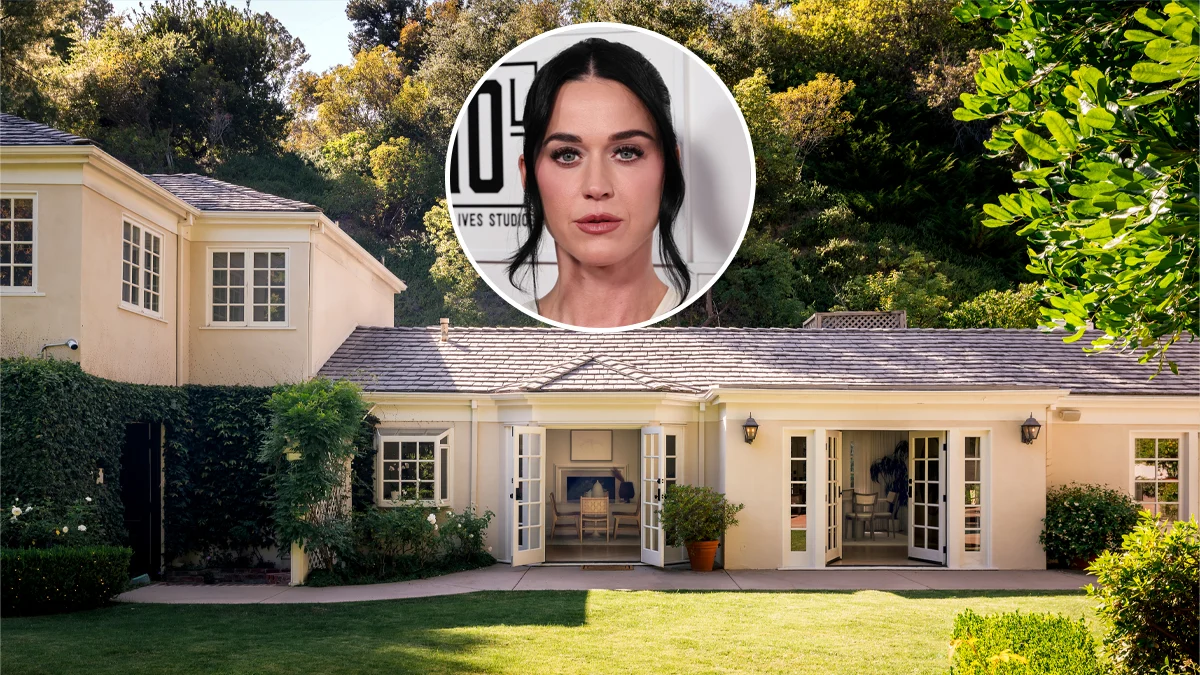
This relocation necessitated a strategic shedding of her extensive Los Angeles property portfolio. Among the assets left behind are two distinct residences located within the exclusive, guard-gated Hidden Valley enclave in the Beverly Hills Post Office area. While the primary residence was successfully sold in 2022 for $18 million, the secondary property—a charming, smaller home that previously served as a guest residence—is once again making headlines. Currently listed for $8.5 million, the property is represented by Josh Flagg of Compass, inviting a new owner to claim a slice of pop-culture history.

The Chronology of a Portfolio Transition
The journey of the Lime Orchard Road property is a testament to the fluctuating nature of the Southern California luxury real estate market. Perry originally acquired the guest house in 2018, viewing it as a vital extension of her nearby primary estate. However, as her lifestyle shifted toward the Central Coast, the necessity for a satellite residence in the hills diminished.
In 2021, Perry successfully offloaded the guest house for $7.475 million—a modest return, netting just $25,000 above her original purchase price. Since that sale, the property has undergone further refinements, leading to its current re-entry into the market at an $8.5 million price point. This timeline reflects not just the movement of a single celebrity, but the broader trend of A-list stars recalibrating their living arrangements to prioritize privacy and environmental wellness over the central hub of industry networking.

Architectural Character and Design Sensibilities
Spanning nearly an acre at the end of a private cul-de-sac, the residence is a masterclass in understated elegance. Constructed in 1960 and subsequently updated by successive owners, the two-story stucco and shake-roof home offers approximately 4,400 square feet of refined living space. The interior aesthetic is defined by a commitment to neutral tones, providing a serene canvas that highlights the home’s structural assets, such as wide-plank oak flooring and custom millwork.
The heart of the home is undoubtedly the living room, which serves as a nexus between indoor comfort and outdoor leisure. Anchored by a grand carved stone fireplace, the room features expansive French doors that dissolve the boundary between the interior and the lush, private backyard. The exterior space is an entertainer’s dream, featuring manicured lawns, alfresco dining terraces, a professional-grade barbecue area, and a classic oval swimming pool framed by mature specimen trees that offer both shade and seclusion.

Internally, the flow is intuitive and inviting. The dining area sits in harmonious proximity to a marble-clad kitchen, which acts as the home’s culinary epicenter. Equipped with high-end stainless-steel appliances, an octagonal island for social interaction, and a cozy, fireside breakfast nook, the kitchen balances utility with warmth. Furthermore, a light-filled den—complete with an integrated wet bar—offers a more intimate setting for relaxation, demonstrating a design philosophy that values both grand entertaining and quiet, personal downtime.
The upper-level wing is entirely dedicated to the primary suite, a sprawling sanctuary designed for privacy. It features a generous sitting area, private balcony access for morning coffee, and dual walk-in closets. The en-suite bathroom is a spa-like retreat, boasting dual marble vanities, a dedicated makeup station, and a deep, freestanding soaking tub positioned perfectly beneath a window to maximize natural light.

Supporting Data: A Look at the Portfolio
Katy Perry’s real estate movements are not merely personal; they are financial maneuvers indicative of a star who manages her assets with as much precision as her world tours. Having sold the rights to her music catalog for a staggering $225 million, and with an estimated net worth of $360 million according to Forbes, Perry’s portfolio strategy has been one of consolidation and long-term value preservation.
While she has parted ways with the Hidden Valley properties, she retains a footprint in the urban core, including a junior penthouse at the iconic Sierra Towers in West Hollywood. This serves as a vital touchpoint for her professional commitments, while her primary residence in Montecito provides the necessary distance from the spotlight. Her recent sightings off the coast of Santa Barbara underscore a intentional pivot toward a life that balances the intensity of global stardom with the grounding influence of the California coastline.

Official Perspectives and Market Implications
The re-listing of the Lime Orchard property by Josh Flagg highlights the enduring appeal of the Beverly Hills Post Office neighborhood. Despite shifting trends in luxury living—where buyers are increasingly looking toward desert enclaves or coastal communities—the prestige of an established, guard-gated community in the 90210 zip code remains a powerful draw.
Market analysts suggest that the $8.5 million listing price for the guest house reflects the property’s pedigree and the recent renovations that have modernized the 1960s structure. By positioning the home as a turnkey luxury asset, the current owners are capitalizing on the scarcity of high-quality, mid-sized homes in the area that offer the perfect balance of security and comfort.

Implications for the Celebrity Real Estate Market
The shift from Beverly Hills to Montecito, as exemplified by Perry’s transition, is a significant trend in the celebrity real estate landscape. For decades, the "Beverly Hills bubble" was considered the mandatory destination for the Hollywood elite. However, the rise of remote work, the desire for larger plots of land, and the increasing value of anonymity have pushed celebrities further afield.
Montecito, with its history of attracting high-net-worth individuals seeking privacy, has become the new gold standard for those looking to balance a high-profile career with a low-profile existence. Perry’s departure from her Hidden Valley homes is not an abandonment of the area, but a strategic reallocation of resources. It signals a maturation in the way artists manage their lifestyles—prioritizing the longevity of their personal well-being over the traditional, performative nature of urban luxury living.

As the industry continues to evolve, the properties left in the wake of such moves—like the Lime Orchard residence—become coveted commodities. They offer the next generation of buyers the opportunity to step into a home that has already been vetted and refined by global icons. Whether the new owner is a fan of the singer’s discography or simply a seeker of refined design, the property stands as a reminder that even for the world’s biggest stars, home is ultimately about finding the right environment in which to create, rest, and grow.
For prospective buyers or those simply interested in the intersection of celebrity, design, and market trends, the listing of this Beverly Hills gem provides a rare look at how the modern icon lives, and how they gracefully exit the stage when it is time for a new act.
 Evan Lee Salim
 Asep Darmawan
 Laily UPN
