

The landscape of drag in popular media has undergone a seismic transformation over the last two decades. What was once a localized, often underground performance art found in the dimly lit clubs of San Francisco, New York, and Chicago has evolved into a multi-billion-dollar global franchise. This week, the theatrical release of Stop! That! Train!—a production starring RuPaul’s Drag Race icons Jujubee and Ginger Minj—marks a new milestone in the commercialization of drag. However, to understand the soul of this movement, one must look back to the scrappy, DIY foundations of queer cinema.
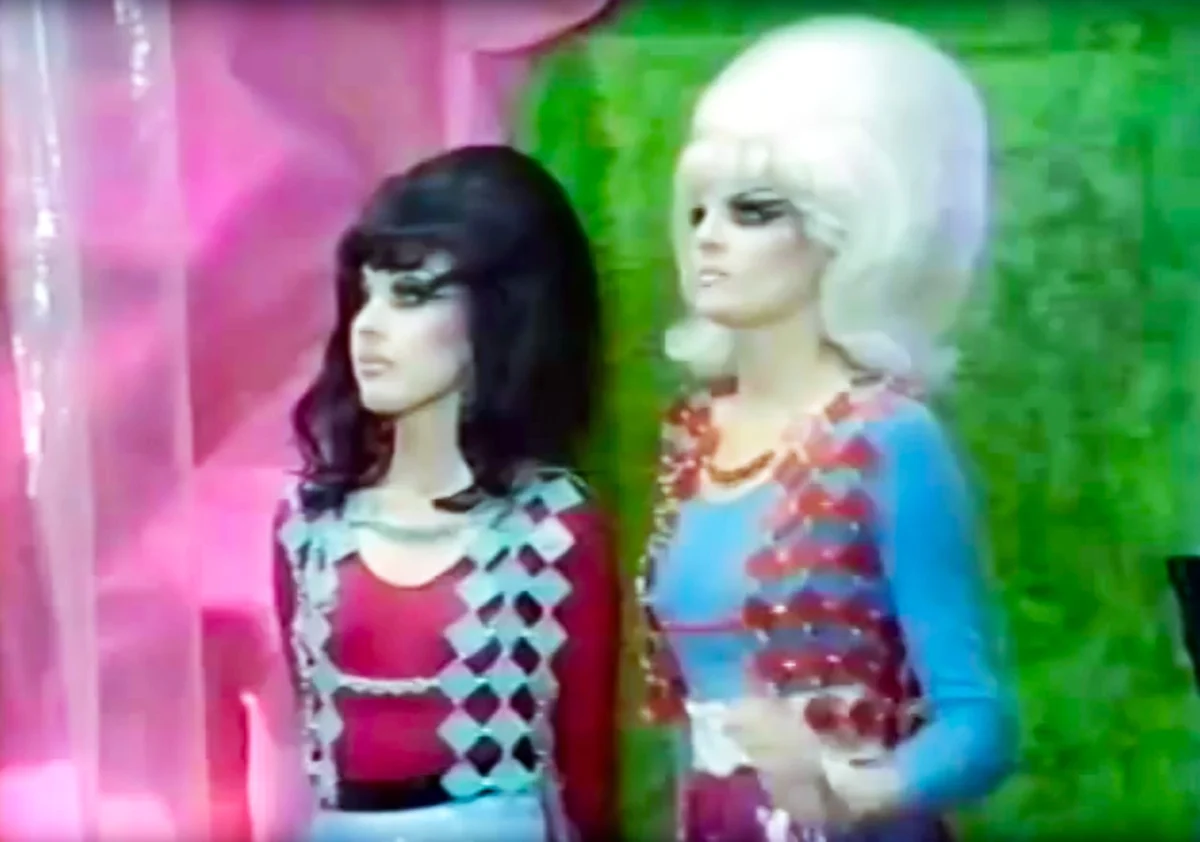
At the heart of this history lies Vegas in Space (1991), a cult classic that serves as both a time capsule of San Francisco’s 1980s drag scene and a testament to the artistic resilience of the LGBTQ+ community during the height of the AIDS crisis. Distributed by the legendary Troma Entertainment, Vegas in Space is a far cry from the polished, studio-backed comedies of today, offering a raw, imaginative, and fiercely sincere vision of a "gender-bending" future.
Main Facts: A Universe of Camp and Creativity
Vegas in Space is a science-fiction comedy set in a distant future where gender is fluid, and glamour is the primary currency. The film follows Captain Tracy (played by the late Doris Fish) and his lieutenants, Mike and Steve, who are dispatched by a benevolent Earth Empress to the resort planet of Clitoris. Because Clitoris is an all-female planet where men are strictly forbidden, the three space explorers must take "sex reversal pills" to transform into women and go undercover.

Their mission is to investigate the disappearance of the "Girlinia," a priceless gem stolen by the Empress’s supposedly villainous sister. What follows is a narrative that uses the framework of 1950s "Buck Rogers" serials to explore themes of identity, performance, and sisterhood.
While modern drag films often rely on high-production values and celebrity cameos, Vegas in Space was built on a foundation of sheer willpower. Directed by Phillip R. Ford and written by Doris Fish, the film took eight years to fund and 18 months to shoot. Despite its limited budget, the production created an immersive, albeit "shaggy," alien world using miniatures, creative light projections, and inexpensive drapes. It remains one of the few films from the era to feature an all-drag cast, positioning professional performers not as caricatures, but as the protagonists of their own cosmic epic.
Chronology: The Long Road to Planet Clitoris
The journey of Vegas in Space from a conceptual stage to a cult phenomenon spans nearly a decade of queer history:

- 1983–1985: Doris Fish and Phillip R. Ford begin developing the concept. Fish, already a titan of the San Francisco drag scene, envisions a film that captures the high-camp aesthetic of her stage shows.
- 1985–1990: The production faces significant financial hurdles. The team spends years raising small amounts of capital through local fundraisers and private donations. Filming occurs sporadically, with the majority of the "space" scenes shot inside a single San Francisco apartment transformed into various sets.
- 1991: The film is finally completed and picked up for distribution by Troma Entertainment, a studio known for championing fringe, low-budget, and transgressive cinema.
- August 1991: Doris Fish passes away from AIDS-related complications just months before the film’s wider premiere, leaving Vegas in Space as her definitive artistic legacy.
- 2009: RuPaul’s Drag Race premieres on Logo TV, beginning the slow migration of drag from the fringe to the mainstream.
- 2026: The release of Stop! That! Train! signals the complete integration of drag into the Hollywood studio system, prompting critics to revisit the "scrappy" roots of the genre.
Supporting Data: The Architecture of an Independent Gem
The production of Vegas in Space is a masterclass in independent filmmaking. Because the creators could not afford soundstages or elaborate CGI, they relied on the traditional "theatre of the mind" and practical effects.
Technical Ingenuity
The "Beaver System," the galaxy in which the film takes place, was rendered through meticulously crafted miniatures. Doris Fish served as the lead designer, creating not only the sets and costumes but also the hair and makeup for the entire cast. The aesthetic was a deliberate nod to mid-century sci-fi like Forbidden Planet, but infused with the "trash-glam" sensibility of the 1980s queer underground.
Budget and Constraints
Estimates suggest the film was made for a fraction of a standard independent feature’s budget. The 18-month shooting schedule was necessitated by the need to work around the cast’s night-job schedules in clubs and the constant need to secure more film stock. This "drag on a dime" approach forced a level of creativity that polished studio films often lack—such as using drapes and projections to simulate a high-tech resort on the Planet Clitoris.

Cultural Context
During the 1980s, drag was not the career path it is today. It was a community-building tool and a form of political protest. Vegas in Space emerged from a San Francisco that was being devastated by the HIV/AIDS epidemic. For many in the cast, the film was an act of defiance—a way to project themselves into a future where they weren’t just surviving, but ruling planets.
Official Responses and Creative Intent
While contemporary reviews from 1991 were mixed—some mainstream critics struggled with the film’s campiness and low-budget technicals—the queer community and cult film historians have since hailed it as a masterpiece of "sincere irony."
Director Phillip R. Ford has frequently spoken about the film’s intent to honor the "professionalism" of drag. In various retrospectives, Ford emphasized that Vegas in Space was never meant to be a parody of drag, but rather a drag-infused parody of traditional Hollywood tropes.

Troma Entertainment’s Lloyd Kaufman, who distributed the film, praised it for its "unapologetic weirdness." Kaufman noted that the film fit perfectly into the Troma ethos because it refused to cater to "polite" society, instead choosing to celebrate the fringe with a level of joy that was infectious.
Modern drag performers often cite the film as a precursor to the "acting challenges" seen on RuPaul’s Drag Race. The DNA of Doris Fish’s Captain Tracy can be seen in the heightened, pun-filled performances of today’s "acting queens," though many critics argue that the modern versions lack the "artistic grit" of the 1991 original.
Implications: Sincerity in the Age of the Brand
The contrast between Vegas in Space and modern releases like Stop! That! Train! highlights a significant shift in queer media. Modern drag is often a "brand"—a polished, curated version of queer identity designed for mass consumption. Vegas in Space, by contrast, represents "performance" in its purest, most unpolished form.

The Paradox of Mainstream Acceptance
As drag performers become major media personalities with brand deals and red-carpet appearances, there is a risk of losing the transgressive spirit that defined the art form. Vegas in Space reminds audiences that drag’s power often comes from its ability to subvert expectations with limited resources. The "Planet Clitoris" of 1991 was a space of total freedom because it wasn’t trying to sell anything to a heterosexual audience; it was a world built by and for the community.
The Las Vegas Connection: Performance and Reality
The film’s title and themes draw a direct parallel between the art of drag and the "crusty fantasyland" of the real Las Vegas, Nevada. Both are built on a diehard commitment to performance. As noted in recent cultural reflections, the real Las Vegas is a place where Elvis impersonators, showgirls, and drag revues coexist in a space that is "aggressively straight and aggressively gay at the same time."
Vegas in Space taps into this universal love of the "spectacle." It suggests that the desire to play a role—to put on a wig and a sequined gown and pretend to be an intergalactic spy—is a fundamental human impulse.

A Testament to Legacy
Ultimately, the enduring popularity of Vegas in Space serves as a memorial to Doris Fish. In an era where Pride Month is often dominated by corporate sponsorships, the film stands as a reminder of a truly great artist’s legacy. It proves that drag had profound cultural value long before it was "monetized" by global streaming platforms.
As the credits roll on this 1991 classic, the message remains clear: Drag is not merely about the "look" or the "brand." It is about the refusal to let a "universe of mediocrity" define the role one plays. Whether in the "Beaver System" or on the Las Vegas Strip, the commitment to one’s own glamour is a radical act of self-preservation.
Vegas in Space continues to stream on various platforms, offering a new generation of fans a chance to visit Planet Clitoris and witness the "oasis of glamour" that Doris Fish and Phillip R. Ford built out of drapes, miniatures, and pure, unadulterated heart.
 Jia Lissa
 Lina Irawan
 Iffa Jayyana
