

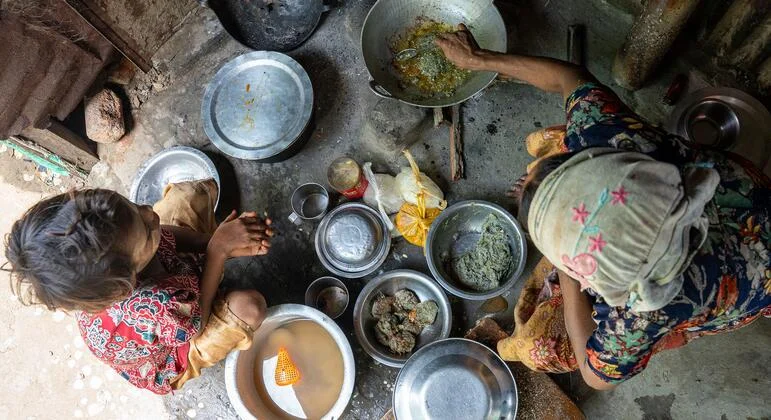
In a significant diplomatic and humanitarian move, the United States State Department has announced a sweeping financial commitment exceeding $1 billion, directed toward the World Food Programme (WFP) and the United Nations Children’s Fund (UNICEF). This funding, comprised of over $800 million for the WFP and more than $218 million for UNICEF, arrives at a juncture when global humanitarian systems are stretched to their breaking point by the compounding pressures of conflict, climate change, and economic instability.
Main Facts: A Strategic Injection of Capital
The announcement marks a substantial bolstering of international humanitarian architecture. The U.S. contribution is designed to address two distinct yet overlapping crises: the immediate, widespread threat of famine and the long-term, systemic vulnerability of children in conflict zones and disaster-prone regions.
By channeling $800 million into the WFP, the U.S. aims to stabilize food security for more than 38 million people across at least 37 countries. Simultaneously, the $218 million partnership with UNICEF represents one of the largest humanitarian initiatives focused exclusively on child survival, aiming to treat nearly one million children suffering from severe wasting—the most lethal form of malnutrition. This latest commitment brings the total U.S. pledges to UN-led humanitarian operations to nearly $4 billion in recent months, underscoring Washington’s role as the primary financial pillar of the current global aid framework.
Chronology of Escalating Need
The path to this multi-billion-dollar commitment is rooted in a series of global developments that have systematically degraded food security since the start of the decade.
- 2020–2021: The COVID-19 pandemic disrupted global supply chains, causing the first major spike in food insecurity in a generation.
- 2022: The outbreak of war in Ukraine—a global "breadbasket"—sent shockwaves through commodity markets, driving up the cost of fertilizer and grain, which disproportionately affected import-dependent nations in Africa and the Middle East.
- 2023–2024: Persistent, climate-induced weather events, including prolonged droughts in the Horn of Africa and devastating floods in parts of Asia, rendered subsistence farming impossible for millions.
- Recent Months: The convergence of these factors, compounded by localized conflicts in places like Sudan, Gaza, and Haiti, led to the current state of "record-level hunger," prompting the U.S. government to authorize these latest emergency tranches.
Supporting Data: The Scale of the Crisis
The data underpinning these humanitarian interventions paints a sobering picture of current global realities. The WFP’s mandate for this funding is not merely to distribute rations but to execute data-driven, logistics-heavy operations. By utilizing pre-positioned food supplies, the agency plans to mitigate the volatility of local markets in crisis-affected nations.
For UNICEF, the metrics are even more targeted. Through this 12-month partnership, the organization intends to:
- Screen 4.4 million children: Using community-based health workers to identify early signs of malnutrition.
- Treat 950,000 children: Providing ready-to-use therapeutic food (RUTF) to those suffering from severe wasting, a condition that, if left untreated, carries a high mortality risk.
- Strengthen Supply Chains: Ensuring that life-saving nutritional supplies can reach the most "difficult operating environments," where infrastructure has been decimated by war or disaster.
Official Responses and Strategic Vision
The leadership of both UN agencies has lauded the contribution, framing it as a "lifeline" that changes the calculus for millions of families on the brink of survival.
The WFP Perspective
Carl Skau, Acting Executive Director of the WFP, emphasized that the funding is not just about calories, but about stability. "It is a lifeline to reach people on the brink of famine, provide nutritional support to mothers and children, and position food to prevent millions from slipping further into extreme hunger," Skau stated. He highlighted that the funds would be immediately deployed to expand relief in Lebanon, scale up cash assistance for displaced families in Haiti, and reinforce logistics in the Democratic Republic of the Congo (DRC) to combat the multifaceted challenges presented by Ebola outbreaks and civil instability.
The UNICEF Commitment
Catherine Russell, Executive Director of UNICEF, focused on the sustainability of the partnership. "This investment will help us reach children faster with life-saving assistance, strengthen local systems and partnerships, and expand access to critical nutrition services for children at greatest risk," she remarked. Russell highlighted that the partnership is intentionally designed to be more than a stopgap; it is intended to bolster local health systems so that they are better equipped to handle future shocks.
Implications for the International Order
The U.S. contribution carries profound implications for the future of international humanitarian efforts.
1. The Burden of Bilateral Funding
The WFP has issued a subtle but clear warning: while U.S. funding is vital, it cannot replace a robust, collective international response. The agency emphasized that extreme hunger is not merely a tragedy; it is a catalyst for destabilization. It triggers forced migration, fuels regional insecurity, and causes catastrophic economic loss. By calling for other nations to join this commitment, the UN is signaling that the current model of relying heavily on a few large donors is unsustainable.
2. Efficiency and Localization
Both agencies have committed to increasing the efficiency of their operations. A significant portion of the new funding is earmarked for "strengthening local leadership." This represents a shift in humanitarian policy—moving away from a top-down, Western-led delivery model toward one that empowers local NGOs and community leaders. By investing in local supply chains, the UN aims to reduce the "last-mile" delivery costs that often inflate humanitarian budgets.
3. Targeting "Complex Crises"
The focus on Ethiopia, Myanmar, and Ukraine demonstrates the changing nature of humanitarian aid. These are not simple cases of food shortages; they are "complex crises" where humanitarian access is often hampered by active conflict or bureaucratic obstruction. The ability of the WFP and UNICEF to operate in these regions will depend on their capacity to maintain neutrality while managing logistics in environments where the rule of law has largely collapsed.
4. Preventing "Wasted" Generations
The focus on child malnutrition is a strategic investment in the future. Severe wasting in early childhood leads to permanent cognitive and physical developmental damage. By prioritizing the treatment of 950,000 children, the U.S. and UNICEF are attempting to prevent a "lost generation" of children who would otherwise grow up unable to contribute to their local economies, potentially trapping their communities in a cycle of poverty for decades to come.
Conclusion: A Race Against Time
The $1 billion injection from the United States provides a necessary buffer for the UN’s humanitarian efforts, but it serves as a stark reminder of the global community’s struggle to keep pace with mounting disasters. As climate change continues to intensify and geopolitical tensions show no sign of abating, the effectiveness of this aid will be measured not just in tons of grain or packets of therapeutic food, but in the ability of these agencies to adapt to an increasingly volatile world.
The call from WFP’s Carl Skau—"Together, we can stay ahead of hunger and save millions of lives"—serves as the closing argument for a global system currently in a race against time. Whether this surge in funding will be enough to stem the tide of record-level hunger remains to be seen, but for millions of families in Haiti, the DRC, and beyond, the impact of this intervention will be measured in the most fundamental way: the chance to survive another day.
 Lina Hope
 Asro
Asro
 Layla Zulfa
