

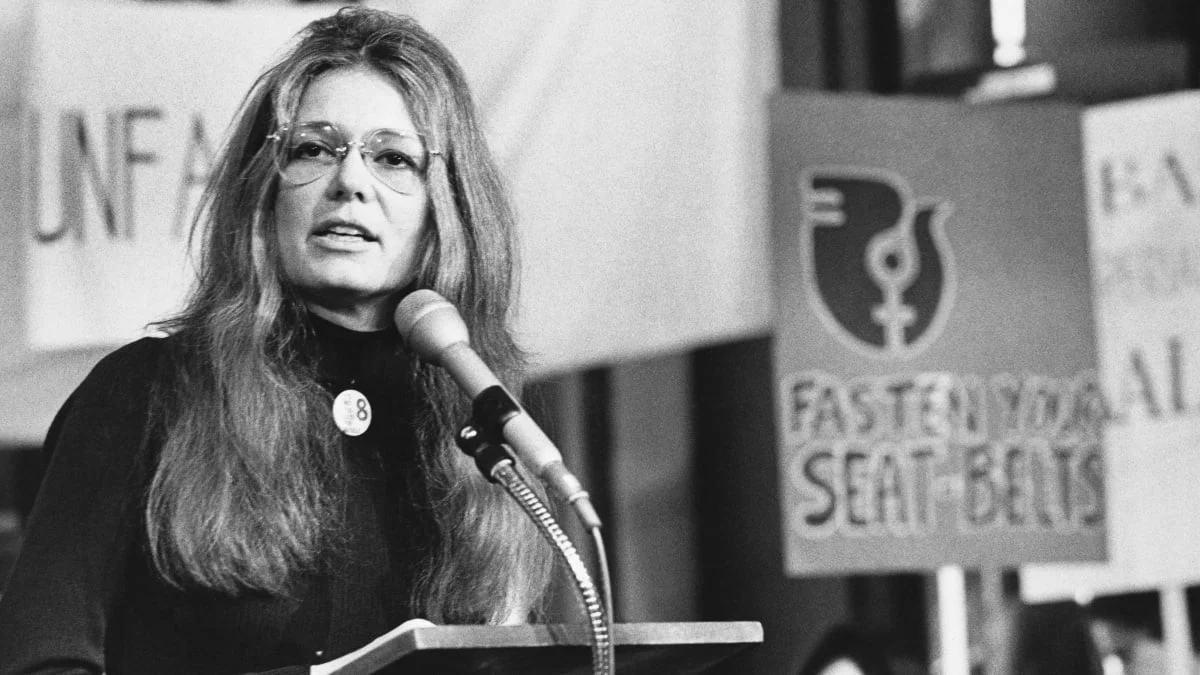
NEW YORK — Gloria Steinem, the pioneering journalist, political activist, and intellectual architect of second-wave feminism whose near-century of life became synonymous with the global struggle for gender equality, died peacefully on Wednesday at her home in New York City. She was 92.
Her passing was announced early Thursday via a statement shared on her official Instagram account. Surrounded in her final moments by those who loved her, Steinem remained steadfast in her commitment to social justice until the end.
"Yesterday, Gloria Steinem passed away peacefully at her home in New York City, surrounded by some of the many who loved her," the statement read. "Gloria’s near-century on earth were years well-lived, and she continued working for equality until the very end."
No cause of death was publicly disclosed. In the hours following the announcement, tributes flooded in from across the political, literary, and entertainment landscapes, painting a portrait of a woman whose intellectual clarity, fierce resolve, and boundless curiosity fundamentally reshaped modern society.
Chronology of a Trailblazer: From Undercover Reporter to Global Icon
To understand the trajectory of Gloria Steinem’s life is to trace the evolution of the modern women’s liberation movement in the United States. Born in Toledo, Ohio, in 1934, Steinem lived a nomadic childhood before graduating from Smith College. Her early career as a journalist immediately signaled her refusal to adhere to the traditional, restrictive pathways laid out for women of her generation.
In 1963, Steinem captured national attention with a groundbreaking piece of investigative journalism. Going undercover as a "Playboy Bunny" at the New York Playboy Club, she exposed the grueling labor conditions, low wages, and pervasive exploitation beneath the glamorous surface of Hugh Hefner’s empire. The resulting two-part exposé, published in Show magazine, established her reputation as a sharp, fearless observer of institutional power imbalances.
By the late 1960s and early 1970s, Steinem had emerged as a principal architect of second-wave feminism. Alongside other prominent activists, she co-founded Ms. magazine in 1972, serving as an editor and driving force for a publication that gave voice to women’s experiences, advocated for reproductive freedom, and challenged systemic sexism head-on. Ms. became the first mainstream periodical to address issues such as domestic violence, employment discrimination, and the necessity of legal abortion access.
Throughout the decades that followed, Steinem was a ubiquitous presence on the front lines of social justice movements. She marched, organized, lectured internationally, and authored numerous bestselling books, including Outrageous Acts and Everyday Rebellions and My Life on the Road. In recognition of her lifetime of advocacy, President Barack Obama awarded her the Presidential Medal of Freedom—the nation’s highest civilian honor—in 2013, praising her for giving a voice to the voiceless and driving a permanent shift in the American cultural consciousness.
Supporting Data and the Architecture of Modern Advocacy
Steinem’s impact on American sociology and politics is quantifiable through the legislative and institutional shifts she helped midwife. Her advocacy directly intersected with the legal recognition of sex discrimination in employment, the expansion of Title IX protections in education, and the destigmatization of conversations surrounding reproductive healthcare.
Yet, beyond legislative battles, Steinem’s primary methodology was relational. The official statement released by her estate emphasized her unique interpersonal gifts: "Gloria’s greatest gift was her ability to listen to others, to make others feel seen and heard. Her words, actions, and example gave people permission to be their truest selves. Gloria lived true to her independent spirit, always with curiosity and a great sense of humor."
In her later years, Steinem channeled this philosophy into the creation of "Talking Circles"—intimate gatherings held in her Manhattan living room. Inviting hundreds of activists, writers, and thinkers over the years, these circles were designed to foster cross-generational dialogue and strategic solidarity. Her final Talking Circle took place just weeks before her passing, proving that her commitment to community-building never waned.
Official Responses and Tributes from Global Leaders
The news of Steinem’s death triggered an immediate and profound wave of grief and gratitude across digital platforms. Public figures, politicians, and artists reflected on her indelible mark on history.
Former House Speaker Nancy Pelosi wrote on X (formerly Twitter), "Gloria Steinem was a fearless trailblazer who transformed the fight for equality in America and inspired generations of women to know their power."
Former Georgia gubernatorial candidate and voting rights activist Stacey Abrams shared her personal reflections: "Meeting heroes always risks disappointment, but knowing Gloria was an honor, where her humor and kindness were matched by a relentless belief that we could be better."
Christiane Amanpour, CNN’s chief international anchor, noted the global scale of her influence: "Gloria Steinem will go down in history as one of the most important activists of all time, leading a movement for the equality of half the world: its women."
Cultural figures and writers similarly highlighted her warmth and tenacity.
Author Roxane Gay posted on Instagram: "Gloria was one of a kind. Genuine, generous, curious, thoughtful. She lived a staggering life and her passing is a staggering loss tempered only by the ferocity of her legacy."
Actor and comedian Amy Sedaris added: "She was our leader. We have to be more like her. Carry her fight."
Television producer Shonda Rhimes remarked, "She was fierce and kind and full of grace. What a loss for the world."
Musician Carole King reflected on the generational continuum of the movement: "As we elders, our daughters, and our granddaughters continue the fight for power, equality, and respect, we hold you in our hearts with love and gratitude."
Actor Sandra Bernhard connected Steinem’s legacy to current political struggles, writing, "It was an honor to have a conversation with the great Gloria Steinem. Classy, funny, she didn’t take any punches… Let’s honor her life and work and rededicate it to reclaiming our reproductive rights!"
Amanda Litman, president of Run For Something, offered a poignant tribute detailing her experiences attending Steinem’s Talking Circles while pregnant and navigating political organizing. "The two talking circles I went to at her home… were experiences I’ll never forget."
Implications: The Legacy and Future of the Feminist Movement
The passing of Gloria Steinem marks the end of an era for the foundational leadership of the mid-20th-century civil rights and feminist movements. Coming on the heels of the recent loss of other cultural giants—such as Dolly Parton—Steinem’s death has prompted a collective moment of reflection within American society regarding the fragility of historical memory and the ongoing urgency of the causes she championed.
At a time when reproductive rights face unprecedented legal challenges globally and polarized political landscapes threaten hard-won civil liberties, Steinem’s absence leaves a formidable void. However, her supporters emphasize that her infrastructure of resistance is built to endure.
According to her estate, Steinem’s final wishes included the continuation of her community initiatives. In lieu of flowers, she requested that donations be made to Gloria’s Foundation, an organization dedicated to funding fellowships and residencies for social justice workers while actively maintaining the tradition of the Talking Circles.
The statement concluded with a metaphor befitting her lifelong dedication to illumination and guidance:
"Gloria loved the tradition of lighting signal fires on hills to light the way to the other side of the mountain. Lighting your own candle for Gloria makes you part of this global and celestial community circle."
As a new generation of activists picks up the torch, Gloria Steinem’s legacy remains a permanent fixture in the architecture of human rights—a testament to what can be achieved through unwavering courage, intellectual rigor, and an abiding love for humanity.
 Nana Wu
 Reynand Wu
