

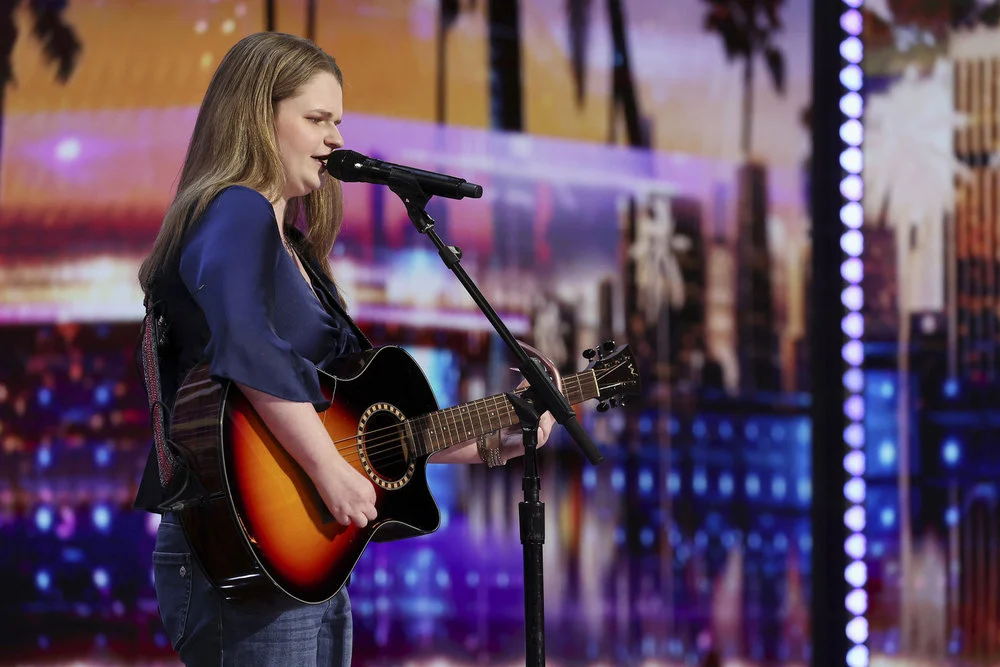
The stage of America’s Got Talent (AGT) has always been a crucible for talent, but as Season 21 hits its seventh week of auditions, the pressure has shifted from the thrill of the "Golden Buzzer" to the cold, hard reality of numerical elimination. With all ten coveted Golden Buzzer spots officially spoken for, the contestants appearing before judges Simon Cowell, Mel B, Sofia Vergara, and Howie Mandel faced a steeper climb than their predecessors.
The stakes were higher than ever on this latest episode, which aired July 21 on NBC. As the pool of hopefuls began to narrow, the judges were forced to pivot from simply identifying "talent" to curating a high-octane lineup capable of holding the audience’s attention during the impending live shows. With only 44 spots available in the final brackets, the tension in the theater was palpable as a diverse array of acts—ranging from mariachi-playing police officers to gravity-defying contortionists—stepped into the spotlight.
The State of the Competition: A Post-Golden Buzzer Landscape
This season’s structure has been uniquely rigorous. Each of the four judges, alongside host Terry Crews, was granted two Golden Buzzers, effectively acting as "fast-track" tickets to the live performance rounds. By the end of the sixth week, the roster of automatic qualifiers was finalized:
- Howie Mandel’s Picks: South Korean magic act Hundred Fingers and Cuban rapper Luke Taleno.
- Simon Cowell’s Picks: Vocalist Lai Noelle and one-legged parkour athlete Rubén Roldán Bustos.
- Mel B’s Picks: Vocalists Isaac Atkins and Mackenzie Sol.
- Terry Crews’ Picks: Dance troupe-dog act Acro Crew and Las Vegas-based Royal Lasers.
- Sofia Vergara’s Picks: Australian singer Lara D. and Ukrainian aerial pole artist Veronika Goroshkova.
With these ten acts safely secured, the remaining performers were left to fight for the remaining 34 spots through the standard "Yes" vote system. However, the sheer volume of acts receiving three or more "Yes" votes created a bottleneck, leading to the introduction of the "Judges’ Callbacks" round—a secondary audition phase designed to separate the good from the great.
Chronology of Performances: A Night of Highs and Lows
The seventh night of auditions showcased a mix of quirkiness, genuine technical brilliance, and, in some cases, utter confusion.
The Comedic Absurdity: Howie Blandel and Cat Williams
The evening began with a bizarre impersonation act by a performer dubbed "Howie Blandel." While his attempt to parody judge Howie Mandel was intended to be humorous, it fell flat with the panel. Mel B was particularly critical, asking, "That was not funny. Did anybody laugh?" The act was met with an immediate "X" from Simon, Sofia, and Mel, effectively ending the performance early.
This was followed by a stand-up routine from a performer named Cat Williams. The panel quickly drew comparisons between the two acts, with Mel B noting, "I think you’re the same guy that came on as Howie… I can tell you have the same shape face and you’re exactly the same height." It was a swift rejection, underscoring the judges’ lack of patience for repetitive or low-effort gimmickry.

Musical Triumphs: The Sound, Los Servidores, and Pynk Beard
Music provided the night’s most consistent high points. The Sound, a family band from Romeo, Michigan, delivered a polished, heartwarming performance. While Simon praised their harmonies, he offered a stern piece of advice: "Going forward, we have to go beyond the safe." He encouraged the group to push their creative boundaries, noting that while they are undeniably likable, the competition requires more innovation to survive the live rounds.
Los Servidores, a group of Southern California police officers who traded their badges for instruments to perform mariachi music, were a massive crowd favorite. Sofia Vergara was visibly delighted, noting, "I rarely get to hear mariachi here on the show."
The night’s standout musical performance, however, came from the Alabama-based band Pynk Beard. Their infectious energy led Simon to make a bold claim: "I believe that we just heard a hit." He went so far as to lament the lack of a remaining Golden Buzzer, telling the group, "If I had one, you’d be getting it."
Physical Mastery: Manramp and Maria
Variety acts are the backbone of AGT, and this episode featured two physical performances that left the judges in awe. Manramp, a performer who effectively turns his own body into a literal skate ramp, was initially met with skepticism. However, the judges were impressed by the practical application of the skill. Howie Mandel compared him to "Tony Hawk without the bells and whistles."
Even more impressive was the German contortionist Maria. Her ability to contort into seemingly impossible shapes while maintaining a graceful, smiling demeanor unnerved and amazed the judges. Sofia Vergara remarked, "You make it seem so easy… meanwhile it looks like you’re about to break in six pieces."
The Magic of Youth: Aidan Corcoran
Nineteen-year-old magician Aidan Corcoran brought an air of mystery to the stage. Despite his clear nerves, his performance of mentalism and illusion was enough to win over all four judges. Simon noted that Corcoran possessed an "air of mystery" that would serve him well with the voting audience, signaling that he is a contestant to watch as the season progresses.
Behind the Scenes: The Judges’ Deliberation
Following the conclusion of the performances, the judges were tasked with the daunting responsibility of pruning a list of nearly 100 acts down to 34. This is where the true nature of Season 21’s competitive landscape became clear.

The panel quickly identified "no-brainers"—acts that were locks for the live shows. Among them were the aforementioned Pynk Beard, the dance group Come Here, the soulful choir The Community ATL, the robotic precision of Unitree, and the emotive performance poetry of Guy Kelton Jones. A significant number of magic acts, including Young & Strange, Darrell Moten, Kameron Marshall, and Geno Ploeger, were also placed on the "shortlist."
However, Simon Cowell, ever the pragmatist, was not fully satisfied. Fearing that the sheer volume of talent was making it difficult to differentiate the truly world-class acts, he proposed the "Judges’ Callbacks."
Implications: The Introduction of the Judges’ Callbacks
The "Judges’ Callbacks" represent a fundamental shift in the America’s Got Talent format. Rather than forcing a final, often rushed decision, this new round allows each judge to invite five or six acts to perform for them in an intimate, closed-door setting.
Strategic Benefits of the New Format
- Refined Selection: By observing acts in a more intimate environment, the judges can gauge how performers handle pressure without the spectacle of the main stage.
- Increased Engagement: It gives the audience a "second look" at fan favorites who might have had a shaky first audition but showed immense potential.
- Mentorship Opportunity: This phase allows for direct feedback, forcing the acts to improve their craft in real-time before the stakes of the live, televised shows.
Simon Cowell characterized this as "really interesting and fun and good for the contestants." It serves as a necessary buffer between the chaotic, unpredictable audition phase and the highly polished, professional environment of the live semi-finals.
Conclusion: Looking Ahead to the Live Shows
As Season 21 approaches the live shows, the narrative is no longer about who can walk onto the stage and earn a "Yes." It is now about who has the staying power to capture the hearts of the American public. The transition from the massive audition pool to the elite 44 finalists is a grueling process that demands more than just a single "wow" moment.
With the Judges’ Callbacks imminent, the remaining contestants find themselves at a crossroads. The performers who can take the constructive criticism offered by the panel—particularly the advice from Simon Cowell regarding "going beyond the safe"—are the ones most likely to thrive. Whether it is the soulful harmonies of The Sound, the technical prowess of Maria, or the high-energy potential of Pynk Beard, the competition has truly begun. The stage is set, the Golden Buzzers are gone, and only the most resilient and adaptable acts will remain standing when the live shows begin.
 Ammar Sabilarrohman
 Siti Muinah
 Iffa Jayyana
