

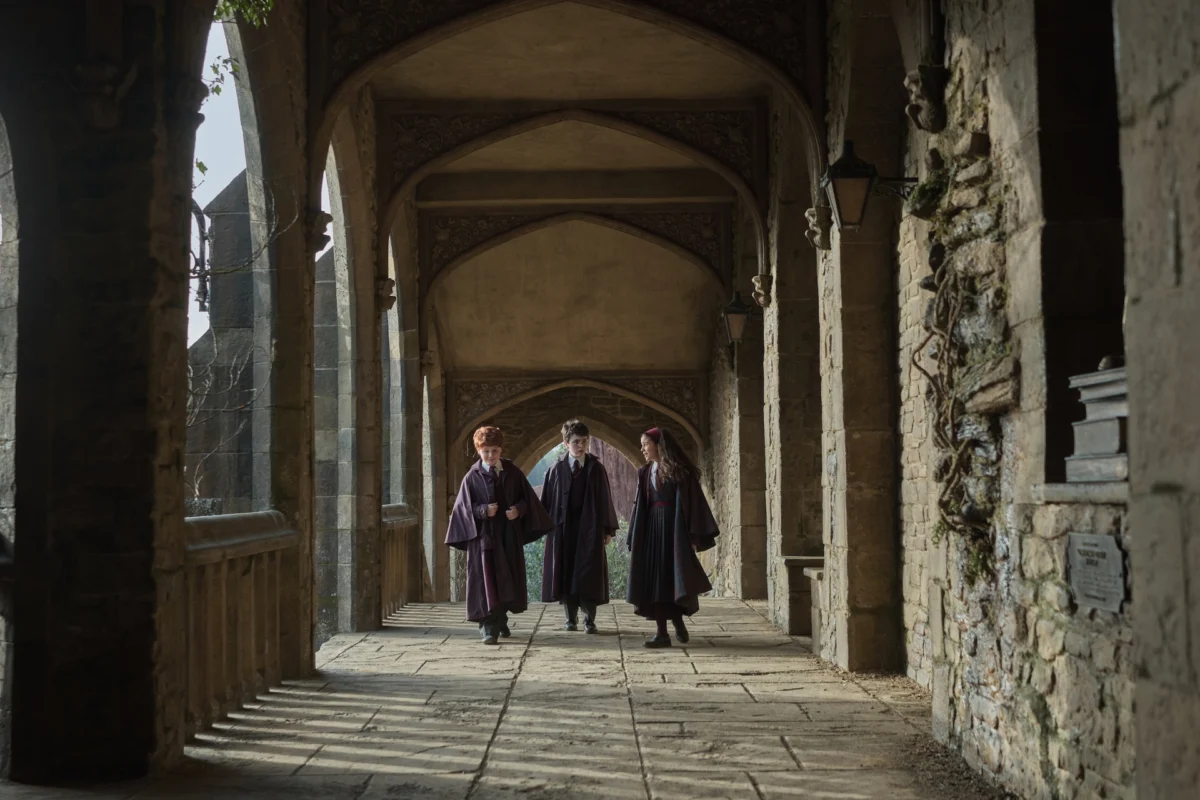
The Wizarding World is returning to the screen, but it will be sitting on the sidelines when the SAG-AFTRA Actor Awards roll around next year. HBO’s highly anticipated television adaptation of the Harry Potter series—a monumental project that has dominated industry headlines—has officially been sidelined from the upcoming awards cycle. Due to a series of specific, newly clarified eligibility requirements issued by the guild, the production will not be in the running for Best Ensemble or any individual acting accolades at the 2027 Actor Awards.
For fans and industry insiders alike, this news serves as a stark reminder of how complex the intersection of production schedules and guild award regulations has become in the streaming era. As the series gears up for its December 25, 2026, premiere, the cast—featuring heavyweights such as John Lithgow, Janet McTeer, and Nick Frost—will have to wait until at least 2028 to see their work recognized by their peers at SAG-AFTRA.
The Rulebook: Decoding the SAG-AFTRA Eligibility Shift
The exclusion of Harry Potter and the Philosopher’s Stone stems from a meticulous update to the SAG-AFTRA rules and regulations document. The guild, which prides itself on maintaining a rigorous standard for the "Actor Awards," has implemented specific thresholds to ensure that series competing in a given calendar year have a substantial enough presence within that window to warrant evaluation.
According to the new guidelines: "If a Comedy or Drama series premieres late in the eligibility year, and at least six episodes air in 2026, but less than six episodes air in 2027, the entire season qualifies for the 2026 eligibility year."
The hurdle for HBO is the "six-episode threshold." Because the series is slated to debut on Christmas Day, it is mathematically impossible for the production to meet the requirement of airing six episodes before the calendar turns to 2027. Consequently, the show is effectively disqualified from the 2026 cycle. By the time the show has a sufficient number of episodes aired to be considered a "full season" by the guild’s standards, the window for the 2027 awards will have already closed, forcing the show to defer its eligibility to the 2028 cycle.
A Chronology of the Production and Awards Window
The timeline of the Harry Potter rollout illustrates the "awards gap" that now plagues late-year television debuts.
- December 25, 2026: The official series premiere. At this point, the show enters the public consciousness, but the clock for the SAG-AFTRA 2026 awards is effectively frozen.
- Early 2027: The remainder of the inaugural season will air. Because the majority of the season lands in 2027, the show fails to meet the "six-episode" requirement for the 2026 calendar year, and the bulk of the content falls outside the 2027 eligibility cutoff, which generally favors shows that complete their runs earlier in the year.
- Late 2027/Early 2028: The show becomes fully eligible for the 2028 Actor Awards.
This creates a significant "limbo" period for the cast. In an industry where momentum is everything, waiting nearly two years after a series premiere to receive recognition from the actors’ union is a daunting prospect for any studio, especially one banking on the prestige of a flagship franchise.

Discrepancies in the Awards Landscape: Emmys vs. Actor Awards
It is important to note that the SAG-AFTRA Actor Awards are not the only game in town. The television landscape is governed by a fragmented collection of award bodies, each with its own idiosyncratic rules. While Harry Potter is effectively barred from the 2027 Actor Awards, it may find a much friendlier reception at the Emmy Awards.
The Television Academy operates on a different, more flexible calendar. Emmy eligibility is typically tied to the "Emmy Year," which runs from June 1 to May 31. Under these rules, a series debuting in December 2026 would be eligible for the 2027 Emmy cycle. This creates a fascinating divergence: the cast and crew could potentially be campaigning for Emmy gold just six months after their debut, while simultaneously being told they must wait until 2028 for consideration from their own union.
This creates a high-stakes scenario for HBO’s marketing team. They must decide whether to lean into the Emmy campaign early, hoping that critical acclaim in the summer of 2027 keeps the show relevant long enough to sustain interest until the 2028 Actor Awards. Alternatively, they might look to replicate the "Bear" strategy—a technique where a show’s schedule is specifically calibrated to overlap with voting windows, maximizing visibility during the most critical periods.
The Precedent: Lessons from ‘Fallout’
The Harry Potter situation is not an isolated incident; it follows a pattern established by other major streaming series. Last year, Amazon Prime Video faced a similar dilemma with Fallout. The second season of the post-apocalyptic drama straddled the 2025 and 2026 calendar years. Like Harry Potter, the show ultimately opted out of the 2026 Actor Awards cycle to ensure it could compete in a more advantageous window.
The Fallout case highlighted the difficulties of "prestige television" schedules. As networks move toward more expensive, cinematic, and longer-form episodes, the traditional "broadcast season" model has collapsed. Shows are no longer constrained by the September-to-May cycle, leading to irregular release dates that consistently clash with the rigid, calendar-based requirements of unions and award bodies.
Limited Series: The Wiggle Room
While the rules for ongoing Drama and Comedy series are ironclad, the guild does provide some flexibility for Limited Series. According to the regulations, shows "in which fewer than 50% of the total eligible episodes air within the calendar year may defer eligibility consideration to the subsequent awards year."
This creates a strategic choice for networks. If a show is classified as a Limited Series, producers can essentially "choose" their awards year—either the year of the premiere or the year the majority of the episodes air. However, for a massive, multi-season undertaking like Harry Potter, this designation is likely off the table, as the show is intended to be a long-running narrative rather than a self-contained story.

Implications for the Industry
The exclusion of Harry Potter from the 2027 Actor Awards carries several significant implications for the entertainment industry:
1. The Power of the Petition
The SAG-AFTRA rules do provide a sliver of hope. The documentation states that petitions for consideration can be submitted. However, the criteria for these petitions remain opaque. It is unclear what specific hardships or extenuating circumstances the union considers valid for an exemption. Historically, these petitions are rarely granted, as the guild is wary of setting precedents that could lead to an influx of exceptions.
2. Marketing and Campaign Strategy
HBO now faces the challenge of "The Long Tail." In the streaming age, a show’s cultural impact can dissipate rapidly after the final episode drops. To stay in the conversation for the 2028 awards, the studio will need to invest in sustained publicity, perhaps leveraging behind-the-scenes content, actor interviews, and social media presence to keep the series at the forefront of the public—and the voter—mindset.
3. The Future of Awards Calendar Reform
This incident highlights an growing tension between production realities and bureaucratic awards standards. As the "prestige TV" model continues to favor late-year, big-budget drops, there will be increasing pressure on organizations like SAG-AFTRA to modernize their eligibility rules. The current calendar-year-based system, while simple to administer, may increasingly fail to reflect the reality of how television is consumed and produced in the 21st century.
Conclusion
"No points for Gryffindor" may be a clever headline, but the situation for HBO is a sobering one. As the Harry Potter reboot prepares to enter a crowded and highly competitive television landscape, its biggest opponent may not be the critical reception or the fan expectations, but rather the administrative architecture of the awards system itself.
Whether the show can maintain its momentum until 2028, or whether it will successfully lobby for an exemption, remains to be seen. For now, the cast of the Wizarding World must focus on the task at hand: bringing a beloved story to life, knowing that the accolades they covet will have to wait for another day. In the world of high-stakes television, sometimes the hardest battle isn’t on the screen—it’s in the rulebook.
 Ammar Sabilarrohman
 Siti Muinah
 Iffa Jayyana
