

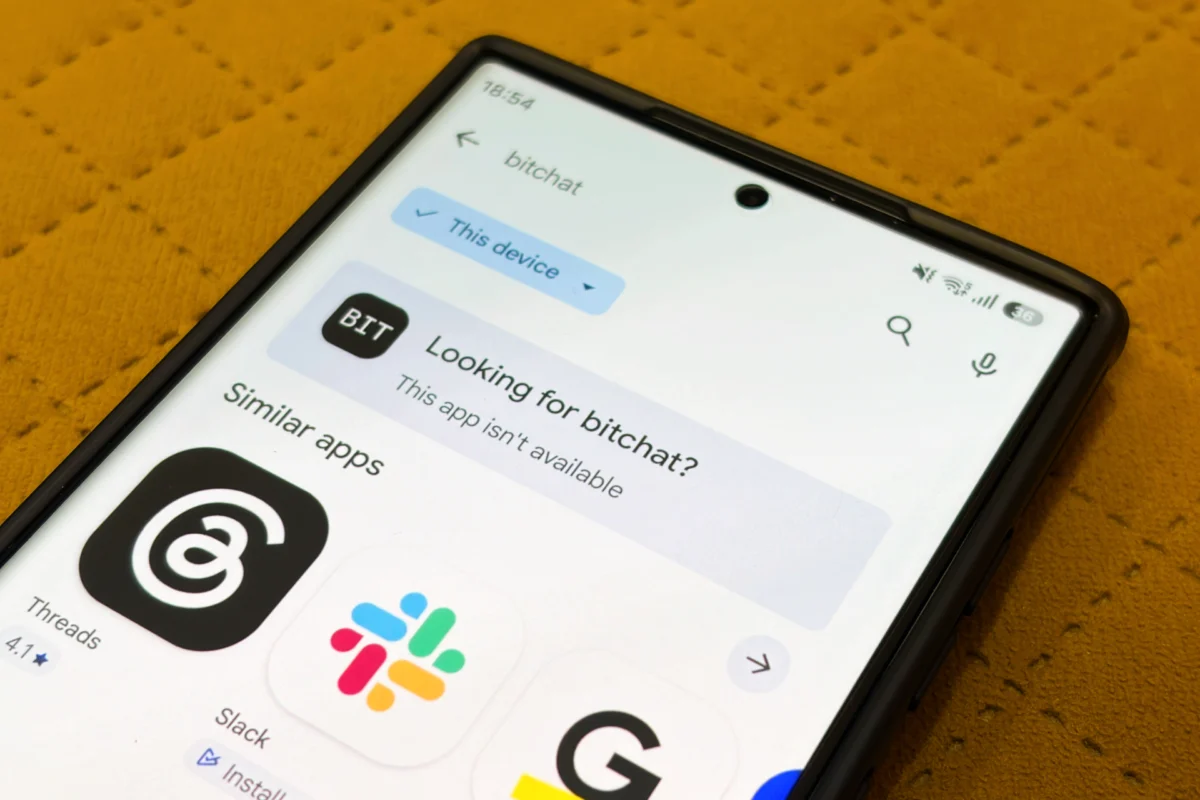
NEW DELHI — Bitchat, the decentralized messaging application championed by tech entrepreneur Jack Dorsey, has officially vanished from both Apple and Google digital storefronts in India. The sudden disappearance marks a dramatic escalation in New Delhi’s protracted campaign against the open-source software, arriving on the heels of previous government attempts to restrict access to its underlying code.
The software, which facilitates peer-to-peer, encrypted communication independent of traditional cellular networks or centralized infrastructure, has found itself caught in a high-stakes collision between government control, civil disobedience, and digital rights advocacy. As youth-led demonstrations rattle the nation’s capital over controversial electoral roll reforms, the total blackout of Bitchat highlights a growing global flashpoint over who controls the channels of human communication during times of political crisis.
Main Facts
The removal of Bitchat from Indian app marketplaces was confirmed over the weekend, when the open-source application became entirely unavailable for download on the Apple App Store and the Google Play Store within the country.
The immediate catalyst for Apple’s compliance was a formal directive issued by India’s Ministry of Electronics and Information Technology (MeitY). The mandate was executed under Section 69A of the Information Technology Act—India’s primary statutory mechanism for ordering the online blocking of digital content. According to a notice shared publicly by Jack Dorsey on the social media platform X (formerly Twitter), Apple was forced to pull the application domestically, though it confirmed the software would remain active and accessible on its global app stores outside of Indian jurisdiction. Furthermore, Apple shuttered Indian access to Bitchat via TestFlight, its proprietary beta-testing ecosystem.
Concurrently, independent checks on Google Play revealed that the application could no longer be located or downloaded by domestic users. Adding to the digital blockade, Bitchat’s official website was rendered inaccessible across multiple major Internet Service Providers (ISPs) operating within the country. While MeitY’s direct intervention was documented through Apple’s legal disclosure, it remains unclear whether Google and local ISPs acted under parallel, formal government directives or preemptive compliance. Major corporate stakeholders—including Apple, Google, and representatives from India’s IT ministry—declined to respond to multiple requests for comment.
Chronology of a Crackdown
The suppression of Bitchat represents the culmination of a months-long regulatory battle between Indian authorities and the decentralized tech community.
- July: Bitchat experiences a viral surge in adoption across India, capturing roughly 85% of its global downloads in a single week—a staggering spike from just 1% over the preceding month. The surge coincides with the deployment of local internet blackouts during youth-led demonstrations.
- July: Escalating its countermeasures, the Indian government orders software-hosting platform GitHub to take down repositories associated with Bitchat. Authorities lean on intermediary liability provisions under local IT laws, citing concerns over the app’s resilient, offline architecture.
- October: Gen-Z-led protests erupt in New Delhi over alleged manipulation of voter rolls, prompting police detentions and a targeted 12-hour internet suspension around Jantar Mantar.
- Late October / Early November: MeitY issues a formal directive under Section 69A of the Information Technology Act, compelling Apple to scrub Bitchat from its domestic App Store and TestFlight services. Google Play and domestic ISPs swiftly follow suit, rendering the application entirely dormant within Indian borders.
Supporting Data and Adoption Metrics
The severity of the government’s response is deeply tied to Bitchat’s unique technological design and the dramatic surge in its popularity.
Launched in July of the previous year, Bitchat was engineered to solve a fundamental vulnerability of modern communication: its reliance on centralized servers and stable internet connectivity. Utilizing advanced Bluetooth mesh networking protocols, the application allows nearby smartphones and computing devices to relay encrypted packets of data directly between one another. By creating a localized, peer-to-peer web, users can exchange messages entirely without cellular networks, Wi-Fi infrastructure, or internet access.
This resilient architecture transformed the app from a niche tech experiment into a critical tool for digital survival. Market intelligence data compiled by Sensor Tower revealed that between July 17 and July 23, India accounted for approximately 85% of Bitchat’s total downloads worldwide. This marked a meteoric rise from a negligible 1% share over the preceding 30 days.
The spike in downloads directly mirrored episodes of civil unrest. When authorities cut off conventional internet access to quell demonstrations, protesters increasingly turned to decentralized alternatives like Bitchat and rival app Briar to coordinate, share information, and bypass state-imposed communications blackouts.
Official Responses and Legal Scrutiny
The campaign against Bitchat has exposed deep fractures within India’s legal and political landscape, drawing sharp rebukes from digital rights groups and legal scholars.
When Indian authorities first targeted GitHub repositories associated with the app in July, the government argued that Bitchat’s decentralized nature fundamentally undermined state security. Officials asserted that the app’s architecture intentionally frustrates law enforcement agencies by making message interception and user tracing nearly impossible, specifically pointing to its capacity to function seamlessly during state-mandated internet shutdowns. That initial takedown relied on laws governing intermediary liability for third-party content—a legal pathway distinct from the Section 69A provision invoked in the recent Apple crackdown.
Civil society organizations have fiercely contested the legality and constitutionality of these actions. The Internet Freedom Foundation (IFF), a prominent digital rights advocacy group based in New Delhi, issued a scathing critique of the latest Apple App Store ban, labeling the order unconstitutional.
According to the IFF, Section 69A of the IT Act was explicitly drafted to empower the government to block specific instances of unlawful information or content, rather than to preemptively ban an entire category of open-source software simply because of its functional capabilities. Furthermore, the organization emphasized a worrying lack of transparency, noting that neither the formal blocking order itself nor the specifics of the allegedly illegal content cited as justification have been made publicly available for legal scrutiny.
Broader Implications for Free Speech and Digital Sovereignty
The systemic erasure of Bitchat from India’s digital ecosystem is unfolding against a volatile political backdrop. The country is currently grappling with a fresh wave of youth-led protests opposing structural modifications to national voter rolls. Demonstrators have taken to the streets demanding the immediate resignation of India’s chief election commissioner, whom they accuse of facilitating electoral manipulation.
State responses to these demonstrations have increasingly relied on time-tested measures of digital authoritarianism. On Friday, authorities enforced a sweeping 12-hour internet blackout surrounding New Delhi’s historic Jantar Mantar monument as protests intensified. By Saturday, local law enforcement agencies had detained numerous participants during demonstrations across the capital.
The intersection of localized internet shutdowns and the eradication of decentralized, offline messaging tools like Bitchat carries profound implications for the future of civil liberties. Critics argue that by systematically blocking software that operates independently of traditional networks, governments are attempting to reassert absolute monopoly control over public assembly and free expression.
As authoritarian and democratic governments alike grapple with the rise of peer-to-peer technologies, the battle over Bitchat in India serves as a critical test case. It raises existential questions for the global tech community regarding the survivability of open-source software, the accountability of multinational tech giants operating under local censorship laws, and the fundamental right of citizens to communicate when traditional digital infrastructure goes dark.
 Iffa Jayyana
 Lina Hope
 Nana
Nana
