

By Anthony Ha
Enriched & Expanded Coverage
Main Facts
As the artificial intelligence boom accelerates, tech companies are racing to construct massive new infrastructure to power next-generation models. However, this expansion has sparked an unprecedented grassroots and regulatory backlash across the United States. In a bid to quell mounting skepticism, Amazon Web Services (AWS) CEO Matt Garman announced that the tech giant has officially stopped using nondisclosure agreements (NDAs) in its dealings with government agencies for data center approvals.
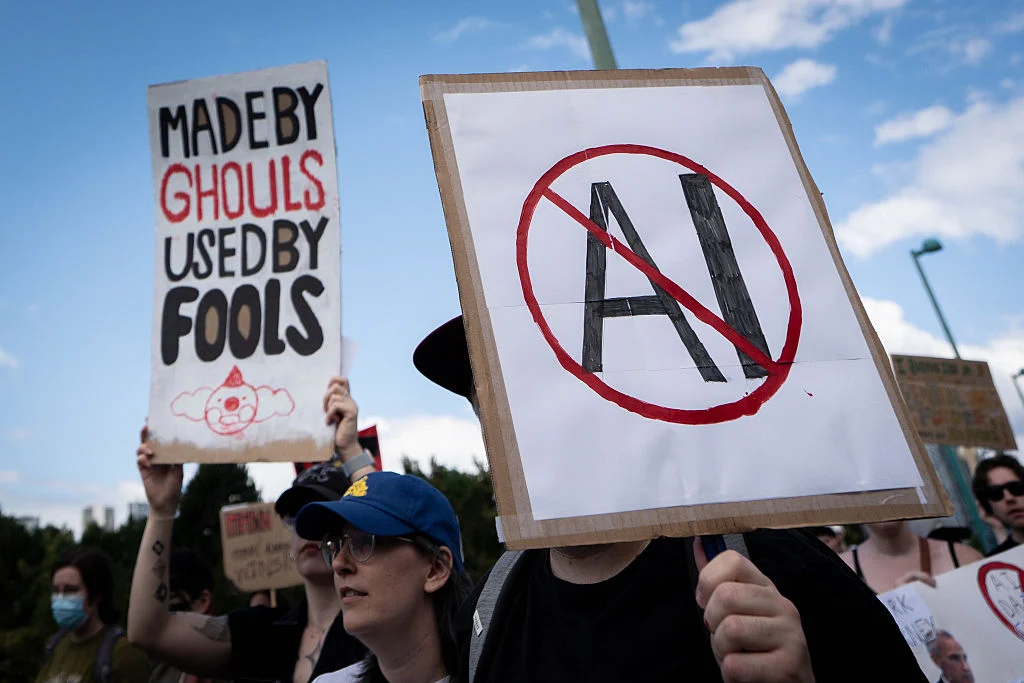
The policy shift forms part of a broader, high-stakes charm offensive by AWS to counter widespread public suspicion. Communities nationwide are increasingly pushing back against the secretive planning, soaring energy demands, and environmental footprint associated with modern data centers.
The friction has tangible consequences. Local resistance and regulatory gridlock have prompted more than 100 data center moratoriums to be weighed across the United States. Most notably, New York State recently enacted a one-year moratorium on permits for large-scale data centers, highlighting a widening chasm between the tech industry’s expansion goals and local public sentiment.
Chronology of a Backlash
The tensions surrounding data center expansion did not materialize overnight. They are the culmination of years of rapid, often opaque development that caught local municipalities off guard.
- The Era of Quiet Approvals: For years, major cloud and AI providers—including Amazon, Microsoft, Google, and Meta—worked closely with local governments to secure cheap land, tax breaks, and utility access. These negotiations frequently took place behind closed doors, facilitated by NDAs signed by local officials before projects were publicly announced.
- The Tipping Point (2025–2026): As generative AI models demanded exponentially more computational power, the sheer scale of planned data centers became impossible to hide. Massive facilities requiring hundreds of megawatts of power and millions of gallons of water began drawing intense scrutiny from environmentalists, local residents, and independent watchdogs.
- The Activist Mobilization: High-profile figures stepped into the fray. Environmental activist Erin Brockovich highlighted data center secrecy as a primary grievance among citizens, pointing to a familiar pattern: projects unveiled only after permits are locked down, unresponsive developers, and local councils bound by secrecy clauses.
- Legal and Regulatory Fallouts: The backlash soon translated into aggressive pushback. Elon Musk’s xAI faced a civil lawsuit from the NAACP regarding the pollution output of backup generators at its data center operations. Meanwhile, planned mega-facilities—such as an Amazon data center in Texas permitted to release millions of tons of carbon dioxide—became focal points for climate protests.
- The Regulatory Freeze: By mid-2026, the dam broke. New York State implemented a sweeping one-year ban on large data center permits, and federal and state lawmakers nationwide began examining over 100 separate moratorium proposals. Recognizing an existential threat to future infrastructure expansion, AWS leadership altered its strategy, culminating in Garman’s public blog post and the abandonment of governmental NDAs.
Supporting Data: Debunking Myths vs. Reality
In his blog post, AWS CEO Matt Garman attempted to dismantle what he termed "four big myths" surrounding data centers: water consumption, electricity costs, pollution, and community value. However, independent reports and watchdog data frequently complicate the narrative presented by tech executives.
1. Water Consumption
- The Industry Claim: Garman cited internal Amazon data showing that "direct data center water consumption" accounts for a mere 0.5% of all industrial water usage in the U.S., arguing it is "orders of magnitude less than golf courses, almond farming, and many other industries." Tech firms have also championed closed-loop and advanced liquid cooling systems—with Nvidia claiming its latest tech eliminates virtually all direct internal water usage.
- The Critical Counterweight: Critics and scientists point out that these figures ignore the indirect water consumption required to generate the staggering amounts of electricity data centers consume, as well as the intensive water footprint of semiconductor manufacturing. Furthermore, independent researchers note a lack of standardized federal or state reporting requirements, leaving a data vacuum regarding true hydrological impact.
2. Electricity Rates and Grid Stability
- The Industry Claim: AWS asserts that electricity rates have only risen in a handful of states with heavy data center concentration, while remaining stable or falling elsewhere. Garman argued that where rate hikes do occur, they are primarily the result of aging electrical grids that failed to receive necessary infrastructure investments before demand surged.
- The Critical Counterweight: Independent energy watchdogs tell a different story. Recent analyses of America’s largest electrical grid revealed that data centers were the primary drivers behind a staggering 76% year-over-year price surge, placing a heavy financial burden on residential and commercial ratepayers.
3. Pollution and Emissions
- The Industry Claim: Addressing concerns over air quality and carbon output—highlighted by legal battles involving xAI’s massive generator arrays—Garman insisted that critics focus unfairly on theoretical permit limits rather than reality. He noted that backup generators are idle 99.9% of the time, operating only about 10 hours a year primarily for routine maintenance testing.
- The Critical Counterweight: Environmental watchdogs argue that permit limits matter because they establish worst-case scenario baselines. For instance, a planned Amazon data center in Texas was permitted to emit up to 33 million tons of carbon dioxide annually—surpassing the emissions footprint of many traditional fossil-fuel power plants in the U.S.
4. Community Contributions
- The Industry Claim: To prove local goodwill, AWS highlighted that it has poured over $1 billion over the last three years into communities across the U.S. that host its data centers, alongside its new policy of absolute transparency regarding government interactions.
- The Critical Counterweight: Despite financial contributions, local pushback persists. Opponents frequently argue that tax abatements granted to tech giants strip local municipalities of the long-term revenue needed to offset the infrastructural wear and tear caused by massive industrial construction.
Official Responses
The debate over data center transparency and expansion has forced technology leaders and industry observers to confront the psychological and political dimensions of public distrust.
Matt Garman’s decision to drop governmental NDAs represents a major tactical pivot for AWS. By removing secrecy from the negotiation phase, Amazon hopes to short-circuit accusations of backroom dealing. "If these measures are enacted, the U.S. could be writing its own losing ticket to this race, and the consequences would last generations," Garman warned, emphasizing that national competitiveness in artificial intelligence hinges on building out this infrastructure today.
However, industry insiders acknowledge that changing policy may not be enough to shift public perception. Anthropic CEO Dario Amodei recently diagnosed the broader tech-infrastructure backlash as "fundamentally a crisis of trust." Speaking on the psychological barriers facing the industry, Amodei noted that citizens frequently operate under the assumption that corporations and government entities are inherently working against public interest.
This sentiment was echoed by cultural commentators like writer Jasmine Sun, who observed that when data center developers present factual reassurances to skeptical town halls, the reflexive public response is simple and absolute: "I don’t believe them."
Implications
The standoff between tech giants and local communities carries profound implications for the future of American technological leadership and infrastructure development.
- A Threat to AI Dominance: If the proliferation of local moratoriums—such as New York’s one-year pause—spreads nationwide, the United States risks severe bottlenecks in the compute power required to train and run advanced AI models. This could cede a strategic advantage to international competitors.
- A Permanent Shift in Corporate Governance: Amazon’s decision to abandon government NDAs could set a new baseline for corporate accountability. Competitors like Microsoft, Google, and Oracle will likely face mounting pressure from local municipalities to adopt similar open-door policies, or risk being completely locked out of municipal permitting processes.
- The Urgent Need for Transparent Metrics: The ongoing disputes over water and energy consumption underscore the urgent necessity for standardized, federally mandated reporting frameworks. Until independent scientists and local regulators have verified, transparent data regarding the environmental toll of data centers, public skepticism will likely remain the defining obstacle for the tech sector.
Ultimately, the data center crisis is no longer merely a zoning or engineering challenge. It has evolved into a fundamental test of corporate social license—proving that even unlimited capital and advanced AI cannot scale without public trust.
 Suro Senen
 Lina Hope
 Nana
Nana
