

Main Facts
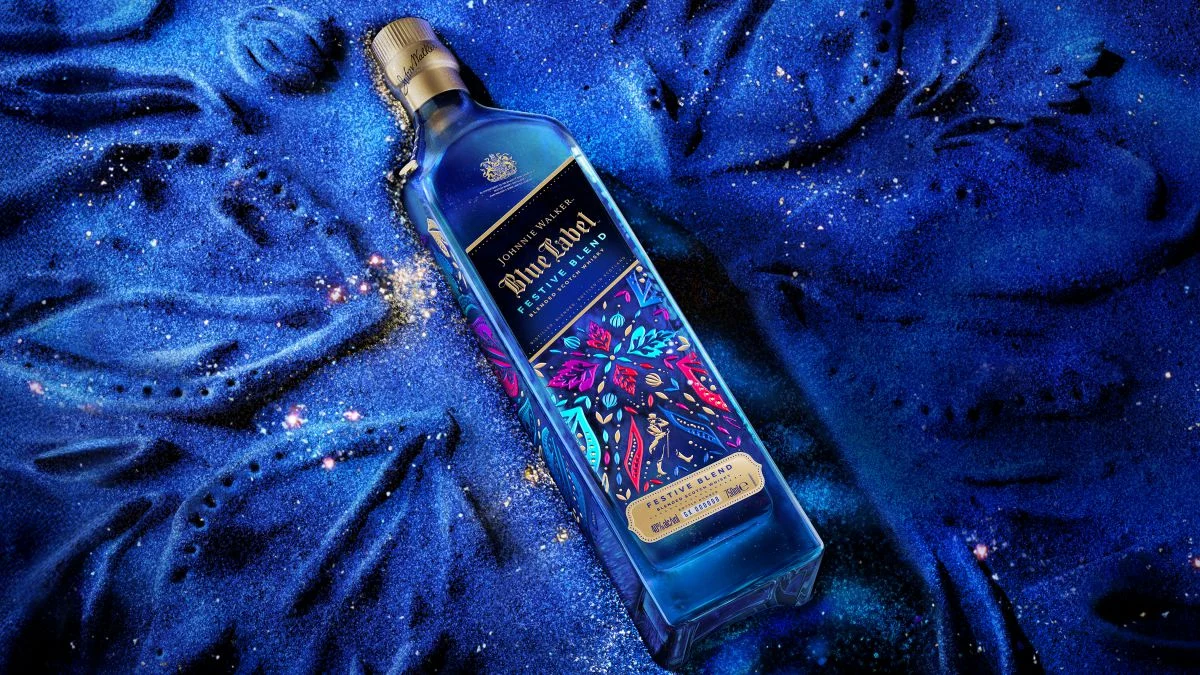
Diageo, the beverage behemoth and parent company of Scotch whisky titan Johnnie Walker, has unveiled its latest high-end offering: the Johnnie Walker Blue Label Indian Festive Blend. Designed as a tribute to the vibrant culture, rich heritage, and culinary traditions of India’s festive season, this limited-edition expression is the brainchild of Johnnie Walker Master Blender Dr. Emma Walker.
Retailing at a suggested retail price (SRP) of $220, the expression is hitting specialty liquor store shelves this month. It represents much more than a mere holiday gimmick; it is an exercise in bespoke liquid architecture. To craft this unique profile, Dr. Walker delved into Diageo’s colossal inventory of maturing spirits, carefully selecting rare stocks from both active and legendary distilleries.
The blend specifically incorporates whiskies from:
- Port Dundas: A celebrated "ghost" grain distillery that provides a foundational layer of sweet depth.
- Clynelish: A Highland malt known for contributing tropical brightness and a decadent, silky mouthfeel.
- Blair Athol: A distillery utilized to infuse the blend with robust, warm spice notes.
- Talisker: The rugged island distillery that introduces a touch of signature maritime smoke.
The launch is far from a standalone release. It anchors the second year of a high-profile creative partnership between Johnnie Walker and acclaimed Indian couturier Rahul Mishra. The collaboration features a specially commissioned bottle design that mirrors the intricate artistry of India’s festive celebrations, backed by an upcoming slate of immersive activations, exclusive experiential events, and high-end culinary gatherings spanning the coming months.
Chronology
To understand the trajectory of the Johnnie Walker Blue Label Indian Festive Blend, one must examine the timeline of strategic evolution that brought Diageo’s premier blended Scotch into direct conversation with South Asian luxury markets and modern global gastronomy.
- The Foundation of Rare Casks: For decades, Johnnie Walker Blue Label has maintained its status as the pinnacle of blended commercial Scotch. With Diageo controlling 31 distilleries across Scotland and holding upwards of 10 million aging casks, the raw materials for blending are virtually unparalleled. However, strict quality thresholds dictate that only one in every 10,000 casks makes the grade for the Blue Label vatting.
- The Genesis of the Rahul Mishra Partnership (Late 2023): Recognizing the burgeoning luxury market in India and the deep cultural appreciation for premium spirits, Johnnie Walker initiated its first major creative collaboration with Indian couturier Rahul Mishra. This initial phase established a bridge between Scottish distilling pedigree and Indian haute couture.
- Dr. Emma Walker’s Culinary Inspiration (2024): Tasked with designing a whisky that could transcend traditional neat pours and actively harmonize with complex cuisine, Dr. Emma Walker began studying the structural architecture of Indian dishes. Her research focused on how master chefs balance pungent spices with aromatic elegance, setting the conceptual foundation for the Festive Blend.
- The Second-Year Partnership Kickoff (Late 2024 to Present): Building on the success of the previous year’s initiatives, Johnnie Walker formally renewed its alliance with Mishra. This paved the way for the simultaneous rollout of the Blue Label Indian Festive Blend bottle, featuring custom packaging designed by the couturier, and the announcement of global activations.
- Global Market Rollout (Current Month): The expression officially drops at select specialty retailers across the United States and international markets, priced at $220, coinciding with peak festive celebration windows.
Supporting Data
The creation of a specialized, geographically inspired blend like the Indian Festive Blend relies heavily on logistics, inventory scale, and precise flavor engineering. An analysis of the data behind Diageo’s operations and the composition of this bottle reveals the immense machinery required to produce a single luxury SKU.
Diageo’s Inventory and Production Scale
- 31: The total number of whisky distilleries owned and operated by Diageo across Scotland, encompassing both single malt and grain facilities.
- 10,000,000+: The estimated number of aging casks resting in Diageo warehouses at any given time, providing a library of flavors ranging from young, vibrant spirits to decades-old antiquities.
- 1 in 10,000: The notoriously strict cask-selection ratio for Johnnie Walker Blue Label. Out of every ten thousand casks monitored by the blending team, only one possesses the exceptional character required to enter the Blue Label blend.
Key Component Distilleries in the Indian Festive Blend
- Port Dundas: Located in Glasgow, this legendary grain distillery ceased operations in 2010. Its remaining stocks are among the most coveted in the industry, prized for imparting a smooth, sweet, and velvety foundation to ultra-premium blends.
- Clynelish: Situated in the remote Scottish Highlands, Clynelish is famous for its waxy texture and notes of tropical fruit and honeyed malt, bringing silkiness to the palate.
- Blair Athol: Positioned at the gateway to the Scottish Highlands in Pitlochry, its distillate provides a nutty, robustly spiced backbone that bridges the gap between sweet grain and heavy peat.
- Talisker: Hailing from the Isle of Skye, even a tiny proportion of Talisker brings a dramatic, windswept character defined by black pepper, brine, and gentle maritime smoke.
Commercial Metrics
- $220: The Manufacturer’s Suggested Retail Price (MSRP) for a standard 750ml bottle, positioning it competitively within the luxury tier of limited-edition blended Scotches.
Official Responses
The intersection of Scottish heritage and Indian festive culture has generated notable commentary from the creative minds steering the project.
Dr. Emma Walker, Master Blender for Johnnie Walker, emphasized the deep respect for culinary arts that informed her blending choices:

"I was captivated by the artistry of Indian cuisine, the way chefs balance bold spice with harmony, elegance, and depth. That sense of balance became my inspiration for this special Blue Label blend. By layering aromatic notes of cardamom, clove, and cinnamon with smooth sweetness and our signature depth of flavor, we’ve created a whisky that complements the richness of India’s festive table while remaining unmistakably Johnnie Walker Blue Label."
The sentiment of cross-cultural dialogue was echoed through the brand’s broader promotional statements regarding the ongoing partnership with Rahul Mishra. Representatives for Johnnie Walker noted that the collaboration aims to redefine how heritage spirits are consumed within contemporary luxury spaces:
"Over the coming months, consumers can expect a series of exclusive experiences, immersive activations, and curated celebrations that further explore the intersection of rare whisky craftsmanship, Indian culture, and contemporary design."
While formal tasting notes from independent critics are still rolling in, early industry reception highlights the novelty of a major Scotch brand intentionally formulating a blend specifically to pair with the complex, multi-layered spice profiles found in South Asian banquets—a departure from traditional Western food-pairing paradigms.
Implications
The launch of the Johnnie Walker Blue Label Indian Festive Blend carries significant implications for the broader spirits industry, marketing strategies, and the evolution of luxury consumption.
1. The Globalization of Flavor Profiles
Historically, blended Scotch was formulated with traditional Western palates in mind—often paired with plain chocolate, cigars, or consumed simply as a post-dinner digestif. By explicitly engineering a luxury expression to complement the aromatic spices of Indian cuisine (such as cardamom, clove, and cinnamon), Diageo is acknowledging a fundamental shift in the global palate. This move signals that heritage spirits brands must innovate flavor profiles to appeal directly to diverse, high-net-worth diaspora communities and rapidly expanding luxury markets in Asia.
2. The Rise of Experiential and Interdisciplinary Collaborations
The partnership between Johnnie Walker and Rahul Mishra underscores a modern truth in luxury branding: product alone is no longer enough. Consumers—particularly younger, design-conscious affluent buyers—cagily demand narratives that connect high-end goods to art, fashion, and culture. By merging haute couture packaging with bespoke liquid blending, Diageo is setting a new benchmark for lifestyle marketing in the spirits sector, moving away from traditional sports sponsorships toward high-art collaborations.
3. Rarity and the Value of Ghost Stocks
As older, irreplaceable stocks from closed facilities like Port Dundas continue to dwindle across the industry, releases like the Indian Festive Blend highlight how master blenders must surgically deploy these liquid treasures. Utilizing ghost stocks not only justifies the $220 price point to collectors and enthusiasts but also creates an aura of urgency and exclusivity. It proves that even within massive multinational portfolios, hyper-customization and limited-run artistry remain viable and profitable strategies for capturing consumer imagination in an increasingly crowded spirits market.
 Evan Lee Salim
 Asep Darmawan
 Laily UPN
