

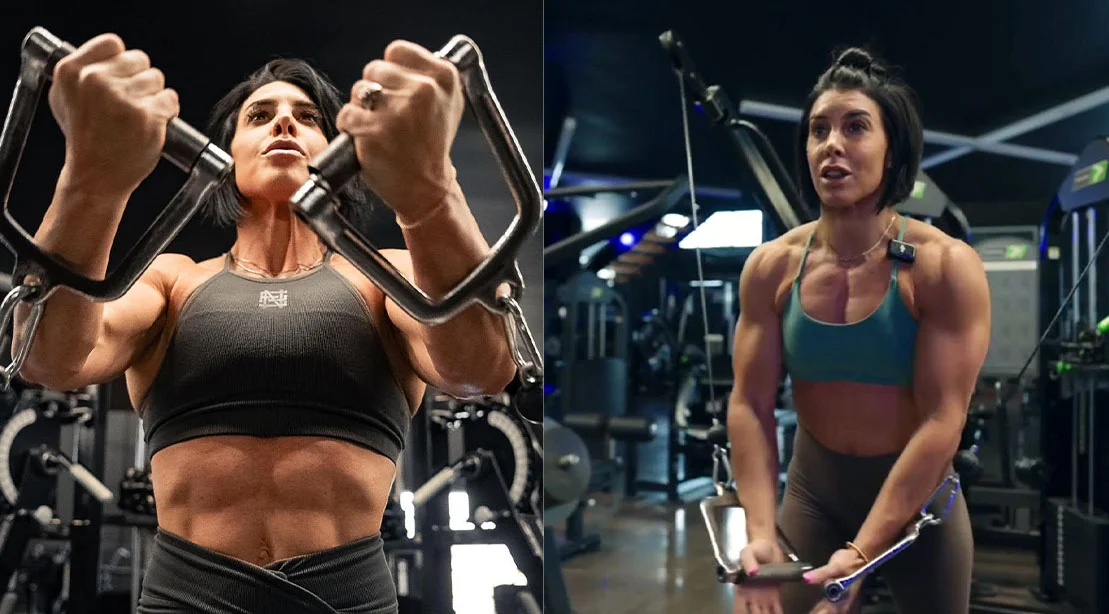
In the high-stakes world of competitive bodybuilding, the difference between a podium finish and a mid-pack placement often comes down to the minute details of muscle development. While compound movements like the barbell bench press provide the foundational mass necessary for a thick torso, the nuances of pectoral refinement are achieved through isolation—specifically, the art of the cable fly.
Understanding the biomechanics of chest training is a hallmark of elite athletes. Yet, for many gym-goers, the complexity of cable angles remains an intimidating hurdle. To demystify this, we turn to the expertise of Dana Linn Bailey, the inaugural winner of the Women’s Physique Olympia title in 2013. Bailey, a legendary figure in the fitness industry, has long championed the idea that effective hypertrophy is not merely about moving weight, but about manipulating trajectories to target specific muscle fibers.
The Foundation of Pectoral Hypertrophy: Why Angles Matter
At its core, the cable fly is a premier movement for isolating the pectoralis major. Unlike a bench press, which involves significant assistance from the triceps and anterior deltoids, the cable fly keeps constant tension on the chest muscles throughout the entire range of motion. By maintaining a constant line of pull, the athlete can elicit a deep contraction that is difficult to replicate with free weights.
However, the "mid-cable fly"—where pulleys are set at chest height—is only the beginning of the story. While the mid-fly offers a comprehensive, balanced stimulus for the entire pectoral region, it is often insufficient for those looking to address specific aesthetic imbalances. To sculpt a chest that possesses both "top-shelf" thickness and a defined lower sweep, one must understand how to manipulate the trajectory of the cable.
The Anatomy of the Chest: A Chronological Progression of Knowledge
Historically, bodybuilding training was dominated by free-weight movements. In the golden era of the sport, athletes relied heavily on variations of the bench press to hit different angles of the chest. The "flat, incline, decline" protocol became the industry standard.
As gym technology evolved, the implementation of cable machines allowed for a more fluid, adaptive approach to these same angles. The chronology of this evolution moved from static bars to versatile cables, allowing for an infinite range of motion. Dana Linn Bailey emphasizes that applying the "bench press logic" to cable work is the most efficient way to achieve professional-level results. Just as a lifter would adjust the angle of a bench to target the clavicular (upper) or sternocostal (lower) heads of the pectoralis, they must adjust the pulley height of the cable station to isolate those same fibers.
Supporting Data: Understanding Incline vs. Decline Flyes
To optimize your physique, you must categorize your movements based on the fiber orientation of the chest. According to Bailey, the cable fly serves as a surgical tool to manipulate these specific zones.
The Decline Fly: Sculpting the Lower Pectorals
The decline fly is achieved by placing the pulleys in the highest possible position on the cable station. From this overhead anchor point, the athlete pulls the handles downward in a sweeping arc toward the waist.
- The Biomechanics: By pulling from high to low, the line of force aligns with the downward-slanting fibers of the lower pectoralis major.
- The Objective: This movement mimics the function of a decline bench press. It is essential for athletes who wish to develop the "lower sweep" or the "shelf" that defines the bottom of the chest, creating a clear separation between the pectoral muscle and the abdominal wall.
The Incline Fly: Building the Upper Shelf
The incline fly, often referred to as a "low-to-high" movement, requires the pulleys to be set at the lowest possible position. The athlete pulls the handles upward and inward, meeting at approximately chest or shoulder height.
- The Biomechanics: This trajectory aligns with the clavicular head of the pectoralis major. By pulling from a low anchor point, the athlete forces the upper fibers to contract against gravity throughout the ascent.
- The Objective: This is the primary movement for developing the upper chest—the area immediately below the collarbone. For many, this is the most difficult area to fill out, and the low-to-high cable fly is the most efficient method to force growth in this specific region without over-taxing the shoulders.
Official Perspective: Dana Linn Bailey’s Coaching Philosophy
In our interview, Dana Linn Bailey stresses that simplicity is the ultimate sophistication. When asked why athletes should deviate from the standard mid-cable fly, her answer remains consistent: "It’s going to target different areas of your chest."
Bailey’s philosophy is rooted in the concept of "purposeful training." She argues that while the mid-fly is a fantastic movement for overall fatigue and metabolic stress, it lacks the precision required for bodybuilding competition. If an athlete has a weak upper chest, performing mid-flyes will only reinforce their existing physique. By "acing the angles," the athlete can dictate where the hypertrophy occurs.
She compares the cable station to a painter’s palette. The cables are the brush, and the angles are the colors. To create a masterpiece—a balanced, fully developed chest—you cannot rely on one color alone. You must consciously shift your anchor points based on the specific aesthetic goal for that training block.
Implications for the Modern Lifter
For the average gym-goer, the implications of this knowledge are transformative. The transition from "just doing flyes" to "targeting specific fibers" marks the threshold between recreational exercise and deliberate bodybuilding.
1. Enhanced Symmetry
By incorporating both high-to-low and low-to-high cable variations, you ensure that no part of the pectoralis major is left under-stimulated. This leads to a more symmetrical appearance, which is not only aesthetically pleasing but also functional for overall chest health.
2. Reduced Shoulder Strain
Unlike heavy pressing movements, which can be taxing on the rotator cuff and the AC joint, cable flyes allow for high-volume hypertrophy with significantly lower systemic fatigue. Because the resistance is constant, you can achieve a maximal "pump" without the need for ego-lifting or dangerous heavy loads.
3. Long-Term Progression
Understanding these angles allows for periodization. If you find your upper chest is lagging, you can program a six-week block with a heavy focus on low-to-high cable flyes at the start of your workout when your energy levels are highest. This strategic approach to training is what separates those who plateau from those who continue to see year-over-year gains.
Conclusion: The Path to Precision
The cable fly is far more than a "finisher" movement. When wielded with the precision recommended by Dana Linn Bailey, it becomes the most versatile tool in your arsenal. Whether you are aiming for the deep, defined sweep of a lower chest or the thick, full appearance of an upper shelf, the answer lies in the cable’s trajectory.
As Bailey reminds her followers, the keys to success are simple: assess your physique, adjust your angles, and remain consistent. The next time you walk into the gym, do not simply aim for the middle pulley. Evaluate your goals, set your anchors, and start building with purpose.
For those looking to stay updated on Bailey’s evolving methodologies and daily training tips, her insights continue to be a primary resource for athletes worldwide. Her commitment to the fundamentals of bodybuilding serves as a masterclass for anyone looking to refine their physique through the intelligent application of science and experience.
 Lina Hope
 rifanmuazin
 Laily UPN
