

By Claudia Ross
PASADENA, Calif. — When media theorist Marshall McLuhan famously declared that “the medium is the message,” he was navigating the nascent anxieties of the 1958 television age, contemplating how cathode-ray tubes and radio waves were fundamentally altering the human consciousness. He could hardly have envisioned a gallery at the Armory Art Center in Pasadena, where, in 2026, artists are utilizing crushed velvet, amethyst crystals, and raw masa to explore the ancient intersection of craft and ritual.
The exhibition Material Prophecies: Craft as Divination asks a provocative, albeit slippery, question: When a material is inherently tied to spiritual practice, does that material dictate the message of the artwork, or does the artist merely borrow the weight of the medium to lend authority to their own narrative? The result is a sprawling, sometimes uneven, but ultimately hypnotic exploration of how we imbue objects with the power of the divine.
Main Facts: The Intersection of Matter and Spirit
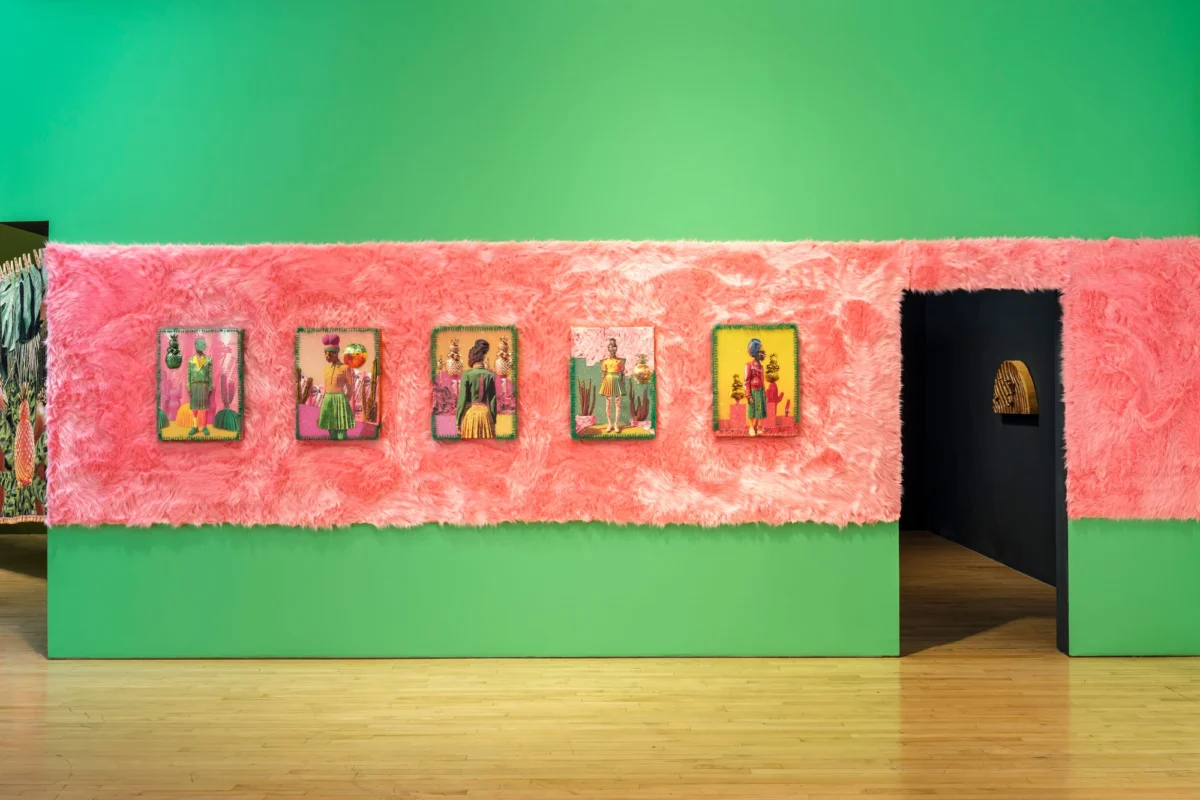
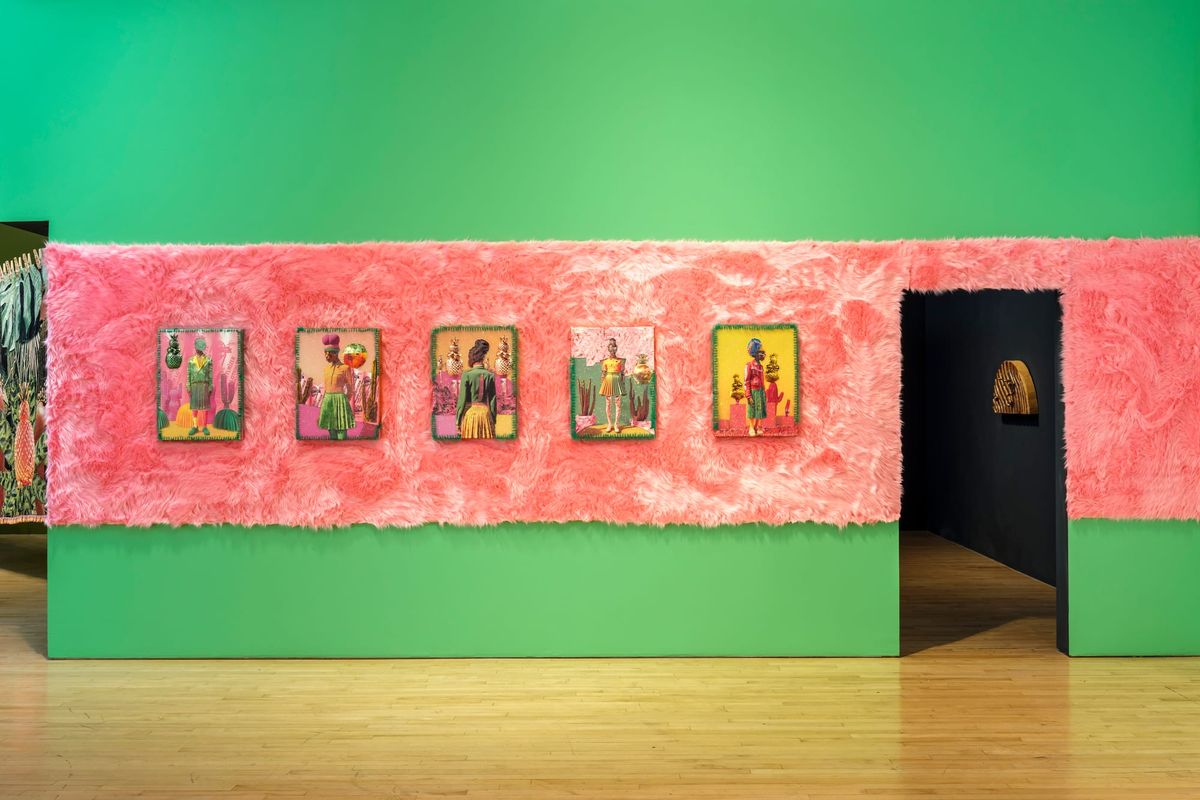
Material Prophecies brings together eight contemporary artists—including Sky Hopinka, vanessa german, April Bey, Jackie Amézquita, Joel Gaitan, Calethia DeConto, and Emmanuel Louisnord Desir—to investigate how physical matter acts as a bridge between the mundane and the metaphysical. The exhibition, curated to highlight the tactile nature of spiritual labor, posits that craft is not merely an aesthetic choice but an act of divination—a way of predicting, protecting, or communicating with the unseen.
The curatorial premise hinges on the idea that certain substances—clay, wood, stone, and pigment—carry ancestral memory. By manipulating these substances, the artists in this exhibition are not merely creating "art"; they are performing a process of transformation. Whether through the heavy, earthen textures of Amézquita’s mud-based reliefs or the ethereal, glittering surfaces of german’s quartz-encrusted busts, the show argues that the material itself is a primary, active participant in the conversation.
Chronology of Materiality: From Ancient Ritual to Modern Art
The history of using material as a conduit for the spiritual is as old as human civilization, yet the timeline of Material Prophecies creates a unique tension.
- 1842: John Herschel invents the cyanotype process. While originally a tool for colonial scientific documentation, in this exhibition, it is repurposed by Calethia DeConto to map the "emotional weather" of memory, shifting the medium from a tool of objective record-keeping to one of subjective, ritualized self-reflection.
- 1958: Marshall McLuhan publishes the foundational ideas behind "the medium is the message," providing the intellectual framework for questioning how form dictates function in contemporary discourse.
- 2024: Jackie Amézquita debuts her Earthworks series, utilizing raw, organic materials—mud and masa—that evoke the agrarian roots of sustenance and survival.
- 2025: Emmanuel Louisnord Desir completes "Raging Machine," pushing the boundaries of bronze casting by merging industrial found objects with the traditional aesthetic of African Diasporic sculpture.
- 2026: Material Prophecies: Craft as Divination opens at the Armory Art Center, serving as a synthesis of these varying historical threads and contemporary experimentations.
Supporting Data: The Artists and Their Mediums
The exhibition’s efficacy is best measured by how the artists engage with the physical "weight" of their chosen mediums.
Jackie Amézquita and the Earth
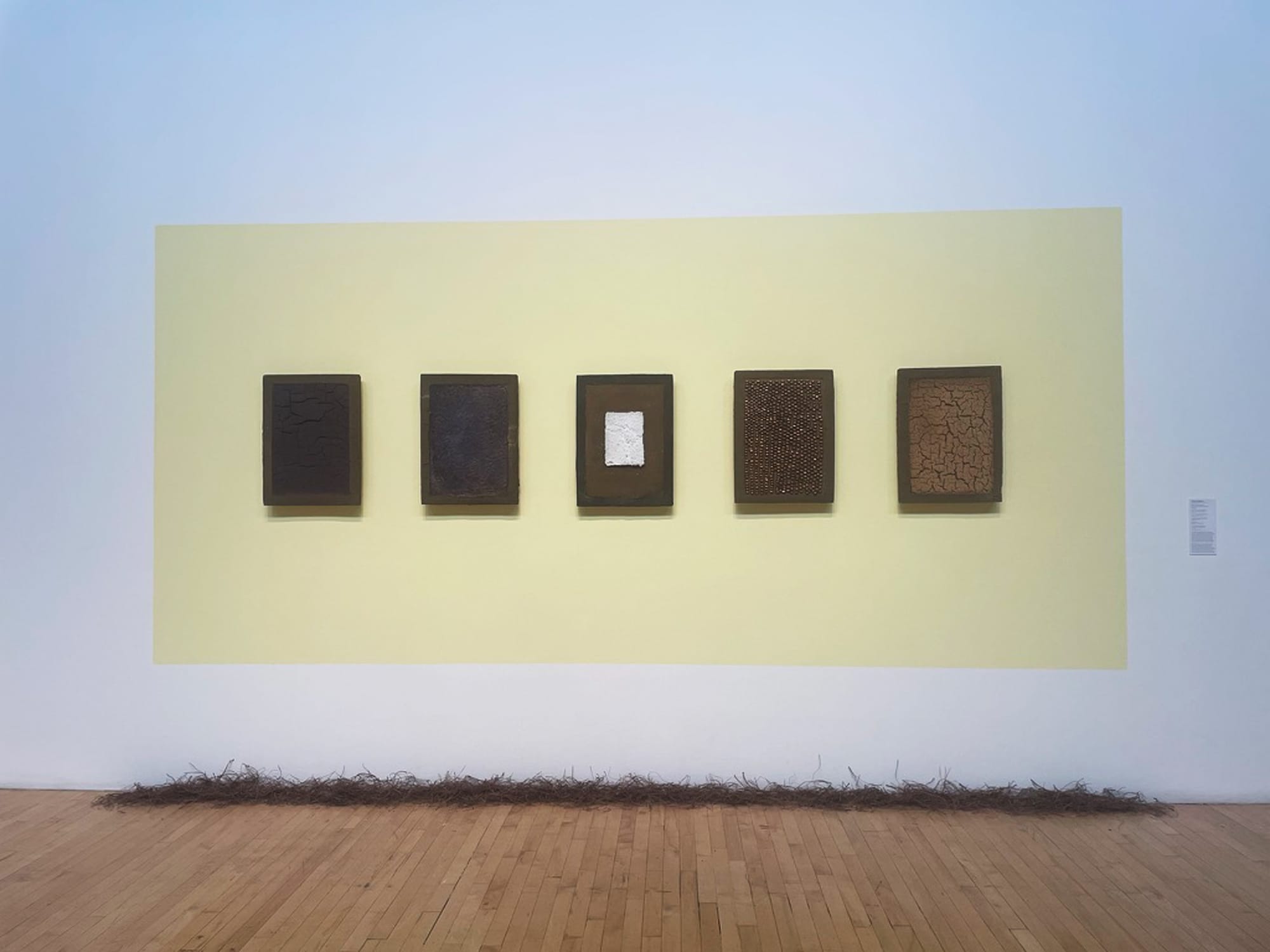
Amézquita’s five wall reliefs, part of her 2024 Earthworks series, are perhaps the most direct engagement with the theme. By utilizing mud, masa, and dried clay, she creates surfaces that feel like living, breathing landscapes. The cracking of the clay serves as a testament to the passage of time—a material manifestation of drought, harvest, and the physical labor required to sustain life.
Joel Gaitan’s Contemporary Devotion
Gaitan’s terracotta figures, such as "No Pidas Agua, Cuando No Hay Sed" (2024), bridge the gap between pre-Columbian ceramic traditions and modern identity politics. By adorning his unglazed, devotional-style figures with metallic teeth and gold jewelry, Gaitan asserts a form of "contemporary defiance." The message here is clear: the divine is not confined to the past or to the museum; it is present in the street-smart, gilded reality of the modern subject.
The Cyanotype Contradiction
Calethia DeConto’s Mapping the Emotional Weather of Memory and the Space Between (2026) offers a critical point of divergence. While the artist frames her blue-and-white photographs as intimate, spiritual inquiries, the historical baggage of the cyanotype—a tool often linked to colonial scientific mapping—adds a layer of complexity. The juxtaposition of the medium’s colonial origins with the artist’s intimate, bodily framing suggests that the "message" of a material can be reclaimed and subverted, though the process is far from seamless.

Official Responses and Critical Reception
The reception of Material Prophecies has been largely positive, with critics pointing to the standout performances of vanessa german and Emmanuel Louisnord Desir.
In his analysis of Desir’s work, one reviewer noted that the artist successfully "resists the stricter categorization" often imposed on works referencing African Diasporic traditions. By welding pencil sharpeners and handaxes into bronze hybrid creatures, Desir forces the viewer to reconcile the industrial, utilitarian world with the sacred, ritualized history of bronze casting.
Similarly, vanessa german’s "DAMN." (2024) has been described as a "revelation." The bust, encrusted with rose quartz and adorned with a necklace of industrial bottle caps, challenges the viewer’s perception of the human form. By transforming the portrait into something crystalline and superhuman, german suggests that the body itself is a site of spiritual transmutation.
Implications: The Future of Craft as Divination
The broader implications of this exhibition suggest a shift in the contemporary art world toward "re-enchantment." In an era dominated by digital ephemeralism and artificial intelligence, there is a palpable hunger for the tactile. The artists in Material Prophecies are not merely making objects; they are engaging in a slow, deliberate process of "divination," where the artist acts as a medium for the materials themselves.
However, the exhibition also forces us to consider the limits of this approach. When an artist uses a material specifically because of its "spiritual" history, they risk commodifying the very rituals they seek to honor. Is the "message" truly in the material, or is the material merely a signifier being used to add gravity to a personal artistic vision?
The "Message" Re-evaluated
If we return to McLuhan, we must ask: What happens when the medium is the history of the sacred? In the case of Material Prophecies, the answer is found in the friction. The most successful works are those where the artist does not merely adopt the spiritual history of their medium but actively struggles with it.
The exhibition suggests that in the 21st century, the artist’s role is akin to that of an alchemist. They must take the discarded, the industrial, and the ancient, and through the labor of craft, force them to speak in a new, unified tongue. Whether or not these works successfully "divine" the future remains to be seen, but they undeniably capture the current anxiety—and the current hope—of a world trying to find sacredness in the substance of the physical realm.
As Material Prophecies continues its run at the Armory Art Center, it remains a vital checkpoint for anyone interested in the intersection of material culture and spiritual identity. It is an invitation to look closer—not just at the art on the wall, but at the very nature of the matter from which our reality is composed.
 Basiran
 Muslim
