

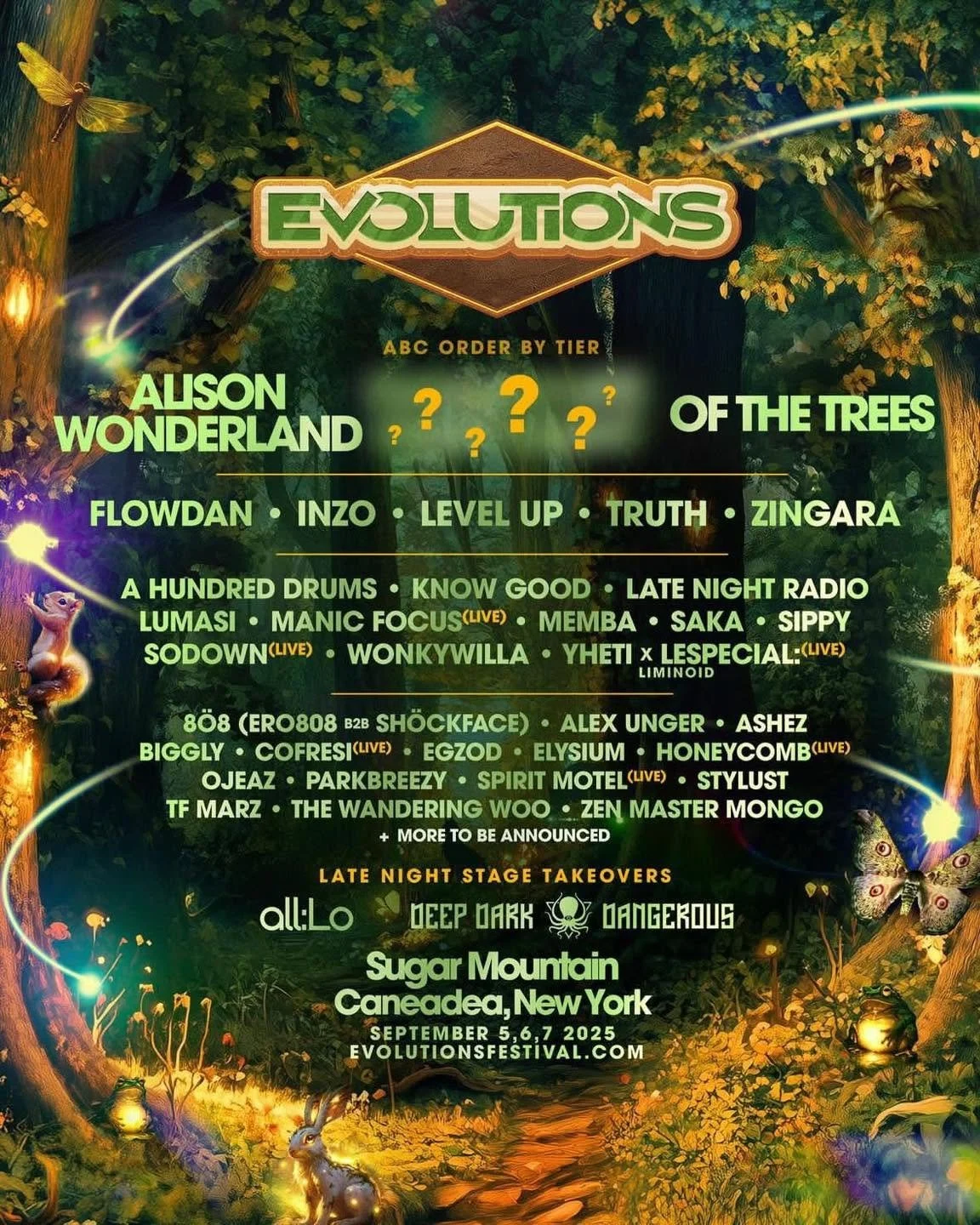
NEW YORK — New York Attorney General Letitia James has launched a sweeping legal offensive against the promoters of the canceled Evolutions Festival, taking aim at what state officials describe as a blatant financial betrayal of electronic music fans and small business vendors. The lawsuit, filed in response to the sudden cancellation of the September 2025 festival, seeks full restitution for hundreds of consumers and local enterprises, alongside millions of dollars in potential civil penalties and strict operational injunctions that could permanently reshape how the organizers handle live events in the Empire State.
At the heart of the legal action is more than $243,000 collected in advance ticket sales for an event that never materialized. The electronic music community had eagerly anticipated the three-day festival, which was slated to feature a star-studded lineup headlined by Alison Wonderland, Of The Trees, and Ganja White Night. However, just ten days before the gates were set to open at the Sugar Mountain Performing Arts Center in Caneadea, New York, the plug was pulled, leaving ticket holders, vendors, and artists in limbo.
While cancellations are an unfortunate reality in the live entertainment industry, the fallout from Evolutions Festival has escalated far beyond standard operational friction. State investigators assert that the promoters not only withheld refunds from hundreds of eager attendees and hard-working vendors, but also violated New York’s strict arts and cultural laws governing consumer financial protection.
Main Facts of the Case
The lawsuit, filed by Attorney General James, targets Evolutions Festival LLC, 845 Vibrations LLC, and individual organizers Michael G. Brown and Justin J. Brown. According to court filings, the defendants are accused of pocketing hundreds of thousands of dollars in pre-event revenue and subsequently refusing to return the money when the festival was called off.
The financial scope of the alleged scheme is substantial:
- Ticket Sales: Evolutions sold 1,157 tickets and passes to 521 individual consumers, generating a total of $243,158.04 prior to the cancellation.
- Vendor Investments: Beyond attendees, 28 independent businesses collectively spent more than $21,000 to secure vendor spaces at the festival, hoping to connect with the thousands of expected electronic music enthusiasts.
- The "Zero Refund" Policy: State investigators allege that the organizers failed to issue a single voluntary refund. While 11 resilient customers managed to claw back a combined $5,005.97 by initiating chargeback disputes through their respective credit card companies, the promoters themselves kept every cent entrusted to them.
The legal jeopardy facing the defendants is immense. The Attorney General’s office is pursuing full restitution for all affected ticket buyers and vendors. Furthermore, the state is seeking civil penalties of up to $5,000 for each of the 1,185 alleged statutory violations. If a court chooses to impose the maximum penalty across every single count, the total financial liability for the defendants could approach a staggering $6 million.
In addition to financial restitution and penalties, James is asking the court to bar the named defendants from organizing, promoting, or staging any future live events within New York State unless and until they post a substantial $500,000 performance bond to safeguard consumer funds.
Chronology of Events
To understand how a promising Labor Day weekend festival devolved into a multi-layered legal battle, it is necessary to examine the timeline of decisions, accusations, and regulatory interventions that led to the Attorney General’s lawsuit.
Late Summer 2025: Anticipation and Ticket Sales
Promoted heavily across social media and targeted digital platforms, Evolutions Festival positioned itself as a premier destination event for the electronic music community. Scheduled to run from September 5th through September 7th, 2025, the festival boasted an impressive roster of bass and dance music acts. Consumers eagerly purchased single-day passes, weekend bundles, and camping options, pushing total pre-sales past the quarter-million-dollar mark. Simultaneously, independent food trucks, clothing designers, and craft vendors paid out-of-pocket fees to secure their spots on the festival grounds.
Late August 2025: The Sudden Cancellation
With just ten days remaining before the music was set to begin, the reality of the situation shattered consumer expectations. On August 26, 2025, organizers abruptly announced that Evolutions Festival would not move forward. The sudden notice left attendees who had already booked travel, accommodations, and time off work scrambling to alter their plans. More pressingly, it initiated an anxious waiting game regarding refunds for the tickets and vendor slots they had already paid for.
Fall 2025: The Inter-Party Blame Game
As weeks passed without refunds being issued, ticket buyers began demanding answers. Instead of facilitating returns, the festival’s organizers pointed an accusing finger at the host venue. Evolutions issued public and private statements laying the blame entirely on the Sugar Mountain Performing Arts Center, claiming the venue had failed to secure the necessary municipal permits required to host an event of that scale.
Sugar Mountain swiftly and forcefully rejected that narrative. Representatives for the venue countered that the festival promoters were entirely at fault, alleging that they failed to supply mandatory documentation, essential contracts, and adequate proof of liability insurance.
The feud soon escalated into a formal legal war. Evolutions Festival LLC filed a lawsuit against Sugar Mountain, maintaining that the venue lacked the proper permits for the anticipated crowd size and failed to obtain the proper legal authorization for alcohol sales on the premises. That breach-of-contract and liability dispute remains tied up in the courts, unresolved and fiercely contested.
Winter 2025 – Early 2026: Regulatory Scrutiny and the AG’s Intervention
As consumer complaints piled up, the New York Attorney General’s office opened an inquiry into the matter. During communications with state investigators, representatives for Evolutions reportedly adopted a hardline stance: they stated that ticket buyers would only receive refunds if and when the festival organizers successfully recovered money through their ongoing civil litigation against Sugar Mountain.

This condition—tying consumer refunds to the unpredictable outcome of a third-party corporate lawsuit—drew immediate alarm from state regulators. New York authorities noted that this approach directly violated state statutes designed to protect everyday citizens from corporate mismanagement and bad-faith business practices.
September 2026: The State Strikes Back
Finding the promoters’ justifications unlawful and unacceptable, Attorney General Letitia James formally filed a lawsuit against Evolutions Festival LLC, 845 Vibrations LLC, and the individual organizers, transitioning the issue from a private business dispute into a major state enforcement action.
Supporting Data and Financial Breakdown
The numbers underpinning the Attorney General’s lawsuit paint a clear picture of the scale of consumer capital exposed by the cancellation.
- $243,158.04: The total amount gathered from 521 customers who purchased 1,157 tickets and passes. This average of roughly $210 per transaction reflects a dedicated consumer base that invested substantial personal funds into the event.
- $21,000+: The collective investment made by 28 small business vendors. For independent entrepreneurs, losing hundreds or thousands of dollars in prepaid fees and lost inventory opportunities can be devastating to their bottom lines.
- $5,005.97: The meager sum recovered by just 11 consumers who successfully bypassed the promoters entirely by utilizing credit card chargeback protections. This figure highlights the absolute failure of the organizers to provide voluntary customer service or voluntary reimbursement avenues.
- $5,000 Per Violation: The statutory penalty ceiling sought by the state for each of the 1,185 identified infractions, establishing a maximum potential penalty threshold near $6 million.
- $500,000: The proposed performance bond requirement that would serve as a prerequisite for any future promotional activities by the defendants in New York.
Official Responses and Statements
The legal action has drawn sharp commentary from state leadership, emphasizing a zero-tolerance policy for consumer exploitation within New York’s booming entertainment and tourism sectors.
In a public statement accompanying the announcement of the lawsuit, Attorney General Letitia James pulled no punches:
"Concertgoers and vendors who spend their hard-earned money in New York should know that my office has their back. My office will never allow unsavory promoters to ruin that experience and take advantage of consumers or small business owners."
James’s office stressed that live event promoters cannot use external business disputes or venue disagreements as a shield to shirk their fundamental financial responsibilities to the public. Under New York law, ticket buyers are not financial underwriters for a promoter’s legal battles with a venue owner.
To date, representatives for Evolutions Festival LLC, 845 Vibrations LLC, and the individual defendants—Michael G. Brown and Justin J. Brown—have not issued a comprehensive public response specifically addressing the Attorney General’s lawsuit, though their legal posture in prior communications indicated an intent to withhold refunds pending the resolution of their suit against Sugar Mountain.
Broader Implications for the Live Events Industry
While the Evolutions Festival lawsuit is specific to a single canceled weekend in Caneadea, New York, the legal action carries profound implications for the wider live music and festival industry, both regionally and nationally.
1. Enforcement of Escrow and Trust Laws
New York’s Arts and Cultural Affairs Law contains explicit provisions designed to protect consumers when events fail to happen. Promoters are generally expected to maintain advance ticket proceeds in protected accounts or secure financial instruments—such as escrow accounts or bonds—that ensure money remains available for immediate reimbursement if a show is scrapped. The Attorney General’s lawsuit serves as a loud warning flare to independent promoters nationwide: treating consumer ticket sales as general operating capital or using pre-sales to pay off unrelated debts is a direct violation of state consumer protection statutes.
2. Shifting Risk Away from Consumers and Vendors
In recent years, post-pandemic festival cancellations have become increasingly common, driven by rising operational costs, insurance hurdles, and unpredictable venue negotiations. Too often, when a festival collapses, the financial burden cascades downward onto the most vulnerable parties: the fans who bought tickets months in advance and the independent food, art, and merch vendors who invested their savings into inventory. By demanding harsh civil penalties and preventative bonding requirements, the New York AG’s office is establishing a precedent that promoters must bear the financial risk of their own business failures, rather than passing those losses onto the public.
3. The Future of Independent Promoters in New York
If the court grants the Attorney General’s requests—particularly the mandate for a $500,000 performance bond—it will fundamentally alter the barrier to entry for independent electronic music promoters in New York. While established festival production companies often have access to substantial capital reserves, smaller, grassroots independent operators may find it exceedingly difficult to secure such bonds, potentially centralizing the market among larger corporate entities. However, supporters of the ruling argue that such friction is a necessary price to pay to weed out undercapitalized operations that leave consumers holding the bag.
As the lawsuit moves through the New York courts, all eyes will be on how the judiciary handles the interplay between the promoters’ cross-claims against Sugar Mountain and the absolute statutory right of consumers to receive refunds for services never rendered. For the 521 ticket buyers and 28 vendors caught in the middle of the Evolutions Festival fallout, Attorney General James’s intervention represents the most promising avenue yet for seeing their hard-earned money returned.
 Pevita Pearce
 Lina Irawan
