

LOS ANGELES — In the sprawling landscape of contemporary television satire, few institutions possess the enduring cultural longevity and venomous precision of South Park. Creators Matt Stone and Trey Parker have long utilized the peaceful mountain town—and, in recent episodes, its international alter-ego setting of South America—as a crucible to melt down the absurdity of modern life and reshape it into biting social commentary.
In Wednesday night’s explosive episode, the long-running animated comedy took direct aim at the upper echelon of global wealth,literalizing a long-held colloquialism by depicting tech moguls, data-center magnates, and venture capitalists as literal, walking, talking penises. The episode, titled with characteristic subversiveness, explores the friction between an increasingly unhinged ultra-wealthy class and the everyday citizens who are forced to bear the brunt of their digital infrastructure, podcast appearances, and public meltdowns.
What follows is an in-depth breakdown of the episode’s narrative progression, its sharp cultural targets, the socioeconomic implications of its satire, and what this explosive installment signals for the remainder of the season.
Main Facts: The Rise of "Weenietown" and the Great Billionaire Infestation
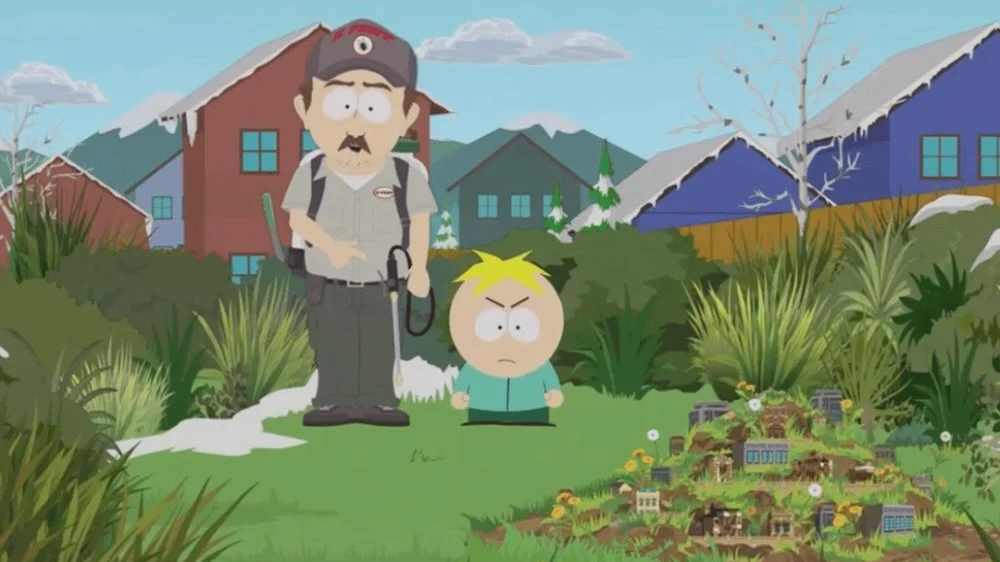
The core narrative of Wednesday’s episode revolves around an invasive species of a different kind: tech billionaires. Setting up camp directly in the backyard of perennial punching bag Butters Stotch, a newly constructed enclave dubbed "Weenietown" begins to choke the local community. Driven by the insatiable energy demands of massive, humming artificial intelligence data centers, the tech elite spark rolling blackouts across the region.
For Butters, the breaking point arrives not from economic disenfranchisement or ideological opposition, but from a deeply relatable domestic tragedy: a neighborhood-wide power outage interrupts his ability to stream his favorite guilty-pleasure television program, Dr. Pimple Popper.
However, Butters’ valid frustrations are immediately met with ideological hostility from his AI-obsessed parents, Stephen and Linda Stotch. Rather than sympathizing with their son’s plight, Stephen flies into a paranoia-fueled rage, accusing Butters of leaning toward communism and threatening to ground him for exhibiting "Libtard" tendencies.
The episode quickly escalates into a multi-tiered farce, examining how modern political discourse, corporate hubris, and the endless churn of podcast culture have warped domestic life. As Weenietown expands, drawing more affluent yet socially inept billionaires to its data hubs, the community spirals into chaos, forcing an unlikely alliance to purge the neighborhood of its most obnoxious inhabitants.
Chronological Breakdown: From Backyard Intrusion to the Nashville Solution
To fully understand the narrative arc of Wednesday’s South Park installment, it is necessary to trace the escalation of events step-by-step as they unfold across the half-hour runtime:
- The Influx and the Outage: The episode opens with Butters discovering that his backyard has been annexed by a sprawling data center compound populated by literal, ambulatory billionaire penises. The massive power draw of the facility cuts electricity to the Stotch household, ruining Butters’ television viewing schedule.
- Parental Gaslighting and Conspiracy: When Butters complains to his parents, Stephen Stotch descends into a conspiratorial spiral. Convinced that his son’s anti-tech, anti-billionaire stance cannot be rational, Stephen blames childhood vaccinations, linking medical science to progressive politics and a supposed total alteration of his son’s identity.
- Internal Friction in Weenietown: Within the billionaire compound, social dynamics begin to fray. The leadership of Weenietown holds meetings to address the severe PR backlash they are generating through their own self-inflicted wounds—specifically highlighting unauthorized podcast appearances on platforms like Joe Rogan’s show and petty, highly publicized public spats with musicians like Macklemore.
- Stephen’s Domestic Breakdown: As Stephen’s obsession with podcasts deepens, he blames his wife for not keeping up with alternative media diets. In a darkly comic monologue, Stephen claims his wife’s failure to listen to podcasts has led to their son being "vaccinated, turned transsexual, and fucked to death in the streets of South America." Overwhelmed by his own manufactured delusions, Stephen ultimately turns himself into the FBI for a bizarre, unrelated crime involving livestock.
- The Catalyst of Consumerism: While grassroots complaints from characters like Butters fall on deaf ears, the situation reaches a boiling point when rumors spread that the ongoing power outages might jeopardize the impending November launch of Grand Theft Auto 6. The threat to gaming culture finally mobilizes the broader populace.
- The Nashville Relocation: Realizing that public sentiment has turned toxic, the senior, more calculating billionaire penises hatch an internal coup. Acting entirely out of self-preservation, they collaborate with Butters to orchestrate a mass deportation of the most annoying faction of tech moguls, successfully banishing them to Nashville, Tennessee.
- The Final Twist: The episode closes with a surprise cameo from arguably the most polarizing billionaire in the global spotlight—complete with anatomical accuracy—signaling that Stone and Parker are officially returning to their trademark political and cultural satire after a relatively apolitical season premiere.
Supporting Data and Cultural Targets: Podcasts, Data Centers, and Public Feuds
The brilliance of South Park has always rested in its ability to pinpoint exact cultural touchstones and weaponize them against the powerful. Wednesday’s episode was no exception, taking direct aim at several distinct pillars of contemporary American life:
- The Data Center Crisis: In the real world, the explosion of generative artificial intelligence has led to a massive surge in energy consumption, with tech giants constructing sprawling data centers that strain local power grids and spark fierce opposition from rural and suburban communities alike. South Park literalized this environmental and infrastructural burden, transforming abstract power grid failures into a literal backyard nuisance.
- The "Podcast-Industrial Complex": Stephen Stotch’s descent into radicalization via unverified audio broadcasts mirrors the real-world phenomenon of algorithmic rabbit holes. The episode mocked the way self-styled intellectual podcasts have become echo chambers for middle-aged parents who view basic civic complaints through the lens of culture-war conspiracy theories.
- Billionaire Social Ineptitude: Through the seminar led by the mayor of Weenietown, the show targeted the awkward reality of modern tech barons. The dialogue cut straight to the bone: acquiring billions of dollars through software monopolies or venture capital does not cure social maladjustment. The episode specifically lampooned the tendency of wealthy executives to pick bizarre public fights with pop culture figures—such as recent, highly publicized tiffs involving musicians and athletes—proving that money cannot buy self-awareness.
Official Responses and Industry Reactions
As of Thursday morning, representatives for the various tech moguls, podcast networks, and municipal leaders lampooned in the episode have largely maintained a strategic silence. Historically, targets of South Park’s satire either lean into the joke with self-deprecating social media posts or pretend the cultural institution does not exist.
However, cultural critics and television analysts have been quick to weigh in. Media pundits have praised the episode for revitalizing the show’s signature brand of chaotic, multi-layered storytelling. Writing for prominent entertainment outlets, reviewers noted that the transition from the relatively muted, apolitical tone of the season’s opening episode to this unfiltered takedown of the tech elite proves that Stone and Parker have lost none of their edge.
Furthermore, gaming forums and social media platforms exploded with memes regarding the Grand Theft Auto 6 plot point, with fans wryly noting that delaying the long-awaited video game is perhaps the only theoretical crime that could genuinely unite a fictional town into overthrowing the ruling class.
Implications: Is the Old South Park Back?
The broader implication of Wednesday night’s broadcast extends far beyond a single half-hour of animated television. Earlier in the season, media observers speculated whether South Park was adopting a softer, more apolitical posture, steering clear of the hyper-polarized political landscape that defined the Trump and post-pandemic eras.
The "Weenietown" episode decisively shatters that theory. By taking direct aim at the intersection of artificial intelligence, wealth inequality, digital infrastructure, and online radicalization, Stone and Parker demonstrated that they are just as willing to skewer the modern American oligarchy as they were to mock politicians two decades ago.
The inclusion of the episode’s final cameo suggests a return to form: a world where no one is safe from ridicule, whether they are a local resident struggling to stream Dr. Pimple Popper or the richest man on the planet rendered as a literal phallus. As the season progresses, viewers can likely expect more targets from the upper echelons of tech and media to find themselves uncomfortably mapped onto the streets of South Park and South America.
 Asro
Asro
 Lina Irawan
 rifanmuazin
