

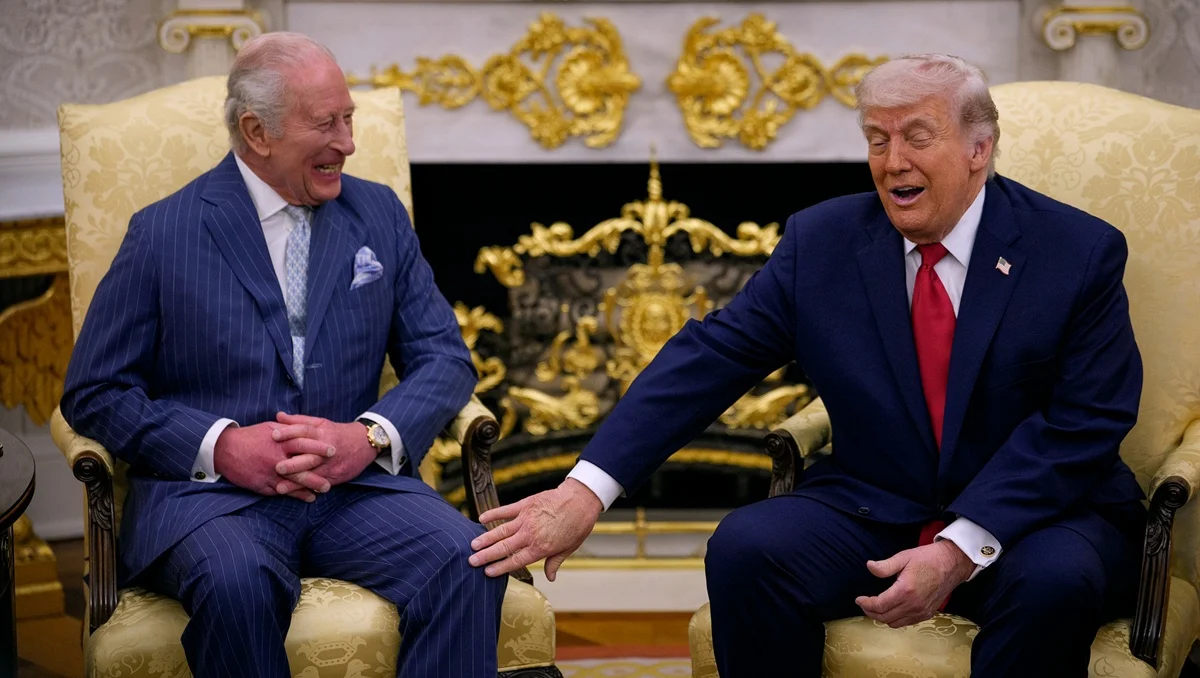
In a recent address during the Rose Garden Club Lunch, President Donald Trump offered a rare, colorful glimpse into his diplomatic interactions with the British Royal Family, while simultaneously doubling down on his ambitious—and controversial—vision for the future of the White House. The President, known for his penchant for branding and architectural legacy, revealed that he had proposed an unofficial, historically charged nickname for King Charles III during one of his high-profile visits to the United Kingdom.
Beyond the anecdotes regarding the monarchy, the President’s remarks underscored a transformative period for the executive mansion. With significant structural overhauls, including the addition of a new ballroom and a reimagined East Wing, the Trump administration is spearheading a multibillion-dollar effort to reshape the seat of American power, drawing both admiration for its grandeur and sharp criticism regarding its fiscal footprint.
The Monarchy and the Moniker: "Charles the Conqueror"
The anecdote regarding King Charles III emerged during a broader discussion about the history of world-renowned architecture. President Trump, reflecting on the historical weight of Windsor Castle—which traces its origins to the 11th century—recalled a conversation with the British monarch concerning the castle’s founder, William the Conqueror.
A Historical Comparison
According to the President, his fascination with the architectural permanence of Windsor Castle led him to inquire about the logistics and the historical figure behind its creation. Upon learning that William the Conqueror was responsible for the site’s fortification, Trump reportedly engaged the King in a discussion regarding the nature of leadership and historical legacy.
"I said to Charles—it was built around 900, you know, a long time ago. But I said to Charles, ‘Who built this? This place is incredible.’ ‘William the Conqueror,’" the President recounted to the luncheon attendees. Trump noted that the King characterized his ancestor as "strong and very tough."
The Unsolicited Suggestion
Seizing on the theme of strength and historical continuity, President Trump suggested that the King himself adopt a moniker that echoed that of the Norman conqueror. "I said, ‘We have to come up with a good name for you, Charles, maybe Charles the Conqueror,’" Trump claimed.
The proposal, while framed by the President as a gesture of respect and a nod to the King’s resilience, was met with a swift, albeit polite, demurral from the monarch. Trump reported that the King replied, "No, no, no, please." While the exchange remains a lighthearted footnote in diplomatic history, it highlights the stylistic dissonance between the American executive’s penchant for bold branding and the more understated, tradition-bound nature of the British Royal Family.
Chronology of the White House Transformation
The President’s comments at the Rose Garden Club Lunch were not merely anecdotal; they served as a preamble to his broader defense of the extensive renovations currently underway at the White House. To understand the scale of these changes, one must look at the timeline of the President’s vision for the Executive Mansion.
- Early Term (2025): Shortly after taking office, the President expressed dissatisfaction with the state of the West Wing and the surrounding grounds, suggesting that the White House needed to reflect a "modern standard of luxury and efficiency."
- The East Wing Demolition (2026): In a move that shocked preservationists and architectural historians, the administration moved to demolish the existing East Wing structure to facilitate the construction of a new, state-of-the-art ballroom and expanded guest facilities.
- Oval Office Revamp: Parallel to the structural changes, the President oversaw a redecoration of the Oval Office, characterized by a gold-heavy aesthetic, which the administration claims restores a sense of imperial grandeur to the office.
- The Helipad and Security Expansion: Ongoing projects include the construction of a new helipad and advanced security infrastructure, bringing the total estimated cost of the renovations to nearly $800 million.
Architectural Ambitions vs. Historical Preservation
The President has made no secret of his desire to leave a physical mark on the White House that eclipses those of his predecessors. During his speech, he drew a direct comparison between the historical weight of Windsor Castle and his own projects.
"William the Conqueror built a great building," the President told the crowd, "but we are building one that’s going to top them all."
The Philosophy of "Top Them All"
For President Trump, the White House is not just an office or a residence; it is a monument to the American presidency that must project strength, wealth, and modernity. By integrating a grand ballroom—a feature typically found in high-end hotels or resorts—the administration aims to create a venue for diplomacy that is unparalleled in its capacity to host state events.
However, this philosophy has met with significant pushback. Critics argue that the White House is a protected national historic landmark and that the destruction of original architectural elements, such as those in the East Wing, is an irreversible loss to the American cultural heritage.
Supporting Data: The Fiscal Reality of the Renovations
The sheer scale of the construction has sparked a national debate regarding government spending. According to recent reports, the current renovation projects, which encompass everything from the ballroom to modern security upgrades and landscape architecture, are estimated to cost approximately $800 million.
Breakdown of Expenses
- Structural Demolition and Reconstruction: $350 million (attributed to the East Wing ballroom project).
- Security and Infrastructure Upgrades: $250 million (including perimeter reinforcement and helipad logistics).
- Aesthetic Renovations: $200 million (including interior design, gold-plating, and historical restoration elements).
This expenditure has drawn scrutiny from oversight groups. Many have questioned the necessity of such an extensive financial commitment, particularly at a time when other national infrastructure projects face funding gaps. Online forums and political commentators have labeled the spending "excessive," arguing that the White House should prioritize function over the "resort-style" luxury that the President clearly favors.
Official Responses and Public Sentiment
The White House has remained largely steadfast in its defense of the project. A spokesperson for the administration stated, "The President believes that the White House should be a residence that represents the power and success of the United States. These renovations are a long-overdue investment in the dignity of our executive office."
The View from the Public and Experts
Conversely, historical societies have expressed deep concern. The National Trust for Historic Preservation has previously urged caution, noting that while the White House requires maintenance, the alteration of its historic footprint fundamentally changes the nature of the site.
Public sentiment remains polarized. Supporters of the President view the renovations as a sign of progress and a rejection of "stagnant" government facilities. Critics, meanwhile, view the changes as an ego-driven project that ignores the historical sanctity of the building. The discourse has become a microcosm of the broader political divide in the country, where questions of tradition, fiscal responsibility, and the projection of power collide.
Implications: A New Era for the Executive Mansion
The implications of these renovations extend far beyond the construction site. By fundamentally altering the architecture of the White House, the Trump administration is setting a new precedent for how the residence is utilized and perceived.
The Shift in Diplomatic Protocol
With a new ballroom and enhanced event facilities, the nature of state visits is likely to change. The President’s emphasis on "topping" the grandeur of European palaces suggests a future where the White House is used more aggressively as a tool of soft power, leveraging sheer luxury and scale to impress foreign dignitaries.
The Precedent of Presidential Legacy
Historically, presidents have been cautious about making major alterations to the White House to avoid being seen as "monarchists" or as prioritizing personal taste over historical stewardship. President Trump’s willingness to bypass these norms signals a shift toward a more executive-centered approach to governance.
Whether these changes will be remembered as a bold modernization or an act of cultural vandalism remains a subject for future historians. What is certain is that the White House of the next decade will be a vastly different place than the one that has hosted presidents for the last two centuries.
Conclusion: The "Conqueror" Mindset
The anecdote about "Charles the Conqueror" serves as a fitting lens through which to view the President’s current agenda. By seeking to align himself with the imagery of historical victors and by investing heavily in the physical manifestation of his power, President Trump is signaling that his vision for the country is one of total transformation.
As the dust settles on the construction sites surrounding the White House, the American public is left to consider what this evolution means for their democracy. Does a stronger, more opulent White House truly represent a stronger nation, or is it a distraction from the fiscal and historical complexities that define the office? As the project nears completion, these questions will undoubtedly continue to dominate the national conversation, serving as a reminder that the architecture of power is rarely just about stone and mortar—it is, ultimately, about the legacy one leaves behind.
 Neng Nana
 Azzam Bilal Chamdy
 Nana
Nana
