

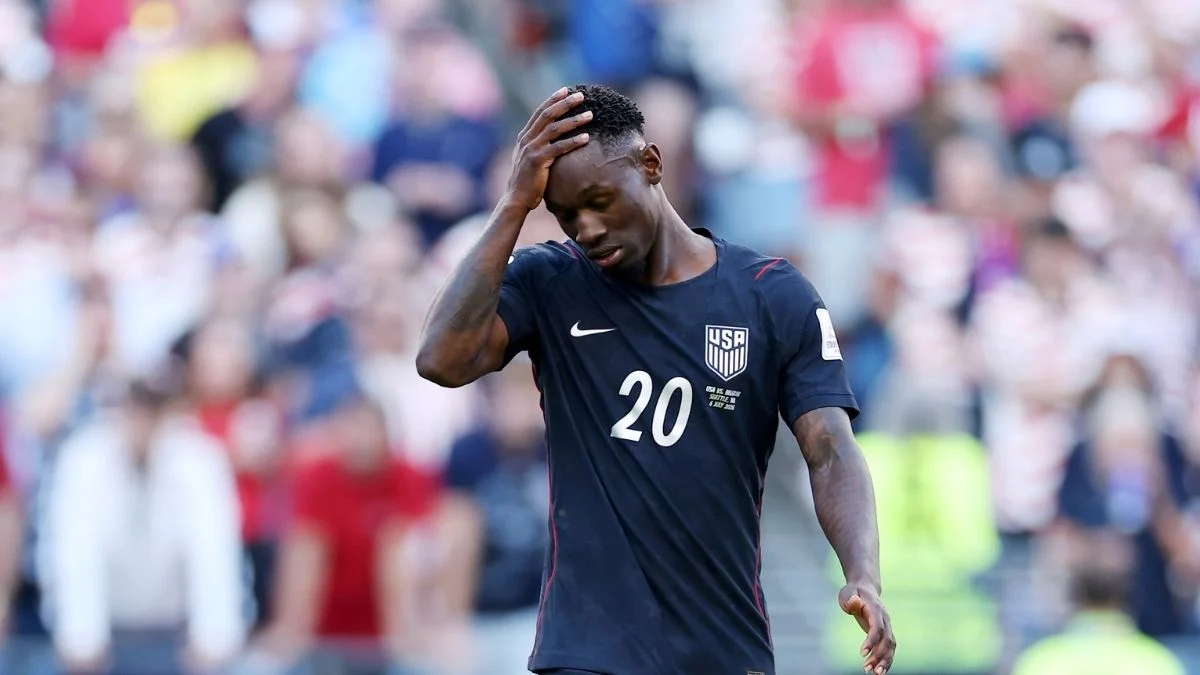
The 2026 World Cup has proven to be a tournament of profound emotional extremes for the United States Men’s National Team (USMNT). Following a crushing 4-1 defeat at the hands of Belgium—a result that unceremoniously ended the host nation’s dreams of glory—star striker Folarin Balogun took to social media to address a grieving fanbase. Yet, while the loss on the pitch remains the primary focus of the sporting world, the tournament has been shrouded in controversy, including the startling revelation that former President Donald Trump personally intervened in officiating decisions during the group stages.
The Heartbreak in the Round of 16
The match against Belgium was intended to be a watershed moment for American soccer. With the tournament hosted on home soil, the pressure on the USMNT was immense, fueled by a narrative of national growth and the emergence of a "Golden Generation." However, the dream evaporated within 90 minutes.
Belgium, a perennial powerhouse of European football, dismantled the American defense with ruthless efficiency. The tone was set just nine minutes into the match when the Belgian attack broke through, silencing the capacity crowd. While Malik Tillman provided a brief glimmer of hope by netting an equalizer, the momentum was short-lived. Belgium responded with a clinical display of tactical superiority, adding three unanswered goals to seal a 4-1 victory.
For Folarin Balogun, the defeat was personal. As the spearhead of the American attack, he felt the burden of the nation’s expectations. In an emotional statement posted to his official X (formerly Twitter) account, Balogun expressed a raw, unfiltered sense of regret.
"My debut World Cup… it hurts to wait 4 years to compete at the highest level our sport has to offer," Balogun wrote. "I want to say sorry to our fans; it was not good enough when it mattered most, and we let you down."
A Nation’s Response: Sentiment and Support
The reaction to Balogun’s apology was swift and surprisingly forgiving. Unlike the vitriol that often follows high-profile losses in international sports, the American soccer community largely rallied behind their talisman.
Social media discourse turned into a forum for national pride rather than finger-pointing. One user on X encapsulated the mood of the fanbase: "Nobody let anybody down. It was a GREAT run! Great games, great fun! We’ll get ’em next time!" Another supporter lauded Balogun’s individual contribution, writing, "Your performance this World Cup was top tier and will be talked about for ages, thank you."
Balogun, sensing the need to shift the narrative from despair to optimism, followed his apology with a vision for the future. "Soccer in America will only become bigger; the belief, the talent, and the passion are continually growing, and I know the best days are in front of us. The future belongs to those who never stop believing. This moment will fuel us. Why not us? For the nation. For the flag."
The Shadow of Political Interference: The Trump-Infantino Connection
While the USMNT’s performance was the talk of the pitch, the tournament has been marred by a bizarre and unprecedented political scandal. Reports have confirmed that in the USMNT’s earlier match against Bosnia and Herzegovina, Folarin Balogun was issued a red card that threatened to derail the team’s tournament progression.
In a revelation that has sent shockwaves through the sporting and political worlds, it was confirmed that Donald Trump personally reached out to FIFA President Gianni Infantino to lobby for the reversal of that red card. The intervention was successful; the decision was reviewed and subsequently overturned, allowing Balogun to remain on the pitch.
This incident has raised significant questions regarding the integrity of international football governance. The optics of a former U.S. head of state pressuring the leader of the world’s governing body of soccer created an immediate firestorm. Critics have argued that the incident undermines the neutrality of the sport and suggests that the 2026 World Cup has become a theater for domestic American political posturing.
Chronology of the 2026 USMNT Campaign
To understand the gravity of the team’s exit, one must view the trajectory of the tournament through a chronological lens:
- Group Stage Opener: The USMNT entered the tournament with immense hype. Early victories suggested a team capable of reaching the quarterfinals.
- The Bosnia Conflict: During the pivotal match against Bosnia, officiating became the focal point. The red card issued to Balogun was initially viewed as a catastrophic blow to American chances.
- The Lobbying Effort: Between the final whistle of the Bosnia match and the disciplinary review, internal communications revealed that Trump had contacted Infantino, urging a reconsideration of the card.
- The Reversal: FIFA issued a statement claiming a "technical review" led to the overturning of the card, a move that drew immediate suspicion from international observers.
- The Belgium Exit: Following the reprieve, the USMNT faced Belgium in the knockout round, where the tactical disparity between the two teams became painfully apparent, ending the American campaign.
Data and Performance Metrics
Statistically, the 2026 USMNT campaign will be viewed as a mixed bag. Under the guidance of their coaching staff, the team demonstrated an ability to compete in possession-based football, but their defensive fragility against elite European opposition proved to be their undoing.
- Goals Scored: The team averaged 1.8 goals per game leading up to the Belgium match, showcasing a high-octane offensive unit.
- Defensive Reliability: The team conceded a total of 7 goals over their four-match run, with 4 of those coming in the final defeat.
- The Balogun Impact: Despite the heartbreak, Balogun remained the focal point of the offense, logging over 300 minutes of play and contributing significantly to the team’s build-up play.
Implications for FIFA and American Soccer
The implications of this tournament extend far beyond the pitch. For FIFA, the "Trump-Infantino incident" represents a potential crisis of legitimacy. If national leaders are perceived to have the power to influence officiating through direct lobbying, the fundamental "fair play" doctrine of the sport is at risk. International sporting bodies are historically sensitive to government interference, and this incident may lead to increased scrutiny from the IOC and other governing entities regarding the independence of FIFA’s disciplinary committees.
For American soccer, the lesson is perhaps more existential. The country has proven it can host a world-class event, and it has cultivated a generation of players who can compete at a high level. However, the reliance on, and the focus on, political influence—whether intended or not—detracts from the sporting achievement. The USMNT must now transition from being a team of "potential" to a team of "results."
Official Responses and Public Scrutiny
FIFA has maintained a stance of administrative transparency, claiming that all disciplinary reversals are subject to internal VAR (Video Assistant Referee) protocols. However, the timing of the decision regarding Balogun’s red card continues to draw skepticism.
In the United States, the political fallout has been limited, as the narrative quickly shifted back to the on-field disappointment. Yet, for those who value the sanctity of the game, the question remains: Can international football ever be truly separate from the powerful political figures who seek to align themselves with its massive global platform?
Conclusion: The Long Road Ahead
As the 2026 World Cup continues without the host nation, the focus for Folarin Balogun and the USMNT shifts toward the 2030 cycle. The apology issued by Balogun was not merely an admission of defeat, but an invitation to the fans to remain invested.
"This moment will fuel us," he stated. If the U.S. is to succeed in future tournaments, it will need more than just political leverage or home-field advantage; it will need to close the tactical gap that was so clearly exposed by Belgium.
The legacy of this tournament will likely be defined by two things: the growth of soccer as an American cultural staple and the debate surrounding the boundaries of political influence in sport. For now, the USMNT must retreat, reflect, and rebuild, knowing that while the dream of 2026 has ended, the scrutiny of their performance—and the circumstances surrounding it—is only just beginning.
 Neng Nana
 Azzam Bilal Chamdy
 Nana
Nana
