

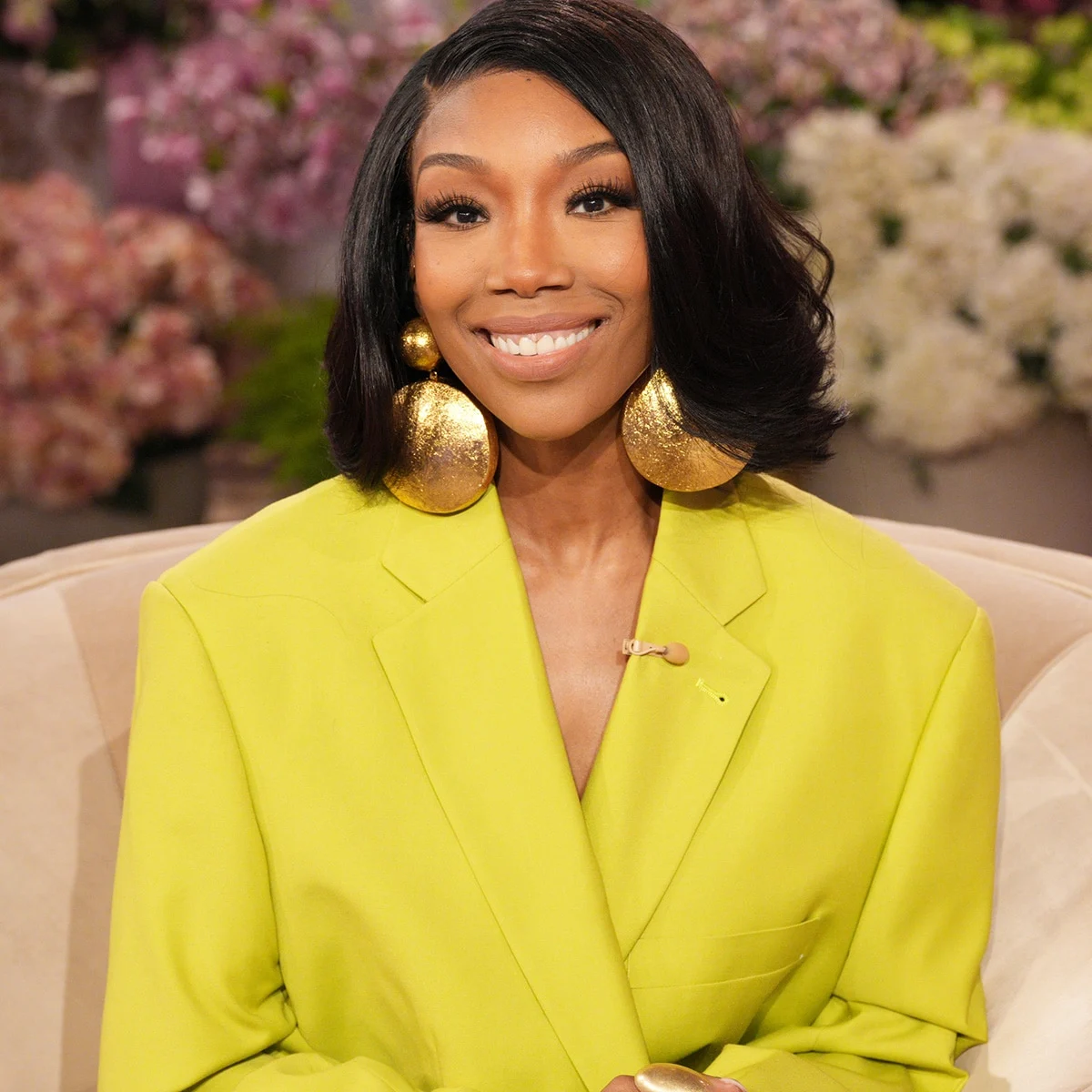
In an era dominated by instantaneous digital feedback, public figures are increasingly subjected to relentless scrutiny regarding their physical appearance. Recently, multi-platinum recording artist and actress Brandy Norwood—known globally as Brandy—joined a growing chorus of high-profile women speaking out against online harassment and body shaming.
While promoting her role in the Disney Channel movie Descendants: Wicked Wonderland, the 47-year-old singer candidly addressed the emotional toll of digital criticism and explained why she chose to confront her detractors directly. Her experience is far from isolated; rather, it reflects a systemic issue within contemporary internet culture, where celebrity bodies are treated as public property.
Main Facts: Brandy’s Stand Against Digital Cruelty
During a joint promotional interview with E! News correspondent Will Marfuggi, alongside her Descendants: Wicked Wonderland costars Rita Ora and Leonardo Nam, Brandy reflected on her decision to publish a powerful social media message addressing online trolls. On July 11, the Grammy-winning artist shared an Instagram post urging her followers to exercise empathy and restraint before commenting on another person’s face or body.
"I didn’t appreciate that," Brandy admitted to E! News, referring to the unsolicited critiques of her appearance that flooded her social media channels. "I didn’t love the way that made me feel."
Rather than reacting with anger, Brandy chose to transform the painful experience into an educational opportunity. She explained that her response was born out of a desire to foster a gentler digital environment:
"I thought about how everyone feels if someone comments about their appearance or anything like that. And I took the moment and decided to share in a teaching way to just encourage people and to inspire people to just be gentle with each other."
Brandy, who shares her daughter, Sy’rai Smith, with her former partner Robert Smith, emphasized that online commentators rarely understand the personal battles of the individuals they target. "You see someone and you judge them," she observed. "You don’t know what story they’re carrying. You don’t know what they’ve been through."
By channeling the grace of her iconic character, Cinderella, Brandy sought to inject a simple message of compassion into the digital space: "Just be kind and be gentle."
Chronology: From 1997’s Fairytale to 2024’s Reality
To fully understand the weight of Brandy’s message, one must examine her history with the character of Cinderella and her journey through the public eye:
- November 1997: Brandy makes television history by starring as the first Black Cinderella in Rodgers & Hammerstein’s Cinderella, broadcast on ABC. The groundbreaking television special co-starred legendary vocalist Whitney Houston as the Fairy Godmother. The production attracted over 60 million viewers and became a cultural touchstone.
- 1997–2023: Over nearly three decades, Brandy builds an illustrious career across music, television, and film, while navigating the shifting landscape of celebrity media—transitioning from traditional print tabloids to the unregulated wild west of social media platforms.
- July 11, 2024: Following a wave of critical online comments regarding her physical appearance and aging, Brandy publishes a widely shared Instagram post calling for digital empathy and a cessation of body-shaming behaviors.
- July 2024 (Mid-Month): During press junkets for her return to the Disney franchise, Brandy speaks with E! News, linking her real-world advocacy for kindness to the enduring legacy of her late mentor, Whitney Houston.
- July 16, 2024: Descendants: Wicked Wonderland premieres on the Disney Channel, with streaming availability launching the following day on Disney+. The film marks Brandy’s triumphant return to the role of Cinderella, allowing her to pay tribute to Houston’s memory.
[1997: Groundbreaking Role] ---> [2024 (July 11): Instagram Call-Out] ---> [2024 (July 16): "Descendants" Premiere]
      Co-starred with                    Addressed digital trolls            Honored Whitney Houston's
      Whitney Houston                     with a call for kindness                artistic legacy
Supporting Data: The Ubiquitous Cycle of Celebrity Body Shaming
Brandy’s encounter with cyberbullying is representative of a broader, more pervasive trend. Data gathered from public statements and social media interactions reveals that female celebrities across various demographics, body types, and age groups face continuous, often contradictory, criticism.
The following case studies illustrate the systemic nature of digital body shaming:
Case Study 1: The Dual Trap of Thinness and Weight Gain
Public figures are frequently caught in a double standard where they are criticized simultaneously for being "too fat" and "too thin."
- Ava Phillippe: In May 2024, the daughter of Reese Witherspoon and Ryan Phillippe revealed on TikTok that she was targeted by two different strangers on the same day. One commenter advised her to use weight-loss medication because she was "too fat," while another accused her of starving herself because she was "too thin." Phillippe noted that her weight had not changed between the comments, highlighting the arbitrary nature of online critiques.
- Bebe Rexha: The pop vocalist has repeatedly used her platform to combat sizeism. In June 2023, Rexha expressed exhaustion over the public’s obsession with her weight fluctuations, tweeting, "I know I got fat. I’m just so sick of people talking about it." She reminded followers that weight shifts are often caused by medical conditions, medications, and natural life events. Years prior, in 2019, Rexha revealed that several high-end fashion designers refused to dress her for the Grammy Awards because she was a size 8, exposing deep-seated systemic bias within the fashion industry.
- Celine Dion: The iconic vocalist addressed persistent concerns and criticisms regarding her thin frame in September 2019, explaining that her body type is a product of her lifelong dedication to ballet and rigorous physical training. Dion remarked, "If you don’t want to be criticized, you are in the wrong place… you can’t please everybody."
Case Study 2: Pregnancy Speculation and Postpartum Scrutiny
The biological realities of motherhood and postpartum recovery are frequently pathologized or mischaracterized by online audiences.
- Natalie Portman: In February 2021, the Academy Award-winning actress faced public pregnancy speculation after media outlets published photos of her on a film set in Australia. Portman utilized her Instagram Story to shut down the rumors, writing, "Hey, so I’m totally not pregnant… but apparently, it’s still OK in 2021 for anyone to speculate and comment on a woman’s body shape whenever they want? Do better."
- Ayesha Curry: In May 2019, after sharing a celebratory family photograph, the cookbook author and entrepreneur was asked by a follower if she was pregnant. Curry corrected the user, explaining that her posture was due to holding her 30-pound son. When another user claimed a child of that weight must have "serious health issues," Curry intervened to defend her family from unsolicited medical diagnoses.
- Jana Kramer: Just one week after undergoing a Cesarean section in December 2018, the actress and podcast host felt compelled to crop a photo of her midsection to avoid online vitriol. Kramer expressed frustration over having to defend her healing postpartum body against accusations of cosmetic surgery, writing, "Why do we women have to compare ourselves to each other and then shame?"
Case Study 3: The Illusion of Digital Perfection
The prevalence of editing software has distorted public expectations, leading to a rejection of natural human features.
- Camila Cabello: The singer-songwriter posted an emotional statement on Instagram after discovering headlines criticizing her natural body shape. Cabello pointed out that the normalization of airbrushed images creates a toxic environment for young girls: "They’re constantly seeing photoshopped, edited pictures and thinking that’s reality… Girls, cellulite is normal. Fat is normal. It’s beautiful and natural."
- Christina Haack: The television personality addressed critics who claimed she looked "too skinny," reminding them that viewers had watched her undergo multiple pregnancies and subsequently return to her baseline weight.
- Nelly Furtado: Demonstrating a unique approach to visual protest, the singer responded to body shamers silently during her performance at Manchester Pride. Furtado took the stage wearing an oversized T-shirt featuring a printed graphic of a stylized female silhouette, effectively mocking the public’s obsession with her physical dimensions.
Official Responses: How Public Figures Are Reclaiming the Narrative
As digital harassment continues, celebrities are shifting away from passive endurance, opting instead for active resistance, education, and boundary-setting.
| Celebrity | Primary Platform | Rhetorical Strategy | Key Message / Quote |
|---|---|---|---|
| Brandy | Instagram / TV Interviews | Educational Advocacy | "I took the moment and decided to share in a teaching way to just encourage people… to just be gentle." |
| Lizzo | TikTok | Boundary-Setting | "I’m working out to have my ideal body type… [which is] none of your f–king business." |
| Demi Lovato | Print Media (Glamour) | Radical Self-Acceptance | "If somebody calls me fat… I laugh to myself and think, I’m doing everything I can, so there’s nothing I can do about it." |
| Halle Berry | X (formerly Twitter) | Absurdist Deflection | Responded to an ageist critique of a nude photograph by posting a non-sequitur fact: "Did you guys know the heart of a shrimp is located in its head?" |
| Candace Cameron-Bure | Instagram Comments | Direct Factual Refutation | Responded to a troll questioning her diet: "If a 25 inch waist looks big to you… then you’re looking through an altered lens." |
Implications: The Broad Impact of Online Harassment and the Path Forward
The collective pushback from figures like Brandy, Camila Cabello, and Ava Phillippe highlights a growing crisis in digital culture. The psychological consequences of body shaming are well-documented, but when amplified by social media algorithms, the damage extends far beyond the individual targeted.
The Normalization of Digital Surveillance
The constant critique of celebrity bodies fosters a culture of hyper-surveillance. When the public observes public figures being picked apart for minor physical variations, it reinforces the belief that ordinary individuals are subject to the same harsh standards. This dynamic contributes directly to increased rates of body dysmorphia, anxiety, and disordered eating among everyday internet users, particularly young girls.
The Fallacy of the "Perfect" Body
As Camila Cabello noted, the proliferation of filters, photo-editing applications, and cosmetic interventions has created an unattainable standard of beauty. When celebrities present unedited, natural bodies, they are often punished by commenters who have been conditioned to view altered images as the baseline reality.
Legacy and Resilience
For Brandy, resisting this toxic cycle is deeply tied to her artistic legacy and her relationship with her late mentor, Whitney Houston. By reclaiming her role as Cinderella and refusing to let online trolls diminish her joy, Brandy honors the lessons she learned early in her career.
"It means everything to me because I feel like I’m doing what she would want me to do," Brandy shared, reflecting on Houston’s enduring influence. "Which is live this beautiful life, doing what I love to do, and still carrying out her legacy, my legacy, in a positive way. In an inspirational way."
Ultimately, the stand taken by these women serves as a vital reminder that public figures are not commodities. Reclaiming the digital space requires a collective commitment to empathy, a rejection of unrealistic aesthetic standards, and, as Brandy simple stated, the willingness to "just be kind."
 Sagoh
Sagoh
 Siti Muinah
 Nana
Nana
