

This article is part of "Iconic Passages," a series celebrating the diverse landscapes of America and the transformative power of the open road.
The gale hits me like a giant, invisible hand, slapping my motorcycle sideways as I maintain a steady 65 miles per hour. Out here in the Buffalo Gap National Grassland, the landscape is a masterclass in scale: wide open in every direction, devoid of trees or structures to blunt the prairie gusts. My bike zigzags, sending a jolt of pure adrenaline from my stomach to my esophagus.
Motorcycling is, by its very nature, a trial by fire. You can spend weeks practicing tight U-turns in empty parking lots, but the true education—the visceral, bone-deep learning—happens only in the saddle. As a rider with only a few months of experience, I chose one of America’s most storied routes for my maiden voyage. From the layer-cake buttes of Badlands National Park to the serpentine canyons of the Black Hills, this stretch of South Dakota is legendary. With Sturgis, the world’s largest motorcycle rally, celebrating its 86th year this August, the region is steeped in two-wheeled history. Yet, as the wind threatened to pull me from my lane, I found myself questioning my own hubris.
The Geography of the Ride: A Chronology of Discovery
The journey began with the intention of crossing 421 miles over four days, accompanied by two seasoned riders: Andria Yu, a former journalist and tai chi world champion, and Rachel Lepley, a veteran of solo motorcycle treks across India.
Day 1: The Badlands Baptism
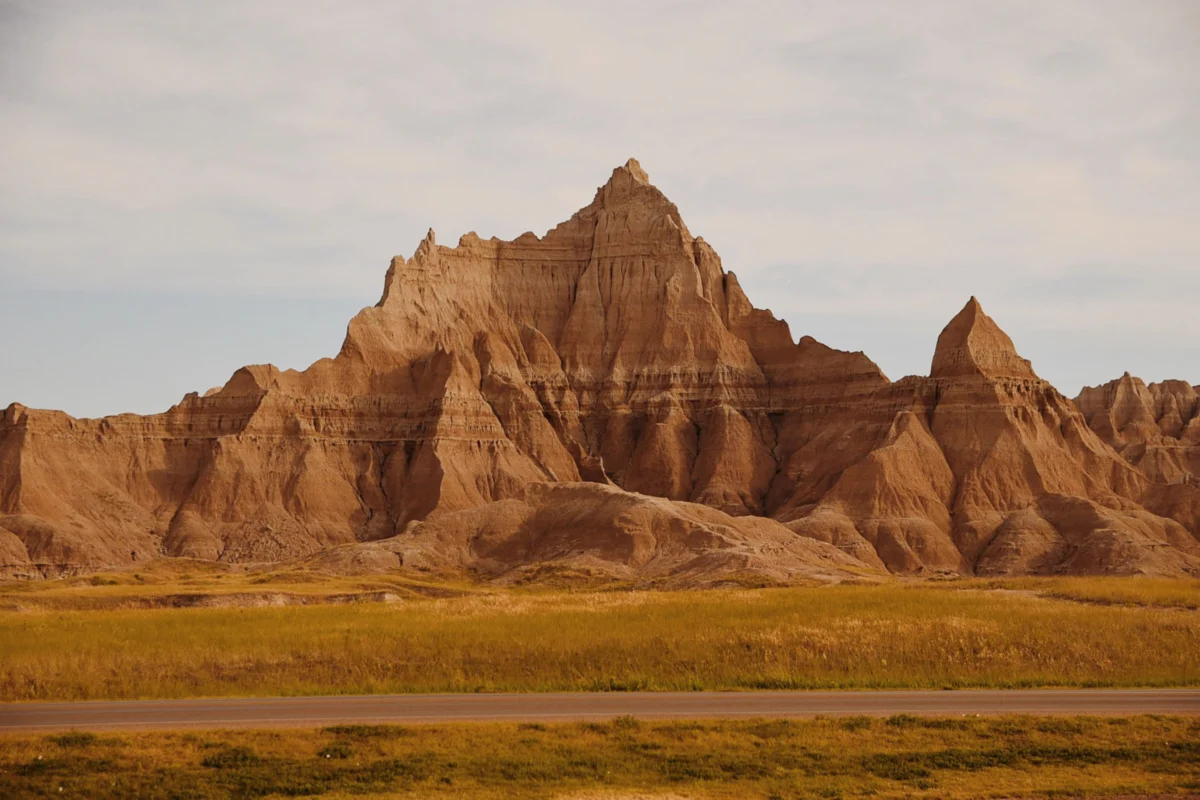
As the prairie opened up, the land eventually tightened. The tan, jagged spires of the Badlands rose from the earth like a forest of praying hands. I felt dwarfed by the ancient, serrated rock formations. As if on cue, Tom Cochrane’s "Life Is a Highway" crackled through my helmet speakers. It was a cliché so perfect I couldn’t help but laugh into my visor. This was the exact reason we ride: to shed the mundane and embrace the elemental.
Day 2: The Ballet of the Black Hills
We departed Rapid City, heading toward Deadwood. The ride evolved into a rhythmic dance—a constant ballet of downshifting on steep, blind ascents and maintaining a focus that allowed for the cinematic scenery without sacrificing safety. We navigated through small towns where homecoming parades featured floats and candy-tossing football players, a stark, heartwarming contrast to the rugged terrain of the canyons.
Day 3: Engineering and Wildlife
We paid our respects to the granite faces of Mount Rushmore before navigating the Wildlife Loop in Custer State Park. The hairpin turns, largely devoid of guardrails, required a level of concentration that borders on meditation. We paused to observe a herd of bison, but my lack of experience showed when I approached the pen with my helmet on; the sudden charge of a "fluffy cow" sent me fleeing with more speed than a stunt rider.
%20(2).jpg)
Day 4: The Final Stretch
Our final day took us through the historic roadside institution of Wall Drug and back toward the prairie. By the time we checked into the Badlands Frontier Cabins, the fatigue was total—my hands were locked in a "Lego-man grip" and my muscles ached—but the mental clarity was profound. I was hitting 72 mph, tackling gravel, and moving with a newfound, unshakable confidence.
The Anatomy of the Machine: Why We Ride
The allure of the motorcycle is rooted in a familiar American trope: the lone wolf disappearing into the horizon. For decades, the motorcycle has served as shorthand for reinvention—the seductive promise that if you simply keep moving, you can outrun your past. In a nation built on the "perpetual grind" of westward expansion and the machismo of the highway, the motorcycle distills that promise to its raw essence: one person, one machine, and the infinite potential of the road ahead.
However, the reality of motorcycling differs significantly from its pop-culture depiction. It is not merely a leisure activity; it is a discipline of total presence. Riding requires a constant sensory intake: the smell of sun-baked earth, the roar of passing semi-trucks, and the jarring rattle of a pothole against your chassis. This intensity is the only thing that effectively silences an over-revving brain. It is a necessary, albeit adrenaline-fueled, meditation.
Challenging the Stereotypes: Women in the Saddle
Perhaps the most significant realization of this trip was the dismantling of the "solitary rider" myth. Motorcycling is a gateway to community. My mentors, Serena Rebechini, Andria Yu, and Rachel Lepley, represent a burgeoning demographic of women who are reclaiming the sport.
Rebechini, my original coach, insisted I master the mechanics of my bike to reject the "ditzy rider" stereotype. Yu approaches the sport with the precision of a martial artist, quickly dismissing "mansplainers" who underestimate her capability. Lepley, whose solo expedition across India speaks for itself, embodies the antithesis of the "damsel in distress" narrative.
During our evenings over elk burgers and huckleberry bourbon, our conversations ranged from the societal impact of toxic upbringing to the historical shadow cast by outlaw motorcycle gangs. These groups—the Hells Angels, the Mongols, and others—have long dominated the public imagination, yet they represent a minuscule fraction of the riding population. For the 99 percent of us, the road is about connection, autonomy, and the sheer joy of the mechanical interface.
The Evolution of Motorcycle Infrastructure
A highlight of the trip was the stay at Shortgrass Resort in Spearfish. Founded by motorcyclists Jared "Cappie" Capp and NASA scientist Rachel MK Headley, the resort is a testament to the fact that motorcycle culture is shifting. Moving away from the gritty, lawless stereotypes of the mid-20th century, the resort offers a farm-to-table experience and luxury suites overlooking 52 acres of prairie.

This professionalization of the motorcycle tourist experience suggests a wider trend. As more people from diverse professional backgrounds take to two wheels, the infrastructure supporting these journeys is becoming more sophisticated. The industry is seeing a surge in demand for "moto-tourism," where the journey—rather than just the destination—is the primary value proposition.
Implications: A Pursuit of Equilibrium
In a contemporary landscape that often feels "eggshell brittle," the motorcycle has become an essential psychological tool. It is a way to transmute existential frustration into forward momentum. When the world feels beyond our control, there is a tangible satisfaction in the ability to steady a machine with one’s own two hands.
The act of gearing up feels like donning a suit of armor. You are not invincible, but you are undeniably capable. As we toasted our final night at the Salty Steer, the sun melting into the horizon, I realized that I hadn’t just completed a route—I had learned to lean with the wind.
The legend of the American road persists because it offers a rare, unfiltered truth: the road does not care about your history or your anxieties. It only demands that you remain present. And as I discovered in the heart of South Dakota, there is no greater freedom than that.
This article appeared in the July/August 2026 issue of Condé Nast Traveler. For more insights on American travel and road-tripping, subscribe to our monthly print edition.
 Asro
Asro
 Siti Muinah
