

By Jen Glennon | Published: September 13, 2026
It is quite literally the name of the game. For more than two decades, Rockstar Games’ flagship Grand Theft Auto series has defined an entire genre of open-world interactive entertainment through a single, foundational mechanic: stealing cars. From the rudimentary, top-down sprite-swapping of the 1997 original to the hyper-realistic urban exploration of GTA 5, the fundamental loop of spotting a vehicle, wrenching the door open, and speeding off into the sunset has remained the beating heart of the franchise.
Now, with the release of Grand Theft Auto 6 fast approaching on PlayStation 5 and Xbox Series X for November 19, Rockstar is poised to fundamentally revolutionize that core experience. Gone are the days of the mindless, single-button carjacking. In their place is a granular, deeply tactical, and surprisingly complex vehicle-theft ecosystem that treats boosting an automobile less like a minor inconvenience for a virtual citizen and more like a high-stakes, meticulously planned heist.
Main Facts: The Evolution of Grand Theft Auto’s Core Mechanic
The most striking revelation regarding GTA 6’s approach to vehicle theft is the complete overhaul of how players interact with automobiles in the game world. Rather than relying on the streamlined, arcade-style mechanics that dominated Grand Theft Auto 5—where approaching a vehicle and pressing a single button instantly forced a driver out or shattered a window—GTA 6 introduces a sophisticated, tiered security framework.
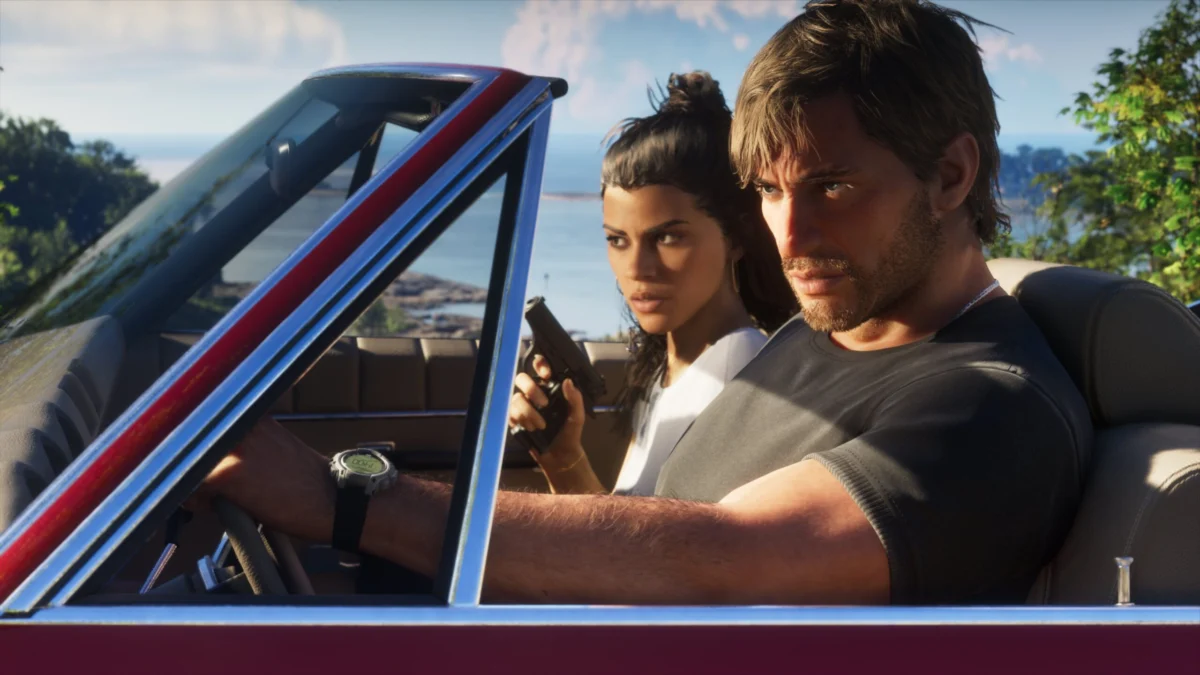
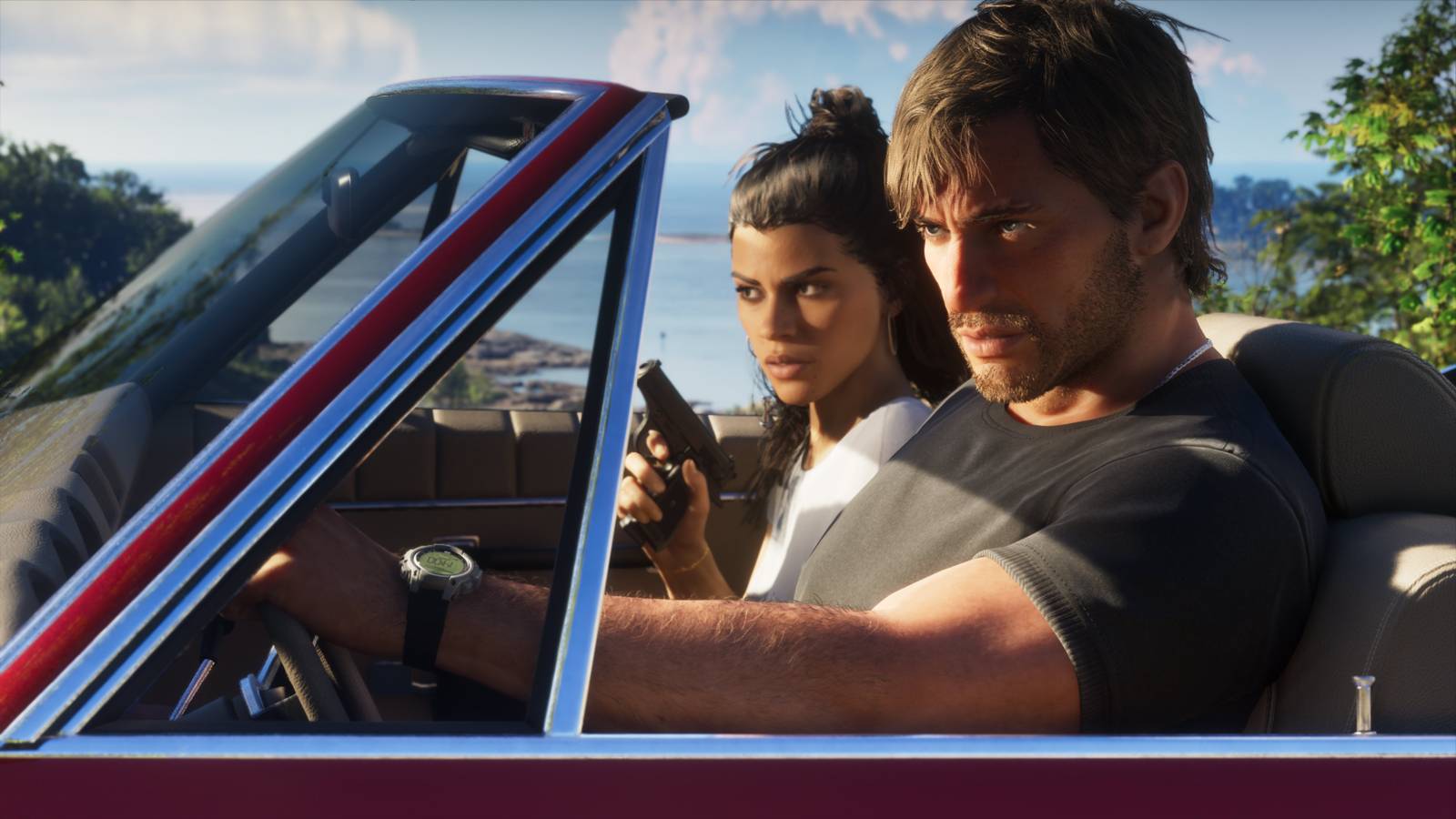
According to recent deep-dives and promotional footage, including the Grand Theft Auto 6: An Extended Look premiere on Netflix, stealing a car is no longer a trivial background activity. Protagonists Jason and Lucia must contend with a variety of modern security measures that mirror real-world automotive protection. Depending on the make, model, and year of the vehicle, players will be forced to employ different tools and techniques:
- Manual Entry vs. Force: Players are presented with contextual choices. For older, classic vehicles—such as the late-70s or early-80s orangey-red beater Jason is seen boosting in the Netflix preview—players can choose to smash a window quickly (attracting immediate attention) or spend precious seconds using a slim jim to edge the window down and trip the manual lock silently.
- Tiered Security & High-Tech Tools: Pricier, modern luxury vehicles feature advanced electronic architectures. To bypass these, Jason and Lucia have access to specialized tech, including a device colloquially referred to in-universe as a "wank scanner," which reads a vehicle’s security parameters and valuation in real time.
- Electronic Key Cloning: High-end sports cars and luxury SUVs will require players to digitally clone key fobs, adding a layer of preparation and timing to what used to be a spontaneous crime.
- Tracking Devices and Speed Penalties: Certain high-security vehicles come equipped with live GPS trackers. If the player drops below a specific speed threshold while driving these hooked vehicles, local law enforcement is immediately alerted, forcing drivers to keep the pedal to the metal to avoid instant detection.
- A Fully Realized Fence System: Unlike previous titles where keeping or selling stolen vehicles was largely restricted to specific garage saving slots or online matchmaking menus, GTA 6 introduces a robust black-market fence system. Modeled after the economy mechanics seen in Rockstar’s 2018 masterpiece, Red Dead Redemption 2, players can now offload virtually any stolen car for profit, turning random grand theft auto into a lucrative, repeatable side hustle.
Chronology: From Simple Carjacking to Complex Heists
To understand the magnitude of the changes coming in GTA 6, it is worth looking back at the evolutionary timeline of vehicle theft across the franchise’s storied history:
The 2D Era (Grand Theft Auto 1 & 2)
In the late 1990s, vehicle theft was functional out of necessity. Viewed from a bird’s-eye perspective, players simply walked up to a car sprite, pressed a button, and instantaneously replaced the civilian driver. There were no animations, no security systems, and very little distinction between a municipal bus and a fast sports car beyond top speed and durability.
The 3D Breakthrough (Grand Theft Auto III, Vice City, San Andreas)
The transition to a fully 3D world in 2001’s GTA 3 transformed carjacking into a visceral cinematic spectacle. Players watched Claude physically yank drivers out onto the pavement. Vice City and San Andreas expanded upon this by adding motorcycles, helicopters, and planes, cementing the franchise’s identity as a chaotic automotive sandbox, though the mechanics of acquiring these vehicles remained instantaneous and uncomplicated.
The HD Refinement (Grand Theft Auto IV & GTA 5)
By the time GTA 4 launched in 2008, Rockstar introduced physics-heavy driving and more nuanced animations—such as breaking a car window with an elbow if the doors were locked. GTA 5 streamlined these elements further to accommodate its sprawling map and three-protagonist structure, ensuring that moving through Los Santos remained fast-paced and uninterrupted by overly complex animations.
The Next Generation (Grand Theft Auto 6, 2026)
Now, entering the era of GTA 6, the pendulum swings dramatically toward realism and tactical depth. By integrating multi-layered security, specialized burglary tools, and an organic economic feedback loop, Rockstar is transforming the most mundane, repetitive action in the game into a micro-puzzle that demands player engagement.
Supporting Data: Examining the Mechanics in Action
A closer inspection of the promotional materials released by Rockstar Games reveals how these mechanics play out in real-time gameplay scenarios:
- The Cold Open and The Beater: In the opening sequences of the Netflix preview, Jason’s theft of an older American sedan showcases the granular input requirements. A UI prompt dictates whether the player opts for brute force (busting the window outright) or stealth (using a slim jim). The latter requires precise controller inputs, emphasizing that time management is a crucial factor during criminal operations.
- Trunk Surprises and Environmental Storytelling: Beyond technical security, GTA 6 is injecting organic narrative chaos into vehicle theft. A standout moment from the preview featured Lucia discovering a bound influencer inside the trunk of a freshly stolen car. This systemic addition hints at a randomized encounter table for stolen vehicles, ranging from mundane cargo to bizarre roadside emergencies—or perhaps, if fans get their wish, an angry alligator.
- Economic Integration: The integration of a Red Dead Redemption 2-style fence system means that low-level crime carries tangible weight within the broader economic simulation of Leonida. Players can no longer view parked cars merely as disposable transport; every vehicle represents a potential payout or a security risk depending on its make and model.
Official Responses and Industry Reception
While Rockstar Games has historically kept its cards close to its chest regarding granular gameplay mechanics, previews and leaks corroborated by industry outlets like IGN have painted a vivid picture of a game that refuses to rest on its laurels.

Industry analysts have praised Rockstar’s willingness to inject friction into a mechanic that could have easily remained untouched for another console generation. In open-world design, convenience is often prioritized over immersion. However, Rockstar’s decision to make high-end car theft genuinely difficult—requiring key cloning, tracking evasion, and tool management—signals a distinct creative confidence. The developers are betting that players want to feel like professional criminals who must master their craft, rather than invincible action heroes who can bypass security with a single button press.
Fan reception, meanwhile, has been overwhelmingly enthusiastic, tempered only by humorous community commentary regarding the game’s cultural quirks (including ongoing internet debates over whether the highly publicized "twerk button" rumors will materialize in the final release).
Implications: What This Means for Open-World Game Design
The philosophical shift in GTA 6’s car theft mechanics carries profound implications not just for the franchise, but for the open-world genre as a whole.
For years, sandbox games have trended toward frictionless design. Open-world titles often strip away animations, realistic constraints, and delays to keep the player moving from objective to objective as quickly as possible. Rockstar is swimming against this current. By forcing players to slow down, assess their surroundings, choose their tools, and manage the immediate consequences of a theft (such as high-speed tracking alerts), GTA 6 prioritizes moment-to-moment tension over mindless convenience.
Furthermore, tying car theft directly into an economy via the black-market fence system changes how players value the game world. When a vehicle parked outside a convenience store isn’t just a disposable metal shell, but a specific asset with a security rating, a market value, and potential hidden cargo in the trunk, the entire world of Leonida becomes more reactive, immersive, and alive.
As November 19 approaches, anticipation for Grand Theft Auto 6 continues to reach unprecedented heights. If these newly detailed mechanics are any indication, Rockstar is not merely delivering a bigger map or prettier graphics; they are re-engineering the very DNA of what made the series legendary in the first place, proving that even after decades of stealing cars, there are still entirely new ways to go fast.
 Nana Muazin
 Layla Zulfa
 Basiran
