

Main Facts
The Scottish island of Islay has long held a mythical status in the world of single malt scotch. Famed for its maritime climate, rugged coastlines, and centuries-old traditions, this windswept corner of the Inner Hebrides is globally synonymous with aggressively peated, heavily phenolic whiskies. Home to legendary distilleries such as Laphroaig, Bowmore, and Lagavulin, Islay produces expressions that evoke bonfires on the beach, iodine, sea spray, and damp earth. Yet, among this pantheon of smoke-forward producers, one name commands a particularly zealous, almost evangelical following: Ardbeg.
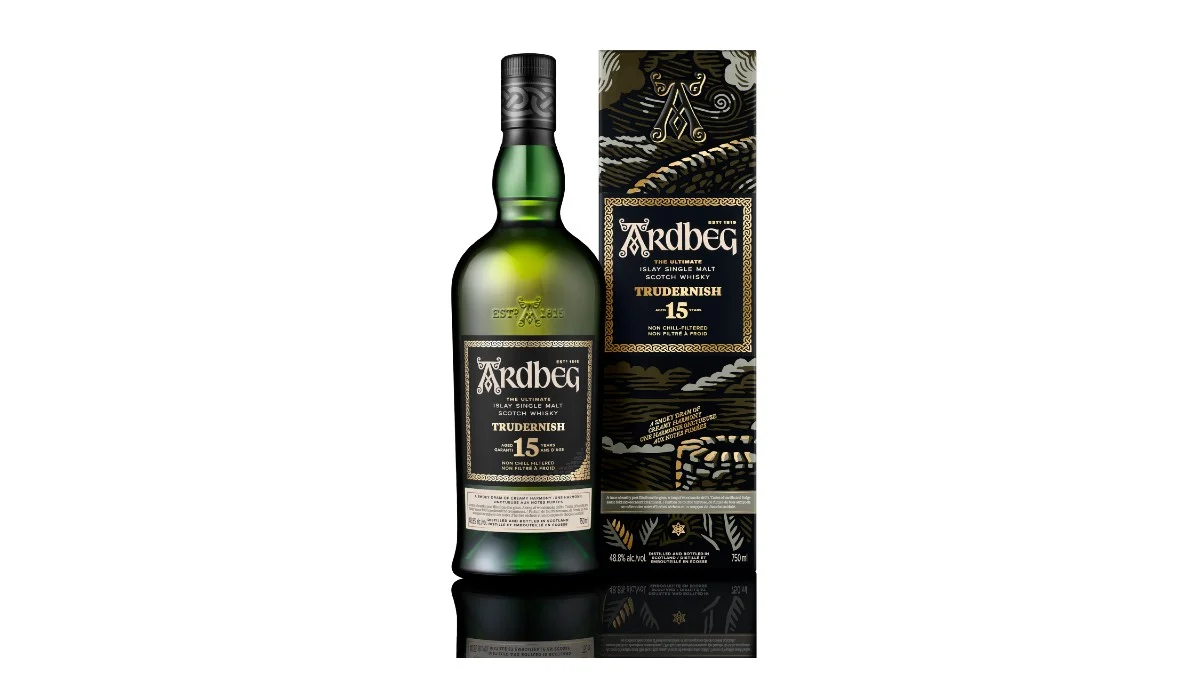
Operating out of the rocky southern coast of the island since 1815, Ardbeg has officially cemented its status as a powerhouse of modern whisky-making with the launch of Ardbeg Trudernish. Announced earlier this month and arriving on shelves now with a suggested retail price (SRP) of $90, this new 15-year-old single malt is not a fleeting limited edition or an experimental one-off release. Instead, Trudernish is designed to be a permanent fixture in the distillery’s core lineup—a monumental structural addition for a brand that has historically relied heavily on its benchmark 10-year-old, a spectrum of no-age-statement (NAS) expressions, and ultra-rare, high-age-statement bottlings like its acclaimed 25-year-old.
Bottled at a sturdy 48.8 percent ABV, Trudernish bridges the gap between youthful, punchy power and mature, complex elegance. It was aged for a minimum of 15 years in a bespoke, tripartite cask regimen: ex-bourbon barrels, Oloroso sherry casks, and heavy-toast new charred oak. The result is widely being hailed by industry critics as arguably the finest peated single malt release of the year so far, offering a masterclass in how decades of maturation can refine and elevate Islay’s ferocious spirit without muting its trademark personality.
Chronology of a Cult Distillery: From 1815 to the Present
To understand why the arrival of a new 15-year-old core expression from Ardbeg is sending shockwaves through the global whisky community, one must look back at the distillery’s tumultuous, phoenix-like history.
1815–1980s: Foundation and the Blend Era
Ardbeg was officially established in 1815 by John MacDougall, though illicit distilling on the site had reportedly been taking place for decades prior. For much of the 19th and early 20th centuries, the distillery operated independently, passing through various family hands before coming under the control of Hiram Walker in the late 1970s. During this era, the vast majority of Ardbeg’s intensely peated spirit was not bottled as a single malt. Instead, it was sold off in bulk to blenders who relied on its unmistakable aromatic punch to anchor complex blended Scotches.
The Dark Decades: Closures and Mothballing
The global whisky loch of the 1980s—characterized by an oversupply of Scotch and a plummeting market demand—hit Islay hard. Ardbeg was shuttered in 1981. Though it reopened briefly in 1989 under Allied Distillers, production was sporadic and minimal. By the mid-1990s, the distillery was once again mothballed, its physical infrastructure falling into disrepair, and its future looking dangerously uncertain. To many enthusiasts, Ardbeg was destined to become a ghost distillery, remembered only through increasingly scarce independent bottlings and vintage legacy stocks.
1997–2004: The Glenmorangie Acquisition and Renaissance
The modern era of Ardbeg began in 1997, when the Glenmorangie Company purchased the dilapidated distillery for a modest sum. Recognizing the cult value and unique profile of the spirit, the new owners immediately invested in full restoration. Master Blender Dr. Bill Lumsden and his team set to work breathing life back into the copper stills. In 2000, Ardbeg launched its definitive 10-year-old expression, a bold move that signaled the distillery’s permanent return to the single malt market. In 2004, the French luxury conglomerate LVMH (Moët Hennessy Louis Vuitton) acquired both Glenmorangie and Ardbeg, providing the global distribution network and financial backing necessary to transform Ardbeg from an endangered boutique producer into an international cult phenomenon.
2024–Present: The Evolution of the Core Range
Over the past quarter-century, Ardbeg has cultivated its global fan base—known collectively as the "Ardbeg Committee"—through creative marketing, annual festival releases (such as Ardbeg Day specials), and cask-strength variations. However, its permanent core age-statement lineup remained relatively lean, anchored tightly by the 10-year-old and the ultra-premium 25-year-old. The introduction of Trudernish in 2024 represents a critical maturation milestone, filling the expansive 15-year gap in the core portfolio and offering a bridge for drinkers seeking deeper maturation without entering the stratosphere of collector pricing.
Supporting Data & Cask Science: Decoding Trudernish
The character of any Scotch whisky is dictated by a trinity of raw materials, distillation craft, and maturation vessel selection. In the case of Ardbeg Trudernish, the science of wood management plays an outsized role in shaping the final liquid.

The Geography of the Name
The name Trudernish is derived from an ancient, long-vanished settlement once located on the rugged southeastern coast of Islay, not far from the modern Ardbeg distillery grounds. By tying the expression to the local topography and history of the island, the distillery reinforces its deep sense of place—a crucial element for consumers who value authenticity and terroir in spirits.
The Cask Triad
Trudernish’s complexity is engineered through a calculated marriage of three distinct cask types:
- Ex-Bourbon Barrels: Providing the foundational backbone of the whisky, American white oak ex-bourbon casks contribute classic sweet notes of vanilla, coconut, honey, and light spice, allowing the distillery’s natural citrus and peat profile to shine through unmasked.
- Oloroso Sherry Casks: European oak casks previously seasoned with Spanish Oloroso sherry introduce profound layers of dark fruit (raisins, figs, plums), toasted nuts, leather, and rich cacao, counterbalancing the maritime salinity of the spirit.
- New Charred Oak: While new charred oak is legally mandatory for American bourbon production, it is used more sparingly in Scotland due to the risk of the aggressive wood tannins overpowering delicate malt whiskies. However, when deployed with precision on a robust, heavily peated spirit like Ardbeg, heavy-toast new oak delivers intense notes of black pepper, baking spices, and caramelized wood sugars, creating a vibrant, spicy friction on the palate.
Technical Profile
- Category: Single Malt Scotch Whisky
- Region: Islay, Scotland
- Distillery: Ardbeg
- Age: 15 Years Old
- ABV: 48.8% (97.6 Proof)
- Price (SRP): $90 USD
- Availability: Permanent core range, available nationwide at fine spirits retailers and online platforms such as ReserveBar.
Official Responses and Tasting Notes
The unveiling of a permanent 15-year-old expression is a rare event at Ardbeg, prompting enthusiastic commentary from the distillery’s leadership.
Dr. Bill Lumsden MBE, Director of Whisky Creation at Ardbeg and one of the most celebrated master blenders in the Scotch industry, emphasized the significance of the release in an official statement:
"A new whisky is always a momentous occasion at Ardbeg—and our first permanent 15-year-old, Ardbeg Trudernish, is truly one to celebrate. Aged in a combination of bourbon, new charred oak, and Oloroso sherry casks, our spirit’s signature smokiness is brilliantly mellowed by rich, creamy flavors, softened with age. You’ll find aromas of peat and woodsmoke engulfed in melted vanilla ice cream. There are tastes of peat, dark licorice, and nuts wrapped in milk chocolate and a long smoky finish."
Detailed Tasting Profile
- Nose: An immediate wave of robust Islay peat smoke interwoven with sweet, aromatic woodsmoke. As the spirit opens up in the glass, heavier industrial notes give way to a decadent, creamy core reminiscent of melted vanilla bean ice cream, toasted coconut flakes, and a hint of zesty orchard peach.
- Palate: A robust, oily mouthfeel delivered by the 48.8% ABV bottling strength. The palate presents an immediate, warming friction of black pepper and charred oak spice, quickly followed by deep savory peat, dark licorice root, roasted hazelnuts, and rich milk chocolate. The influence of the Oloroso sherry casks emerges mid-palate with dried sultanas and a touch of aged leather.
- Finish: Exceptionally long, warming, and resonant. The smoke lingers on the back of the palate long after the sweet fruit and chocolate notes fade, leaving a dry, satisfying impression of coastal salinity, embers, and charred wood.
Market Implications and the Future of Islay
The launch of Ardbeg Trudernish carries significant implications for both the distillery and the broader single malt scotch market.
Filling the "Age Gap"
For years, critics and collectors have noted that while the standard Ardbeg 10-Year-Old is an exceptional entry-level pour and the Ardbeg 25-Year-Old is a masterpiece of aged luxury, there has been a noticeable valley in the core range between youth and advanced maturity. By introducing a permanent 15-year-old at an accessible $90 price point, Ardbeg is strategically capturing a massive demographic of consumers who are willing to pay slightly more for elevated complexity, but who find ultra-aged expressions (typically priced well into the hundreds or thousands of dollars) financially out of reach.
Setting a New Standard for Peated Cask Management
The use of new charred oak in Scotch whisky maturation remains a subject of ongoing debate among traditionalists. Some purists argue that virgin oak can easily mask the delicate maritime qualities of Islay single malt. However, Ardbeg’s deft balancing act—combining virgin oak with the softening influence of seasoned ex-bourbon and rich Oloroso sherry casks—demonstrates how modern wood science can be harnessed to push boundaries. If Trudernish achieves the commercial and critical success it currently projects, it may encourage other peated distilleries to experiment more boldly with complex multi-cask vatings for their core age statements.
A Banner Year for Ardbeg
With the 10-year-old cask-strength variant receiving widespread acclaim last spring and now the triumphant debut of Trudernish, Ardbeg is cementing 2024 as one of its most innovative and successful years in recent memory. For global whisky enthusiasts—and the fiercely loyal members of the Ardbeg Committee—Trudernish is more than just a new bottle on the shelf; it is a masterclass in balance, proving that even after more than two centuries of distilling, Islay’s wildest distillery still knows how to innovate.
 Evan Lee Salim
 Asep Darmawan
 Laily UPN
