

By TechCrunch Transportation Desk
Enriched & Expanded Report
Main Facts
In a significant regulatory capitulation, Tesla has officially rebranded its advanced driver assistance system (ADAS) in Europe, dropping the controversial "Full Self-Driving (Supervised)" title in favor of "Tesla Assisted Driving." The branding pivot follows intense pushback from European transportation authorities—most notably Germany’s federal ministry—who argued that the previous name was inherently misleading to consumers because the software does not actually perform the entire task of driving independently.
The move marks a notable tactical shift for CEO Elon Musk, who has spent years locked in a battle with international regulators to bring the company’s flagship automated driving software to European roads. By acquiescing to semantic demands from Berlin and other EU member states, Tesla hopes to clear the final regulatory hurdles for widespread continental adoption, unlocking what analysts estimate could be a massive, untapped recurring revenue stream.
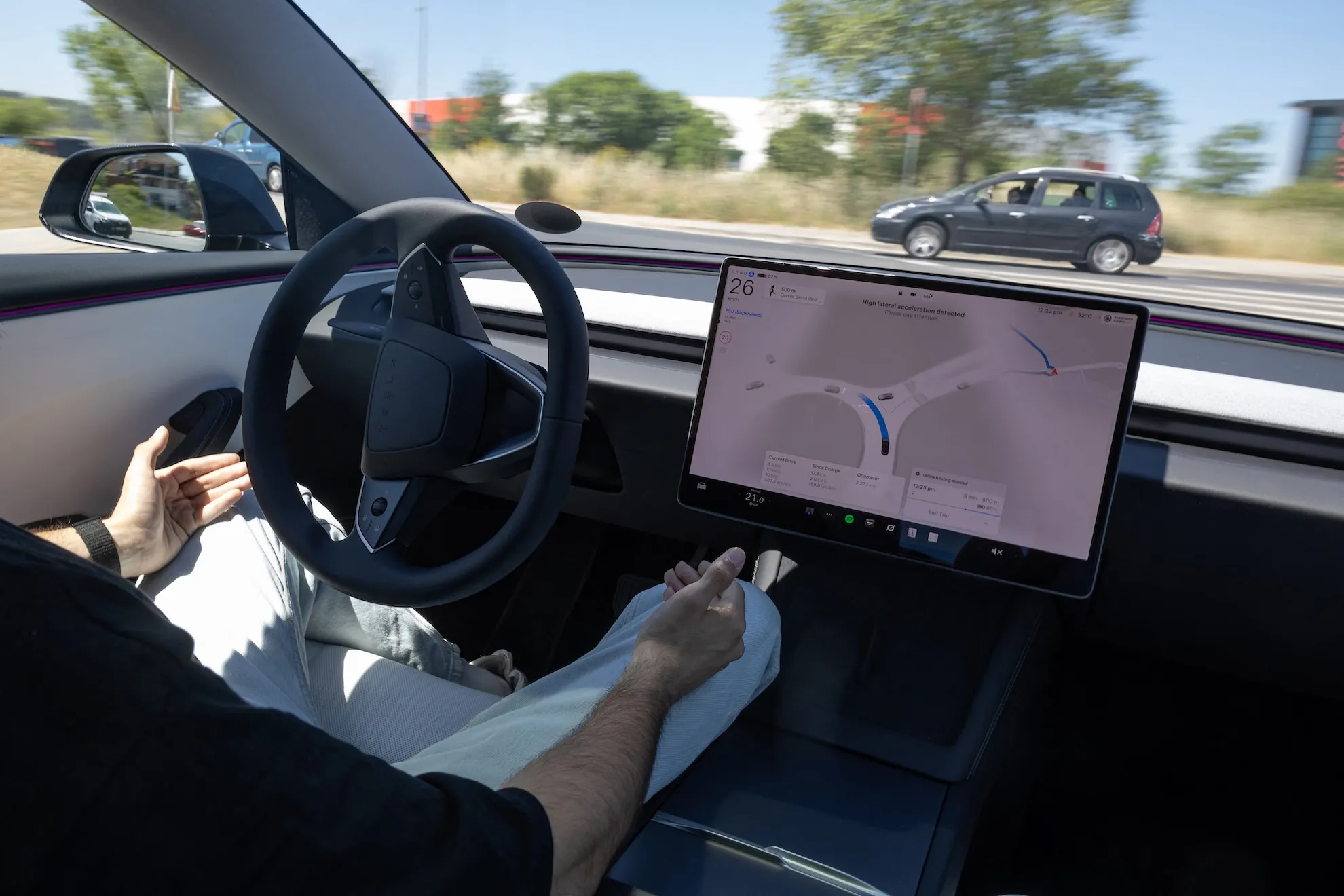
While the software has evolved dramatically from basic lane-keeping and adaptive cruise control into a complex neural-net-driven system capable of navigating surface streets, parking lots, and highways, it remains a Level 2 automation system. This classification dictates that human drivers must remain fully attentive at all times and be prepared to take immediate control. Consequently, safety regulators across Europe have scrutinized not only the software’s operational parameters but also the marketing language used to describe its capabilities.
Chronology of the European Push
The path to Europe’s regulatory showdown with Tesla has been years in the making, marked by aggressive lobbying, escalating tensions, and shifting political landscapes:
- June 2025: Elon Musk takes to social media platform X (formerly Twitter) to rally European consumers, claiming that deploying FSD in Europe "will save lives of people in the car, as well as vulnerable road users like pedestrians, cyclists, and pets." He urges his followers to lobby their respective governments for approval.
- March 2026: Escalating his rhetoric, Musk publicly lambasts the European Union, stating that the bloc’s "extreme regulatory burden" stifles innovation. He asserts that European drivers "will love Tesla self-driving!" once barriers are removed.
- Early 2026 (Weeks after Musk’s critique): The Netherlands breaks ranks with broader EU hesitation, becoming the first European country to officially greenlight the use of FSD (Supervised). Investigative reports later allege that the Dutch vehicle safety regulator, the RDW, faced relentless pressure and "browbeating" from Tesla and coordinated online activist campaigns.
- September 2026: Germany’s transport ministry formally steps into the fray. Minister Steffen Bilger publicly labels the "Full Self-Driving" nomenclature misleading, noting that the software falls short of full autonomy. Bilger holds direct talks with Tesla executives.
- October 2026: Following bilateral discussions, Tesla officially proposes the name change to "Tesla Assisted Driving." In response, Minister Bilger announces he will actively advocate for pan-European approval ahead of a crucial EU-wide legislative vote slated for later in the year. Musk publicly thanks Bilger on X.
- January 2026 – Present: Amid mounting legal scrutiny—including a landmark judge’s ruling that Tesla engaged in deceptive marketing regarding its older "Autopilot" system—Tesla officially discontinues Autopilot to streamline consumer adoption toward its advanced software suite.
Supporting Data and Regulatory Scrutiny
Tesla’s journey toward European integration has not been without controversy. Investigative reporting by outlets such as Reuters has shed light on the intense lobbying tactics deployed by the Austin-based automaker. Documents and insider accounts suggest that Tesla’s aggressive campaign to secure regulatory clearance in Brussels and national capitals was heavily reliant on internal company safety research that critics and independent automotive experts have characterized as "flawed studies" and "faulty safety data."
Furthermore, the technological baseline of Tesla’s software has expanded exponentially. Modern iterations of the software utilize advanced end-to-end neural networks trained on millions of miles of driving data, replacing hard-coded programming. Features once restricted to basic highway driving now allow vehicles to:
- Automatically pull in and out of tight parking stalls.
- Navigate complex urban intersections, roundabouts, and traffic lights.
- Perform proactive safety interventions, overriding human inputs if an imminent collision is detected—even when the primary driver assistance suite is toggled off.
Despite these technological leaps, the software’s safety record remains a matter of intense public debate. FSD and its less sophisticated predecessor, Autopilot, have been implicated in numerous federal investigations by agencies like the U.S. National Highway Traffic Safety Administration (NHTSA), as well as a growing docket of civil lawsuits stemming from fatal and severe-injury crashes where the systems were active.
The legal pressure finally forced a structural product overhaul earlier this year when Tesla retired the "Autopilot" name entirely, a decision catalyzed by judicial rulings finding fault with how the company marketed driver-assistance capabilities to the general public.
Official Responses
The compromise between Tesla and European regulators has drawn reactions from key stakeholders across the political and corporate spectrums:
- Steffen Bilger (German Transport Ministry): In an official ministerial release, Bilger maintained that while Tesla’s technology represents a fascinating leap in automotive digitalization, clear boundaries must be drawn between assistance and full autonomy. By securing a name change to "Tesla Assisted Driving," Bilger noted that the ministry can now ethically and legally champion the software’s safety case to broader EU regulatory bodies.
- Elon Musk (Tesla CEO): Musk has adopted a pragmatic, albeit strategic, tone. While previously critical of European bureaucracy, his public thanking of Minister Bilger signals a realization that compromise is necessary to unlock the European market. Musk’s overarching philosophy remains that autonomous and semi-autonomous software, deployed at scale, is statistically safer than human drivers—a premise he believes will ultimately win over skeptical international regulators.
- European Regulatory Bodies (EU / RDW): Broadly speaking, EU transportation officials have maintained a unified stance that consumer protection and clear semantics must precede technological deployment. The Dutch RDW’s early approval served as a testing ground, but the upcoming EU-wide vote will establish a unified standard for all 27 member states, heavily influenced by Germany’s pivot.
Implications for the Future
The rebranding of Tesla’s flagship driver-assistance software carries profound implications for the automotive industry, global regulatory frameworks, and Tesla’s financial future:
1. Market Expansion and Revenue Potential
Europe represents one of the most lucrative automotive markets in the world. Securing pan-European approval for "Tesla Assisted Driving" transforms the region from a regulatory roadblock into a massive addressable market for software-as-a-service (SaaS) revenue. Up to this point, Tesla’s software attach rates outside of North America and China have been stunted. A successful EU-wide rollout could generate billions of dollars in high-margin software upgrades and subscription fees.
2. A Precedent for Global AI Regulation
Tesla’s capitulation in Europe establishes a critical precedent: tech giants cannot simply export American marketing terminology into highly regulated foreign jurisdictions without pushback. The forced shift from "Full Self-Driving" to "Assisted Driving" may encourage regulators in other regions—such as Asia-Pacific markets and Latin America—to demand greater semantic accuracy and accountability from companies developing artificial intelligence for physical safety-critical applications.
3. Consumer Trust and Liability
By officially shedding the "Full Self-Driving" label in Europe, Tesla may mitigate some consumer confusion, reducing the likelihood of drivers overestimating the vehicle’s capabilities. However, it also alters the liability landscape. As long as drivers understand they are using an "assisted" system rather than a "self-driving" car, accountability for operational errors remains squarely on the human behind the wheel. This distinction is vital as courts continue to parse liability in autonomous and semi-autonomous vehicle accidents.
Ultimately, Tesla’s concession in Germany proves that even the world’s most valuable automaker must bow to sovereign regulatory authority. Whether "Tesla Assisted Driving" can conquer European roads without compromising safety will be the defining automotive story of the coming years.
 Siti Muinah
 Nila Kartika Wati
 Nana Muazin
