

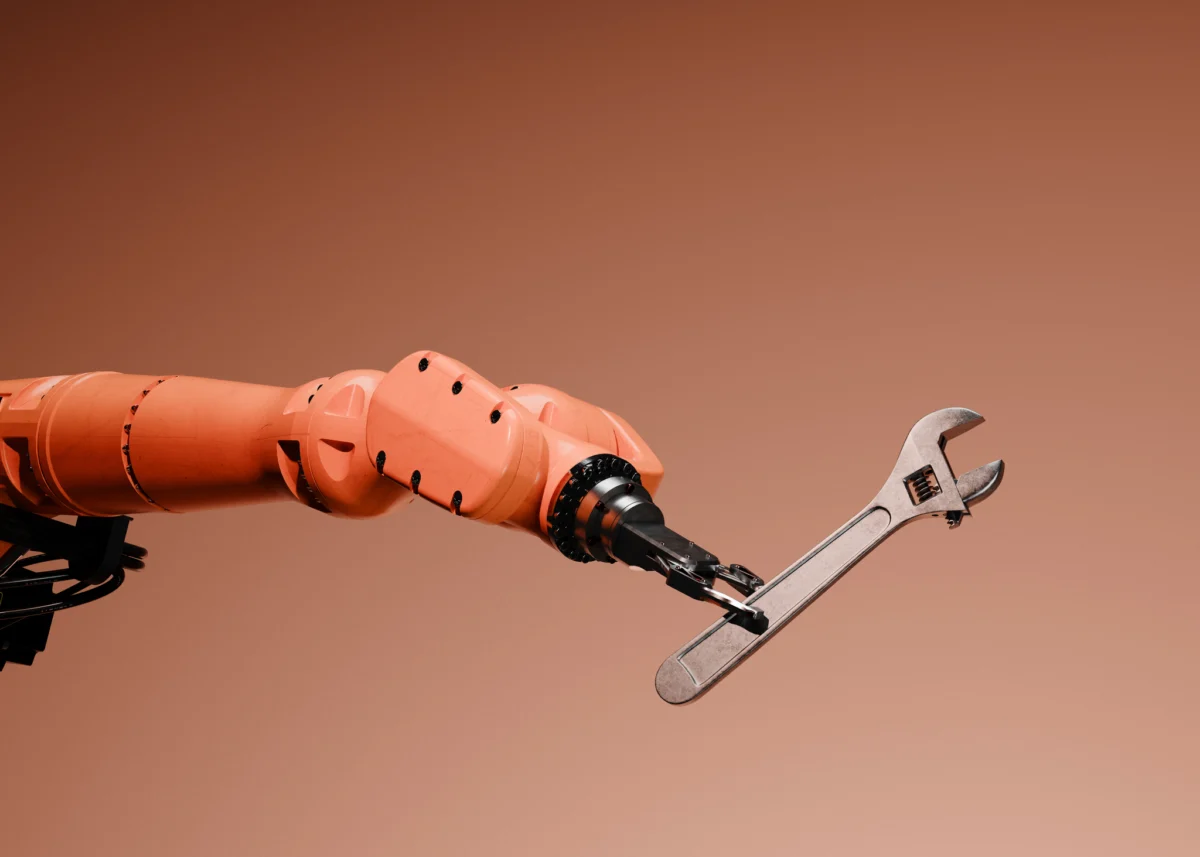
SAN FRANCISCO — In the rapidly accelerating race to bring functional humanoid and general-purpose robots out of science fiction and onto factory floors, warehouses, and eventually living rooms, a critical bottleneck has always remained: data. While artificial intelligence models for text and vision have gorged on decades of digitized human thought scraped from the internet, physical robots cannot learn how to fold laundry, repair an engine, or pour a latte from a PDF. They need to see, map, and replicate physical human motion in the three-dimensional world.
Enter Mecka AI, a young startup founded in 2024 with the ambitious mission of becoming the primary data engine for the physical AI era. On October 7, 2026, the company officially announced that it has successfully raised a $60 million Series B funding round. The heavy-hitting investment was led by venture capital titan Sequoia, with significant strategic participation from tech heavyweights including Nvidia and Microsoft’s venture fund, M12, alongside a roster of other institutional backers.
This fresh capital injection values the two-year-old startup at approximately $500 million, a staggering valuation that underscores the intense, gold-rush-like demand among hardware and AI developers for high-quality, real-world human motion datasets.
Main Facts
The core pillars of Mecka AI’s recent funding announcement and business model outline a rapidly shifting landscape in tech investment:
- The Funding Round: Mecka AI secured $60 million in its Series B financing round.
- Key Investors: The round was led by Sequoia, featuring strategic investments from Nvidia and Microsoft’s M12 fund.
- Valuation: The deal places the startup’s valuation right around the $500 million mark, matching earlier market leaks reported by industry media.
- The Core Business: Mecka AI specializes in capturing, structuring, and analyzing human motion data. The company pays human subjects to record everyday tasks (such as making coffee or performing mechanical repairs) while outfitted with body sensors and smartphones.
- Strategic Purpose: The collected datasets are used to train the foundational neural networks powering humanoid robots and other autonomous mechanical systems, effectively serving the same function for robotics that companies like Scale AI served for Large Language Models (LLMs).
Chronology: From Stealth to a Half-Billion-Dollar Valuation
The trajectory of Mecka AI reads like a textbook case of modern AI-era hyper-growth, moving from an abstract concept to an industry-defining enterprise in record time.
2024: The Inception
Mecka AI was founded in 2024 by a team of machine learning researchers and robotics engineers who recognized a glaring structural flaw in the robotics industry: while hardware developers were making immense strides in actuators, materials, and battery life, the "brains" and operational intuition of the robots were lagging far behind. Existing models lacked the nuanced, physics-based intuition required to handle unstructured, dynamic human environments. The founders realized that to teach a machine to move like a human, you first needed an unprecedented volume of granular, high-definition human kinetic data.
Mid-2026: Scaling Operations and Market Validation
As humanoid robotics initiatives from companies like Tesla, Figure, Boston Dynamics, and Sanctuary AI gained momentum, the demand for training data skyrocketed. Mecka quietly built out its proprietary capture framework—deploying networks of human contributors equipped with specialized body-tracking sensors and high-end smartphones. By recording everyday domestic and industrial actions, Mecka built a library of behavioral data capable of translating messy human reality into clean, machine-readable vector data.
September 2026: Whispers of the Mega-Round
By late summer 2026, industry insiders began leaking details regarding Mecka’s financial maneuvers. Reports surfaced that the startup was actively courting top-tier Silicon Valley investors to close a massive new capital raise. Media coverage highlighted that the impending Series B would push Mecka’s enterprise valuation to the $500 million threshold, capturing the attention of major ecosystem players who understood that whoever controls the data pipeline controls the robotics revolution.
October 7, 2026: Official Series B Unveiling
Mecka AI formally pulled back the curtain on its $60 million Series B round. With Sequoia leading the charge and ecosystem gatekeepers like Nvidia and Microsoft validating the company’s technical architecture through their investments, Mecka firmly cemented its status as a critical cornerstone of the physical AI infrastructure.
Supporting Data: The Anatomy of the Robot Data Economy
To understand why Mecka AI commands a half-billion-dollar valuation just two years after its inception, one must examine the broader economic and technological landscape of AI training data.
In the software realm, data labeling and generation giants have achieved massive valuations by fueling the LLM explosion. Companies like Scale AI, Mercor, and Surge act as the digital mines where raw data is extracted, cleaned, and refined into fuel for generative text and image models.
However, robotics requires an entirely different taxonomy of data. It is not enough to parse text; an AI model driving a humanoid hand must understand grip pressure, torque, spatial orientation, fluid dynamics, and friction.

Mecka AI is not alone in recognizing this lucrative vacuum, though it has quickly emerged as a frontrunner. Competitors are sprinting down parallel tracks:
- XDOF: Another nascent player in the physical AI data space, XDOF made headlines when it was reported to be in talks for its own Series B round at a staggering $1.2 billion valuation, just three months after emerging from stealth mode.
- Legacy LLM Giants Pivoting to Robotics: Traditional human-data powerhouses that built their empires on software and text are aggressively expanding their mandates to capture physical motion. Scale AI and Micro1 (which previously raised funds at a $500 million valuation) have both initiated aggressive pivots to ingest robotics training streams, recognizing that the next frontier of AI is physical.
The sheer velocity of capital flowing into these companies indicates that institutional investors view physical data acquisition as a high-stakes race. If software data created trillion-dollar tech monopolies, physical AI data is projected to underpin the automation of the global labor force.
Official Responses and Industry Perspectives
The convergence of AI, hardware, and venture capital in Mecka’s funding round has drawn commentary from across the technology sector, highlighting the collaborative yet fiercely competitive nature of the modern AI ecosystem.
While Mecka AI’s founders emphasize that their platform is hardware-agnostic—meaning their datasets can theoretically train any robot, from bipedal humanoids to robotic arms on factory assembly lines—the identity of their investors tells a deeper story.
Nvidia’s participation is particularly telling. As the undisputed hardware kingpin providing the graphic processing units (GPUs) and simulation environments (such as Nvidia Omniverse) where humanoid robots are digitally trained before deployment, Nvidia has a vested interest in ensuring that developers have access to top-tier real-world training data. By backing Mecka AI, Nvidia helps grease the wheels of the entire physical AI pipeline, ensuring that developers building robots on Nvidia chips have access to the data required to make those robots intelligent.
Similarly, Microsoft’s M12 venture fund represents big tech’s aggressive hedging across the entire automation landscape. With Microsoft heavily integrated into enterprise cloud computing and artificial intelligence through its partnership with OpenAI, extending its reach into foundational robotics data aligns with its long-term strategy to dominate both digital and physical enterprise workflows.
Venture firm Sequoia, leading the round, has doubled down on its thesis that the next era of venture returns will come from bridging the digital-physical divide. Speaking on background regarding the broader physical AI boom, venture analysts note that investments in companies like Mecka represent a bet on infrastructure rather than speculative consumer applications. Much like the railroads of the 19th century or the fiber-optic cables of the dot-com boom, data collection startups are building the indispensable rails upon which future industries will run.
Implications: What Mecka AI’s Rise Means for the Future of Work and Technology
The successful capitalization of Mecka AI at a $500 million valuation carries profound implications for multiple sectors, stretching far beyond Silicon Valley boardrooms.
1. Accelerating the Humanoid Timeline
For years, skeptics argued that humanoid robots were a parlor trick—impressive engineering demonstrations that would forever struggle to adapt to the chaotic, unstructured nature of human environments. By systematizing the collection of human motion data, companies like Mecka are systematically dismantling this barrier. When a robot can watch millions of hours of humans navigating cluttered kitchens, opening doors, and handling fragile objects—and translate those actions into physics-based neural network weights—the learning curve flattens dramatically. We are likely to see commercially viable, general-purpose humanoid robots deployed in controlled logistics and manufacturing settings much sooner than skeptics anticipated.
2. The Rise of the "Gig Economy" for Physical AI
Mecka AI’s business model relies on paying everyday people to wear sensors and record their daily routines. This opens up an entirely new labor paradigm: a gig economy built around human data contribution for physical automation. As demand for high-fidelity kinetic datasets grows, thousands of individuals could find themselves monetizing their daily chores, cooking habits, and trade skills, serving as the biological teachers for silicon students.
3. Intensifying Competition and Consolidation
With giants like Scale AI expanding into robotics and specialized startups like Mecka and XDOF commanding billion-dollar or near-billion-dollar valuations within months of inception, the data-labeling landscape is bound for intense consolidation. Hardware manufacturers—ranging from automotive giants pivoting to robotics to dedicated humanoid startups—will increasingly find themselves forced to either partner with data brokers like Mecka or spend billions building proprietary internal data-capture pipelines.
Conclusion
Mecka AI’s $60 million Series B is more than just another venture capital milestone; it is a barometer for the maturation of physical artificial intelligence. As the boundary between digital algorithms and physical machinery continues to dissolve, companies that can successfully capture, structure, and monetize the fundamental mechanics of human movement will hold the keys to the next industrial revolution. With Sequoia, Nvidia, and Microsoft now backing its vision, Mecka AI is positioned squarely at the epicentre of the robot-training gold rush.
 Siti Muinah
 rifanmuazin
 Nila Kartika Wati
