

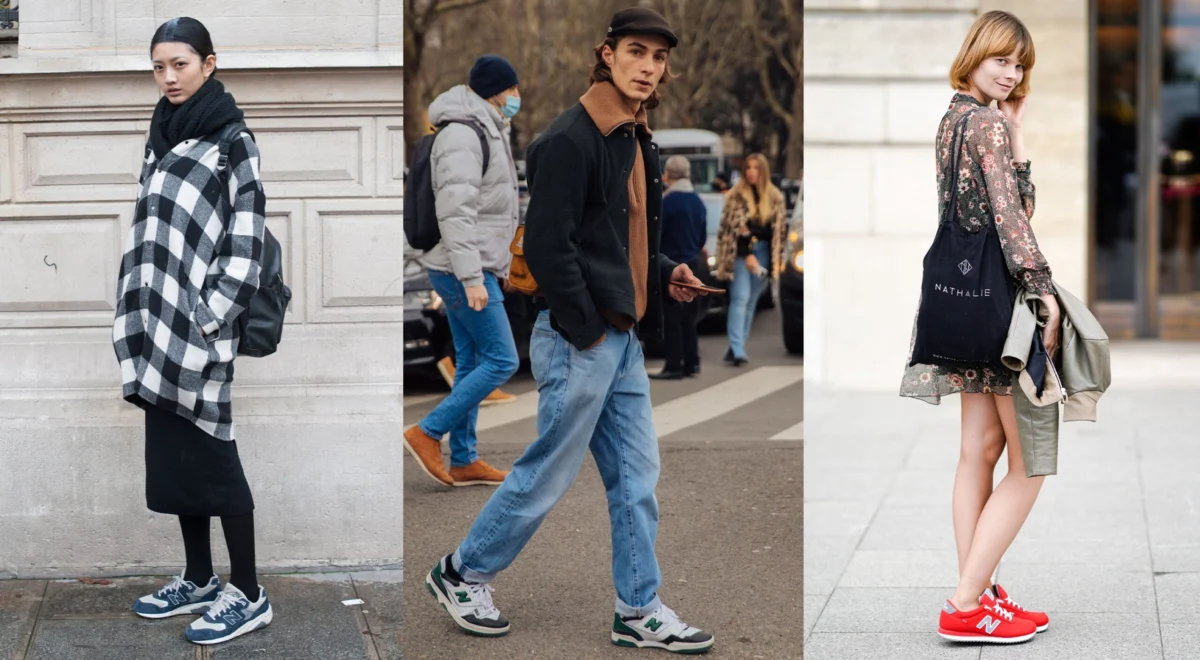
For decades, the sartorial lexicon of Paris—the undisputed global capital of high fashion—was written in the language of the pointed-toe pump, the slender leather loafer, and the architectural boot. To walk the cobblestones of the Le Marais or the manicured gravel of the Tuileries in a pair of chunky, mesh-paneled athletic trainers was, until quite recently, considered a cardinal sin of style. It was the hallmark of the "tourist"—a label every visitor to the City of Lights desperately tries to avoid.
Yet, on a recent weekend trip to Paris, a profound shift in the visual landscape became impossible to ignore. From the bustling queues outside the latest exhibitions at the Musée d’Orsay to the chic, zero-proof cocktail bars of the 11th Arrondissement, the aesthetic consensus had shifted. The most stylish, fashion-forward individuals on the pavement were not wearing stilettos. They were wearing New Balance.
This is not merely a fleeting trend; it is a fundamental transformation in how we define "smart" travel footwear. The Boston-based brand, once relegated to the status of "suburban dad" utility or serious marathon training, has achieved the impossible: it has become the definitive accessory for the world’s most discerning tastemakers.

The Anatomy of a Fashion Uprising
The ascent of New Balance within the high-fashion ecosystem has been a slow burn, culminating in a total takeover during this year’s Fashion Week. Outside the Grand Palais, the contrast was striking: editors, buyers, and influencers—traditionally the gatekeepers of the "chic" aesthetic—were pairing oversized, structured trench coats and delicate silk slip skirts with the unapologetically athletic silhouette of the 574 Core or the technical, Y2K-inspired 1906R.
What was once a jarring juxtaposition has become a new, refined uniform. The appeal lies in a concept that the French call insouciance—a deliberate, effortless nonchalance. By grounding a sharp, formal silhouette with a pair of highly cushioned, mesh-heavy sneakers, the wearer signals that they value their mobility as much as their aesthetic. It is the sartorial equivalent of "low effort, high reward."
Chronology of a Cult Classic
To understand how a company founded in 1906 as an "Arch Support Company" became the darling of the runway, one must look at the brand’s strategic evolution over the last decade.

- 2010–2015: The "Dad Shoe" Renaissance: The brand began leaning into its heritage, capitalizing on the "ugly sneaker" trend. Models like the 990 series were embraced by niche streetwear enthusiasts who prized quality and "Made in USA" manufacturing over the hype-driven models of competitors.
- 2018–2021: The Designer Pivot: New Balance began a series of calculated, high-profile collaborations. By partnering with avant-garde labels like Junya Watanabe, AURALEE, and even high-street staples like Arket, the brand successfully bridged the gap between orthopedic utility and avant-garde fashion.
- 2023–Present: Global Ubiquity: The post-pandemic demand for "comfort-first" fashion provided the final catalyst. As travelers returned to the streets of Europe, the need for footwear that could survive 20,000 steps without sacrificing style became paramount. The "Parisian Street Style" look became synonymous with the brand, effectively cementing its status as a global essential.
Supporting Data: Why Travelers Are Choosing Comfort
The shift is driven by more than just visual appeal. Travelers today are prioritizing the "all-day" performance of their wardrobe. The modern traveler is increasingly "carry-on only," meaning every item in a suitcase must serve multiple functions.
According to retail analytics and market trends, the demand for "lifestyle performance" footwear has seen a 40% uptick in the last three years. New Balance’s engineering, rooted in its history as an arch support company, offers a distinct advantage. With features such as ENCAP midsole technology, high-density foam inserts, and an industry-leading range of widths (from narrow to extra-wide), the brand addresses the physical reality of urban exploration.
When you are navigating the uneven cobblestones of the Latin Quarter, the physical pain of an ill-fitting shoe is no longer acceptable. The brand’s ability to offer a "custom" feel in a mass-market product has turned casual tourists and fashion veterans alike into brand loyalists.

The Industry Perspective: A "High-Fashion" Stamp of Approval
Fashion experts and industry insiders suggest that the brand’s success is a direct response to the "return to the office" and the "rise of the weekend trip."
"There is a growing fatigue with impractical fashion," says a leading fashion editor. "When you see an attendee at Paris Fashion Week wearing a vintage-inspired 990v4 with a structured wool blazer, you aren’t seeing a lack of effort. You are seeing a shift in power. The power now lies in being able to move freely, to commute, to work, and to dine, all without needing a shoe change."
Collaborations have been the brand’s secret weapon. By working with Japanese labels like AURALEE, New Balance has introduced muted, sophisticated color palettes—creams, sages, and slate grays—that feel more at home in a high-end boutique than a gym locker. These collaborations have provided the "high-fashion" stamp of approval that allows the sneaker to exist in the same space as a designer handbag.

Implications for the Future of Travel Fashion
The implications of this trend extend far beyond the retail sector; they signal a broader change in the way we curate our lives. The "20,000-step" sneaker is the ultimate symbol of the modern, mobile lifestyle.
For the traveler, the implications are twofold:
- Versatility as the New Luxury: The ability to wear the same pair of shoes from a morning flight to an afternoon gallery crawl and finally to an al fresco supper is the ultimate travel luxury. It reduces luggage weight and eliminates the "foot pain" tax that often ruins a vacation.
- The Death of Formal Rigidness: The success of the sneaker in Paris suggests that the rigid, formal dress codes of the past are eroding. In their place, we are seeing the rise of a "smart-casual" hybrid where comfort is no longer the enemy of style—it is the prerequisite.
Conclusion: A Wardrobe Essential
If the "little black dress" was the uniform of the 20th century, the "New Balance sneaker" is the uniform of the 21st. It is a testament to the fact that, in an increasingly chaotic world, we value things that are honest, well-made, and capable of keeping up with us.

As I headed home from my latest trip to Paris, my feet felt remarkably fresh—a rarity after a weekend of heavy walking. My sneakers, dusty from the Parisian streets but still looking sharp against my tailored trousers, were the clear MVPs of the trip. Whether you are a dedicated follower of trends or a pragmatic traveler looking for your next pair of walking shoes, the evidence is clear: the most stylish choice you can make is the one that lets you keep walking.
Quick Guide: Choosing Your New Balance for Travel
- For the Minimalist: The 990 series remains the gold standard. Its retro suede aesthetic and neutral colorways pair effortlessly with almost anything, from jeans to formal skirts.
- For the Trendsetter: The 1906R or the 530 provide that sharp, "technical" look that adds an instant layer of modernity to oversized coats and blazers.
- For the Classicist: The 574 Core is the quintessential "everyday" trainer. It is the most accessible entry point to the brand and offers a timeless silhouette that never looks out of place.
Note: A version of this article was originally published on Condé Nast Traveller UK.
 Sagoh
Sagoh
 Asro
Asro
