

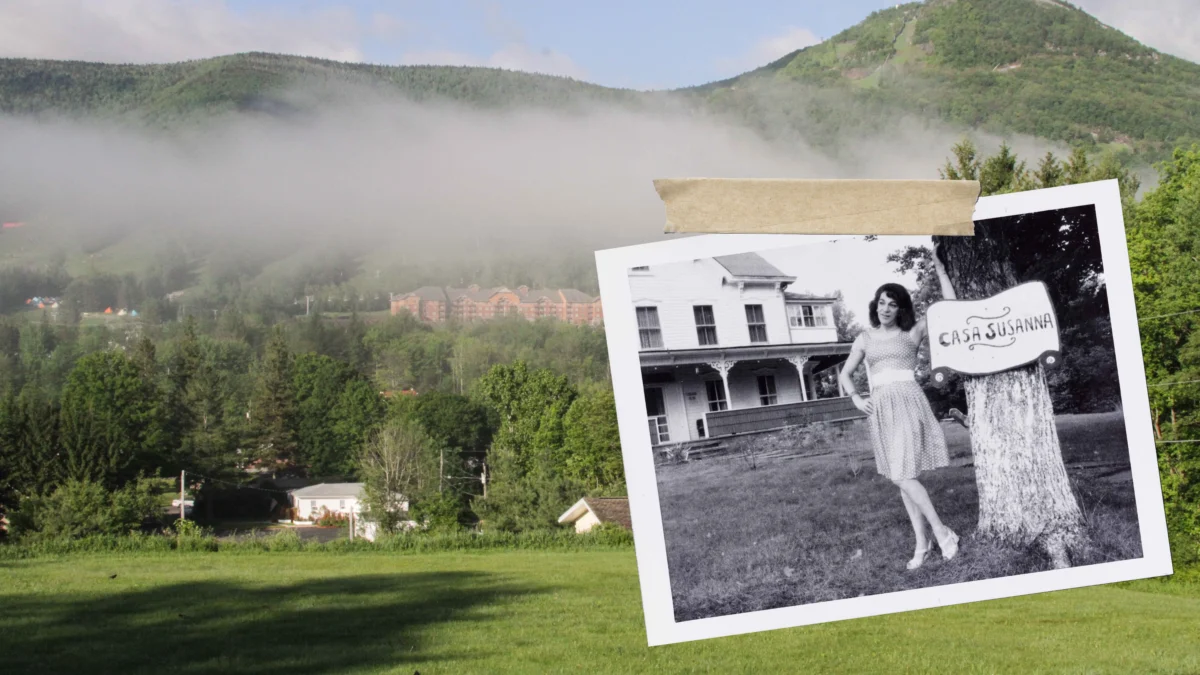
In the quiet, mist-shrouded reaches of the Catskill Mountains, life moves at a pace dictated by the seasons rather than the frantic pulse of the city. For a trans person living in this remote pocket of upstate New York, the isolation is often a choice—a deliberate retreat into a landscape where the towering hemlocks and ancient maples far outnumber the human residents. Here, the local social fabric is woven with a quiet, rugged independence; the clerks at the post office and the neighbors at the local grocery store are more interested in the health of one’s garden after a late-spring frost than the intricacies of one’s gender identity.
For eight years, I have made my home in these mystical mountains, finding solace in their staggering beauty and sharp, uncompromising seasons. Yet, living here has also fostered a deep, often haunting curiosity about those who came before me. The Catskills have long served as a sanctuary for outsiders, a place where the unconventional could find space to breathe. Among these ghosts of the past, none looms larger—or more enigmatically—than the pioneering mid-century resort known as Casa Susanna.

The Genesis of a Secret Haven
Casa Susanna was not merely a resort; it was a lifeline. Operating in the 1950s and 60s, it stood as one of the first organized gathering places for a clandestine network of transfeminine individuals and cross-dressers at a time when simply existing in one’s chosen gender was frequently criminalized.
The story of the resort is inextricably linked to Susanna Valenti, a Chilean immigrant who met her wife, Marie Tornell, while working at her family’s wig shop in New York City. The couple eventually moved to a large property in the Northern Catskills, near the town of Hunter. It was here that they established a sanctuary—initially called Chevalier D’Eon, named after the historic French spy known for cross-dressing—where Susanna could live authentically.

What began as a private retreat soon blossomed into a vital hub for a burgeoning community. Susanna, a shrewd and charismatic figure, penned an advice column titled "Susanna Says" for Transvestia, the premier magazine for cross-dressers that circulated from 1960 until 1986. Through the pages of this publication, despite the constant threat of the post office flagging their correspondence as "obscene," a network was forged. Men from across the country, and even across the globe, read of Susanna’s resort and made the arduous journey to the Catskills. For an all-inclusive fee of $25—roughly $260 in today’s currency—guests could trade their societal personas for a weekend of wigs, makeup, and, most importantly, the life-saving validation of being seen by others like themselves.
A Chronology of Survival
The history of Casa Susanna is a testament to the resilience of the trans experience.

- 1950s–1964: The original property, featuring a main house, a barn used for cabarets, and several bungalows, becomes the epicenter of a secret trans network. Guests arrive via bus or, in some cases, steamship, to live openly for a few precious days.
- 1964: Facing mounting financial pressures, Susanna and Marie sell the first property. They downsize to a nearby white Victorian farmhouse, reopening Casa Susanna as a smaller, more intimate guesthouse.
- 1972: The second property is sold, marking the end of the physical site of the resort.
- 1996: Susanna Valenti passes away in New York City, just months after her wife, Marie.
- 2004: A massive, serendipitous archive of photographs from the resort is discovered at a flea market, sparking a renewed scholarly and public interest in the history of the site.
- 2023–2024: The documentary Casa Susanna, directed by Sébastien Lifshitz, premieres on PBS, and a comprehensive book, Casa Susanna: The Story of the First Trans Network in the United States, 1959–1968, is published by Isabell Bonnet and Sophie Hackett.
The Architecture of Identity
The resort provided more than just a place to stay; it provided a stage for the reclamation of self. Guests would engage in cabarets, share meals, and document their experiences through hundreds of photographs. These images, once risky evidence of "deviance," are now historical artifacts of profound importance. They show women playing Scrabble, lounging by the pond, and laughing—simple acts of humanity that were, at the time, acts of profound rebellion.
However, it is vital to note that this history is not without its complexities. The resort was, by design, exclusive to cross-dressers, specifically those who were often heterosexual and white. While some attendees would go on to medically transition, the "network" operated under a specific set of cultural ideals that prioritized a certain brand of mid-century femininity. Nevertheless, as Susan Stryker notes in the introduction to the recent historical volume on the house, these early networks were the bedrock upon which modern trans liberation was built.

Modern Implications: The Cycle of Progress and Regression
Visiting the site of the second Casa Susanna today is a somber experience. The original farmhouse has been demolished, replaced by modern, generic construction—likely a ski chalet intended to serve the nearby Hunter Mountain resort. As I stood in the driveway, watching the construction workers navigate the debris of what used to be a beacon of hope for so many, the weight of the moment was palpable.
The loss of the physical structure mirrors a deeper anxiety within the modern trans community. We are currently living through a period of legislative regression that feels eerily reminiscent of the fears of the 1950s. Across the United States, we have seen the emergence of "draconian" laws, such as those in Idaho criminalizing the use of gender-appropriate bathrooms, and in Kansas, where the state has moved to revoke the driver’s licenses of transgender residents.

For many of us, the question of whether we have a sustainable future in this country is no longer abstract—it is a daily, lived fear. My own home has become a makeshift sanctuary, where I host monthly gatherings for neighbors who have fled increasingly hostile states. We share coffee and cookies, we talk, and we find strength in one another’s presence. In doing so, we are performing the same act of survival that Susanna and her guests perfected decades ago.
Reflections on the Ancestral Path
The absence of any physical marker at the former site of Casa Susanna is a stinging oversight. There is no plaque, no plaque acknowledging the thousands of lives that were changed within those walls. It is a reminder that queer history is often erased, left to be reclaimed only by those who know where to look.
.jpg)
Yet, as I prepared to leave the property, I noticed the large, gnarled roots of an old tree that had been uprooted to make way for the new construction. It was likely the very same tree featured in the iconic photograph of Susanna leaning against the "CASA SUSANNA" sign. In that moment, the distance between the past and the present collapsed.
We live in an era where we often take our visibility for granted. We post selfies, we walk through public spaces, and we fight for legal recognition. But we do so on the shoulders of people who had to hide in the shadows of the Catskills just to feel the sun on their faces for a single weekend.

When we gather at my kitchen table, we are not just drinking coffee; we are maintaining an unbroken line of resistance. We are the inheritors of the "magic" that Susanna spoke of—the ability to create beauty in a world that is often designed to stifle us. As I drove away, I whispered a silent thank you to the ghost of the woman who understood, better than anyone, that in a hostile world, the most radical thing you can do is be yourself.
The house is gone, but the network remains. It lives in the conversations we have, the community we build, and the quiet, persistent knowledge that we were here before, and we are here now. As the saying goes: If you know, you know. And for those of us who carry this history, that knowledge is enough to keep us going.
 Asro
Asro
 Siti Muinah
