

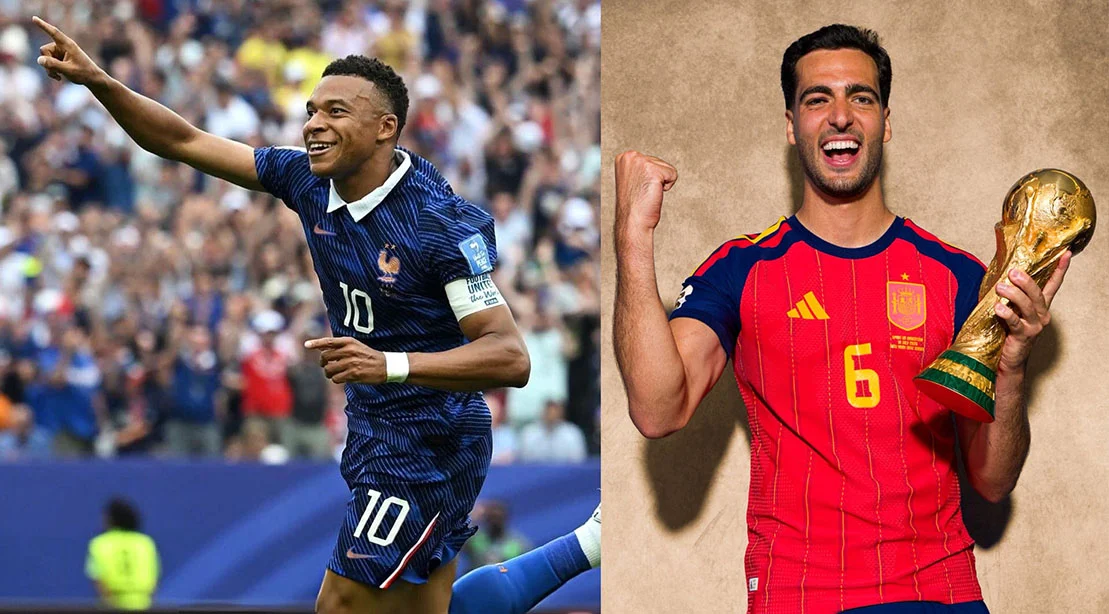
The dust has finally settled on the 2026 FIFA World Cup, a tournament that did not merely host games but redefined the scale of international sport. Across three host nations—the United States, Mexico, and Canada—16 iconic stadiums played host to 48 nations in a grueling, record-shattering marathon of football. By the time the final whistle blew on July 19, crowning Spain as the champions, the tournament had cemented its status as the most-attended event in the history of the sport, with a staggering 6.6 million fans passing through the turnstiles.
From the relentless heat of the American south to the tactical battles in the north, the 2026 edition was a test of endurance, logistics, and individual brilliance. As the world turns its gaze toward the 2030 tournament, we take a deep, analytical dive into the statistics, narratives, and historic milestones that made this summer truly unforgettable.
The Path to Glory: A Chronological Overview
The 2026 tournament was defined by its expanded format, designed to accommodate more nations and, consequently, more drama. The journey began with a whirlwind of group-stage matches that tested the depth of every squad. Travel logistics proved to be a formidable adversary for many, as teams moved across diverse time zones and climates, often with little time for recovery.
As the knockout stages arrived, the pressure intensified. The “questionable refereeing decisions” mentioned by pundits were eclipsed by the sheer quality of play. Spain’s progression was a masterclass in consistency; while other favorites faltered under the weight of the new 48-team structure, the Spanish side remained unflappable. By the semifinals, the tournament had become a tactical chess match, culminating in a final that saw Spain solidify its place at the top of the footballing hierarchy, lifting the trophy amidst a wave of historic fanfare.
Statistical Supremacy: The Golden Boot and Goal Scoring
In a tournament defined by attacking intent, individual brilliance shone brightest. The race for the Golden Boot was a narrative unto itself, featuring the titans of the modern era.
Kylian Mbappé’s Historic Ascent
French superstar Kylian Mbappé delivered a performance for the ages, netting 10 goals throughout the tournament. This tally was sufficient to secure the Golden Boot, outpacing Argentina’s Lionel Messi, who finished with eight, and England’s rising star, Jude Bellingham, with seven. More importantly, this haul brought Mbappé’s career World Cup total to 22, officially leapfrogging Lionel Messi (21) to become the most prolific goalscorer in World Cup history.
Team Output
While individual stars grabbed the headlines, the collective attacking output of the top nations was equally impressive. England and France led the pack, each finding the back of the net 20 times. Argentina followed closely with 19. While these numbers were high, they still fall short of the all-time record set by Hungary in 1954, who managed 27 goals in a single edition—a record that remains the gold standard for offensive dominance in the modern era.
The Underdogs and the Elders: Notable Records
Every World Cup produces a "Cinderella" story, and in 2026, that narrative belonged to Cape Verde. With a population of less than 600,000, they defied the odds to reach the Round of 16, becoming the smallest nation by population to ever reach the knockout stages.
The story was anchored by goalkeeper Vozinha (Josimar Dias). At 40 years and 12 days old, he became the oldest goalkeeper to record a clean sheet in a World Cup match—a feat made even more remarkable by the fact that it occurred against the eventual champions, Spain. It was a poignant reminder that football, at its highest level, remains a game where experience can still neutralize youth.
Conversely, the tournament also showcased the next generation. Mexico’s Gilberto Mora became the youngest player at the 2026 event at just 17 years and 240 days old. While he didn’t break Norman Whiteside’s 1982 record (17 years and 41 days), his presence on the world stage signaled a changing of the guard that fans are eager to watch evolve.
Minutes Played and Tactical Efficiency
The expansion to an eight-match path for finalists created a new physical benchmark. Spain’s defensive pillars, Marc Cucurella and Pau Cubarsi, alongside Argentina’s midfield engine Alexis Mac Allister, all logged 750 minutes on the pitch. This shattered the previous record of 720 minutes set in 1990, highlighting the extreme physical toll of the new tournament structure.
The MVP of the tournament, Rodri (Rodrigo Hernández Cascante), epitomized the tactical evolution of the modern midfielder. His performance was statistically unprecedented, as he registered 790 successful passes—breaking his own record set in Qatar 2022. By controlling the tempo of the game with such surgical precision, Rodri provided the foundation upon which Spain’s victory was built.
Spain’s Unbeaten Dynasty: A Historic Run
Perhaps the most significant implication of the 2026 World Cup is the formal establishment of a new Spanish dynasty. With their triumph, Spain extended their unbeaten streak to 38 international matches. The team has not tasted defeat since a narrow 1-0 loss to Colombia in March 2024. This run eclipses the legendary 37-match streak held by Italy (2018–2021), proving that this Spanish side is not merely a collection of talented individuals, but a disciplined, cohesive unit that has rewritten the history of international football.
Official Responses and Administrative Reflections
Following the conclusion of the tournament, FIFA President Gianni Infantino hailed the 2026 edition as a "watershed moment for the sport." The administrative success of managing 16 stadiums across three countries with vastly different infrastructures was a massive undertaking.
"The logistical challenges were immense, but the passion of the fans in North America has proven that football is truly a global language," the official statement read. FIFA also acknowledged the feedback regarding refereeing, noting that the introduction of enhanced officiating technology remains a priority for future iterations to ensure that the integrity of the game keeps pace with its rapid expansion.
Implications for the Future of Football
The 2026 World Cup has set a new high-water mark for attendance, revenue, and broadcasting reach. However, it has also sparked a debate about the sustainability of the "expanded format." The physical toll on players, many of whom were coming off grueling club seasons in Europe and beyond, was evident in the fatigue displayed in the latter stages of the tournament.
The Road to 2030
As the footballing world looks toward the 2030 World Cup—which will be hosted by Morocco, Portugal, and Spain—the lessons of 2026 will be vital. The focus will likely shift toward:
- Player Welfare: Managing the increased number of matches without compromising player health.
- Travel Efficiency: Minimizing the carbon footprint and travel exhaustion for squads.
- Competitive Parity: Ensuring that smaller nations, like the inspired Cape Verde squad, continue to have the resources to compete at the highest level.
The 2026 World Cup proved that football is more popular than ever. It showcased that even as the game evolves, the fundamental allure—the tension of a penalty kick, the brilliance of a perfectly weighted pass, and the sheer joy of a nation united—remains unchanged. Spain now stands atop the mountain, but as the records of 2026 are written into the annals of history, the stage is already set for the next chapter in 2030.
For the fans who lost sleep, the analysts who crunched the numbers, and the players who gave everything for their national jerseys, 2026 was not just a tournament; it was a testament to the enduring power of the beautiful game. As we close the book on this historic chapter, one thing is certain: the bar has been raised, and the world is already waiting for the next kick-off.
 Lina Hope
 rifanmuazin
 Laily UPN
