

By Editorial Staff | July 22, 2026
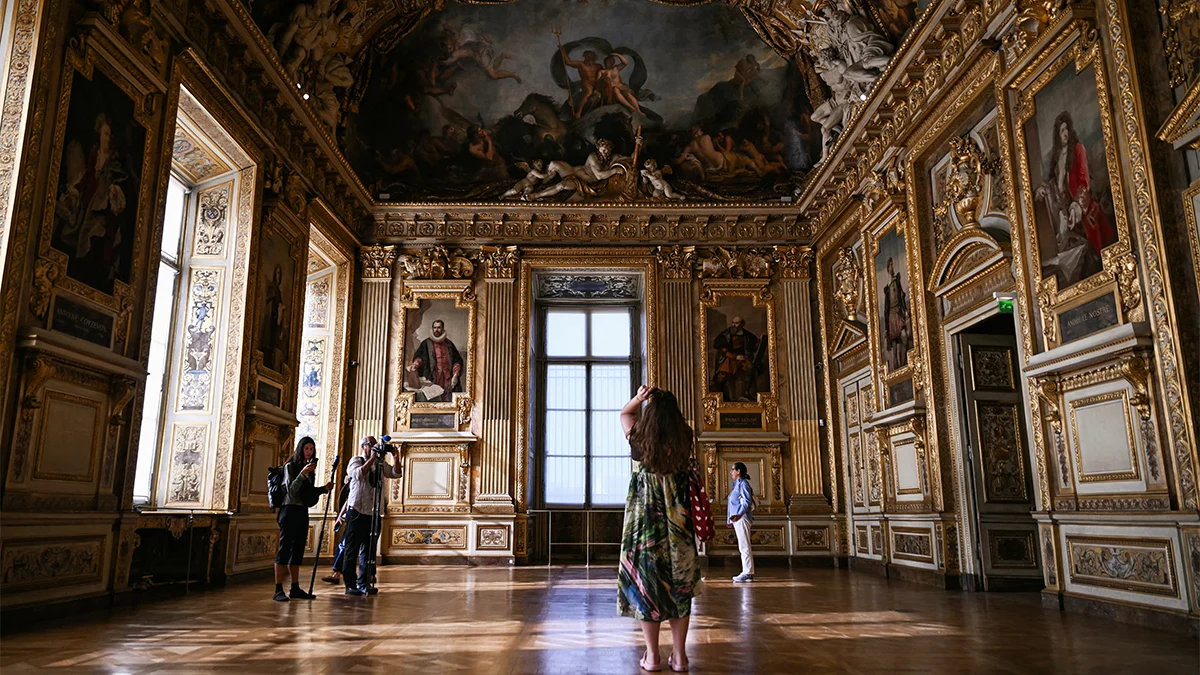
Eight months after the world watched in disbelief as one of the most brazen art heists in modern history unfolded at the heart of Paris, the Louvre Museum has finally reopened the doors to its storied Apollo Gallery. The space, which served as the setting for a daylight robbery that resulted in the loss of $102 million in irreplaceable French crown jewels, has returned to public view. However, visitors walking through the ornate hall today will find a significantly different experience—one that prioritizes architectural preservation over the display of the treasures that once defined the room.
The Reopening: A Shift in Perspective
For decades, the Apollo Gallery was synonymous with the opulence of the French monarchy, acting as a vault for some of the nation’s most delicate and historically significant jewelry. Following the October 19, 2025, heist, the museum’s leadership faced the difficult task of balancing the public’s desire for access with the need to restore a sense of security and sanctity to the space.
Christophe Leribault, who assumed the role of museum director this past February following the resignation of his predecessor, Laurence des Cars, emphasized that the reopening is intended to be a restorative moment. "It’s an opportunity to rediscover the splendid architecture and decor of this gallery," Leribault noted in a press conference.
The gallery, a masterpiece of 17th-century French design, is now devoid of the jewelry collections that previously anchored its displays. Instead, the museum has opted to return the space to its roots as a purely ceremonial hall. Visitors are invited to contemplate the vast, intricate Greek frescoes and the radiant gold-leaf detailing that pays homage to Apollo, the god of the sun. While the absence of the jewels may be felt by those expecting the gallery’s previous layout, the move signals a permanent shift in how the Louvre manages its most vulnerable—and valuable—assets.
Chronology of a Crisis: The Eight Minutes That Shook Paris
To understand the gravity of the current moment, one must look back at the harrowing events of October 19, 2025. The audacity of the crime remains a subject of intense scrutiny by law enforcement and museum security experts alike.
- October 19, 2025, 9:30 a.m.: The Louvre, usually a beacon of calm, was breached by a sophisticated group of thieves. Utilizing a strategy that relied on speed and tactical precision, the perpetrators smashed a window, entering the Apollo Gallery before the museum’s peak morning rush.
- 9:30 a.m. – 9:38 a.m.: In a window of just eight minutes, the robbers navigated the gallery with apparent knowledge of the security protocols, seizing items from display cases with calculated efficiency.
- 9:39 a.m.: The suspects exited through the same point of entry, disappearing into the Parisian cityscape before responding authorities could secure the perimeter.
- October 20, 2025: The immediate aftermath saw a global outpouring of shock. France’s cultural reputation was hit hard, with the "unshakeable" status of the Louvre being called into question.
- February 2026: Following a period of intense public and political pressure, museum director Laurence des Cars resigned. Christophe Leribault was appointed to oversee the institution and lead the museum through its most significant security overhaul in a century.
- July 22, 2026: The Apollo Gallery officially reopens to the public, featuring upgraded, state-of-the-art surveillance and intrusion-detection systems.
The Lost Treasures: A Priceless Legacy
The financial estimate of $102 million, while staggering, fails to capture the true cost of the theft. The stolen artifacts were not merely luxury goods; they were tangible links to the French Empire.
Among the missing items are the personal jewels of Empress Eugénie, the wife of Napoleon III, whose refined taste helped define the aesthetic of the Second French Empire. Perhaps even more devastating to historians is the loss of the royal sapphire set—a tiara, necklace, and matching earrings that once belonged to Queen Marie-Amélie, the last queen of France.
These pieces, crafted with meticulous attention to detail and set with rare, high-carat stones, were considered "priceless" by curators. Their historical provenance made them impossible to auction on the open market, leading many experts to speculate that the items were likely stolen on commission for a private collector or intended to be broken down into individual stones for resale—a prospect that has deeply saddened the global art community.
Security Upgrades: A Fortress Reimagined
The reopening of the gallery is not merely a cosmetic endeavor. Behind the scenes, the Louvre has undergone a radical security transformation. The incident exposed fatal gaps in the museum’s physical and digital security, particularly regarding the ease with which the thieves accessed the gallery through an external window.

"The fragility of a place we thought unshakeable has been exposed," said French Culture Minister Catherine Pégard during a ceremony marking the reopening. "We have had to confront our vulnerabilities to ensure that the memory of our heritage remains protected."
The new security suite includes:
- Reinforced Perimeter Barriers: Advanced, high-strength ballistic glazing has replaced the original glass in the gallery’s windows, capable of withstanding heavy impact.
- AI-Driven Surveillance: New, high-definition cameras equipped with behavioral-analysis software now monitor the room 24/7, capable of flagging suspicious loitering or abnormal movement patterns to security command centers.
- Redundant Alarm Systems: The gallery now features a multi-layered sensor network that integrates motion, pressure, and thermal detection, creating a "bubble" around the central areas of the room.
- Rapid-Response Integration: The Louvre has partnered with the Gendarmerie to establish a direct, real-time data link, significantly reducing the time it takes for law enforcement to receive alerts in the event of an emergency.
Official Responses and Public Sentiment
The fallout from the heist was felt at the highest levels of the French government. The theft was not viewed as a simple burglary; it was perceived as an assault on French identity.
The investigation, which has been ongoing for eight months, saw a significant breakthrough earlier this spring when police announced the arrest of two suspects linked to the crime. However, the recovery of the stolen jewelry remains elusive. Authorities have remained tight-lipped regarding the ongoing investigation, citing the sensitivity of the leads.
For the French public, the reopening of the Apollo Gallery represents a tentative return to normalcy. However, the tone remains somber. Minister Pégard’s comments reflect the collective mood: "That sinister day, when iconic pieces were taken, cannot be forgotten, and indeed, I believe, should not be. It was a trauma for the entire world."
The Path Forward: Can the Louvre Move On?
As the doors open once more, the Louvre faces a critical question: Can it regain the trust of the global community while operating as a public institution?
Museums across the world are watching the situation in Paris closely. The Louvre’s challenge is the quintessential dilemma of modern cultural heritage management: how to preserve the accessibility of history while safeguarding it from those who would exploit its value.
For the visitors entering the Apollo Gallery today, the experience is stripped of the jewels but perhaps richer in context. By focusing on the architecture, the museum is forcing a re-evaluation of the space itself. The gallery is no longer a vault; it is a monument to the resilience of art.
Whether or not the stolen crown jewels of Empress Eugénie and Queen Marie-Amélie will ever surface remains a mystery. Until then, the empty display cases serve as a silent, powerful reminder of the fragility of our shared history. The Louvre, and by extension the world, has learned a difficult lesson: that the most guarded treasures require not only walls of stone and iron, but a constant, evolving vigilance.
As the sun streams through the restored windows of the Apollo Gallery, casting light on the gold-gilded ceiling, the message is clear: the history of France continues, even in the wake of its greatest losses. The museum remains open, the history remains visible, and the hunt for the missing treasures continues, far from the public gaze, in the quiet corridors of justice.
 Evan Lee Salim
 Asep Darmawan
 Laily UPN
