

As the world turns its gaze toward the United States for the 2026 World Cup, the spectacle of elite athleticism serves as a powerful reminder of how far human performance has come. When Argentina defeated Austria 2-0 on June 22 in the Dallas, Texas area, the crowd witnessed the culmination of decades of evolution in sports science. Yet, amidst the roaring stadiums and modern analytics, one man stands as the silent pioneer of this modern era: Dr. Kenneth H. Cooper.
Widely revered as the "Father of Aerobics," Dr. Cooper’s influence transcends the American borders, reaching back to the golden age of football. His contribution to the 1970 Brazilian World Cup team—a squad frequently cited as the greatest ever to grace the pitch—serves as a cornerstone of his legacy. At 95 years old, Dr. Cooper remains a living testament to the very principles he pioneered, continuing to work and advocate for a healthier global population.
The 1970 Blueprint: How Science Secured Brazil’s Glory
The story of Dr. Cooper’s involvement with international soccer began not in a high-tech training facility, but through a fortuitous connection during his tenure in the U.S. Air Force. When he met the trainer for the Brazilian national team, then stationed in Mexico City, he was presented with a unique challenge. The team was talented, but they lacked the specific physiological conditioning required to dominate at the highest level of international play.
Cooper implemented his now-legendary "12-minute test," a protocol designed to measure cardiorespiratory fitness by tracking the distance an individual could cover in a set timeframe. His initial findings were eye-opening: the Brazilian stars were covering approximately 1.86 miles in 12 minutes.
"I had them run 20 miles a week," Cooper recalled. "They were running at a 7-minute pace, running in fragments of 4 to 5 miles to get that 20 miles a week. By the end of that time, a year later, we retested them at 2.3 miles in 12 minutes."
The results were transformative. Brazil went on to win six straight matches, clinching the 1970 World Cup title with a level of dominance in the second half of games that bewildered their opponents. While legends like Pelé provided the technical brilliance, Cooper’s conditioning regimen provided the engine. "They were in outstanding condition—they beat everybody in the second half," Cooper noted.
A Life of Service: From NASA to the "Father of Aerobics"
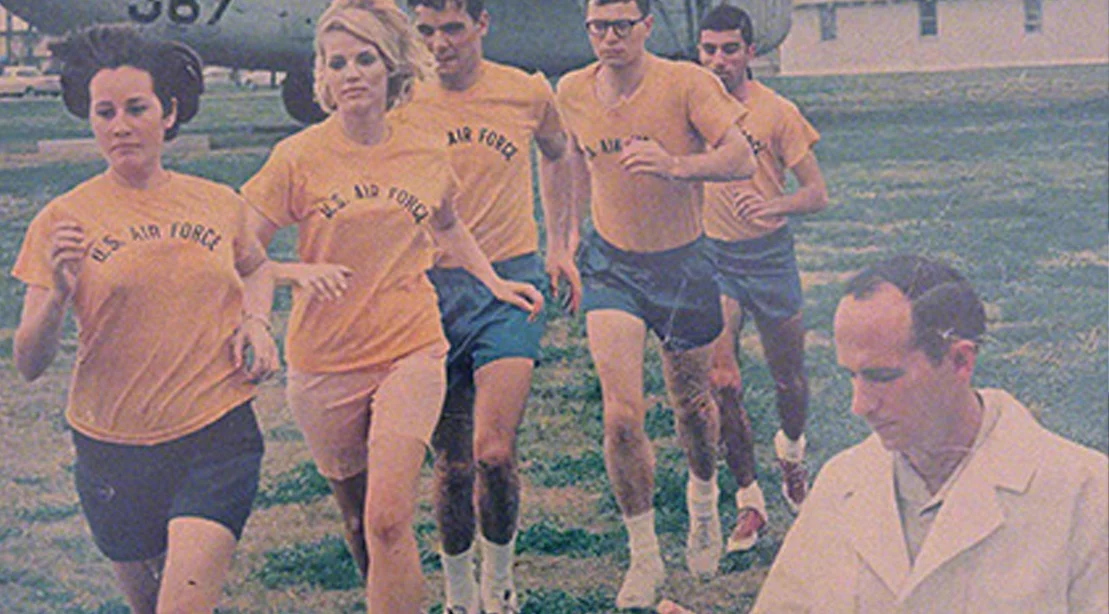
Before his influence on global sport, Dr. Kenneth Cooper was already a luminary in the field of aerospace medicine. Serving for 13 years as a U.S. Air Force Lieutenant Colonel and flight surgeon, Cooper’s work was critical to the success of the American space program.
Pioneering Space Medicine
Cooper worked directly with NASA to design the physical conditioning and in-flight anti-deconditioning programs necessary for early astronauts. In the weightless environment of space, the human body undergoes rapid muscle atrophy and cardiovascular decline. Cooper’s protocols ensured that astronauts could maintain the physical integrity required for the rigors of space travel.
The Aerobics Revolution
Following his military service, Cooper turned his attention to the general public. He codified the link between cardiorespiratory fitness and long-term health, coining the term "aerobics." His research-backed guidelines—including the recommendation of 150 minutes of moderate-intensity exercise per week—have become the global gold standard for public health organizations.
His influence in Brazil remains so profound that, to this day, the act of jogging is colloquially referred to by locals as "doing the Cooper."
Supporting Data: The Science of Longevity
Dr. Cooper’s impact is best measured not just in World Cup trophies, but in the longevity of the patients who have followed his "Cooperized" lifestyle for decades.
At the Cooper Aerobics Health and Wellness center in Dallas, a group of 20 patients followed his specific principles regarding exercise, nutrition, and wellness for 45 years. The results, published in internal longevity studies, are staggering. The men in the cohort lived to an average of 86.5 years, while the women reached an average of 90.4 years.
This combined average of 88.6 years represents a lifespan nearly a decade longer than the current national average for Americans. These findings underscore Cooper’s core philosophy: that health is a cumulative journey of disciplined, daily habits rather than a sprint toward a fleeting fitness goal.
Rethinking Health Metrics: Waist Size vs. Weight
In an era of body-positive messaging and fluctuating diet trends, Dr. Cooper remains a staunch advocate for objective health markers. He argues that the scale is often a misleading indicator of health. Instead, he favors the "tape test"—a measure of waist circumference as a percentage of height.
"The circumference of your waist should be no more than one-half your height," Cooper explains. "If you’re 5 feet tall, that’s 60 inches in height; your waist should not exceed 30 inches."
While the modern military standard allows for a waist measurement up to 55% of one’s height, Cooper insists that the 50% threshold is the "gold standard" for metabolic health. This metric, he argues, is a more accurate predictor of visceral fat levels—the type of fat associated with heart disease, diabetes, and systemic inflammation.
Implications for Future Generations
As Dr. Cooper enters his 95th year, his legacy is being carried forward by the next generation. His son, Tyler Cooper, serves as the President and CEO of the family business, overseeing six distinct entities and a non-profit organization that continues to expand internationally. With interest from nations as far as China in replicating the Cooper model, the reach of his methodologies is truly global.
His daughter, Berkley, has also embraced the family commitment to fitness, having completed the Boston Marathon, an event her father ran twice during his own peak years.
Advice for the Modern Era
In his latest book, Grow Healthier as You Grow Older, Dr. Cooper distills over 50 years of medical experience into actionable advice for the aging population. He believes that the goal for those over 80 should be to maintain a walking pace of one mile in 17 minutes.
"Studies showed if you can do that, 84% of men and 86% of women will make it to age 90," he says. His own life serves as the ultimate validation; he remains active, sharp, and engaged in his medical practice, even as the vast majority of his 1956 medical school class has passed away.
Conclusion: Fitness as a Lifelong Journey
The 2026 World Cup is a celebration of human potential, but the lessons provided by Dr. Kenneth Cooper suggest that this potential is not reserved for professional athletes. It is available to anyone willing to apply the discipline of consistent, aerobic-focused activity.
Dr. Cooper’s final message to the public is one of adaptation. "Fitness is a journey, not a destination. You must keep it up the rest of your life," he asserts. "You can’t run anymore? You can walk, you can swim, or cycle. Where there’s a will, there’s a way."
As the world celebrates the athletic feats in Dallas and beyond this summer, it is worth remembering the man who helped set the pace. By prioritizing cardiovascular health, maintaining a healthy waist-to-height ratio, and viewing fitness as a permanent lifestyle, Dr. Cooper has provided a roadmap for not just living, but thriving, well into the ninth and tenth decades of life. His work continues to echo in stadiums, in research laboratories, and in the lives of the thousands of people who are, quite literally, "doing the Cooper" every single day.
 Lina Hope
 rifanmuazin
 Laily UPN
