

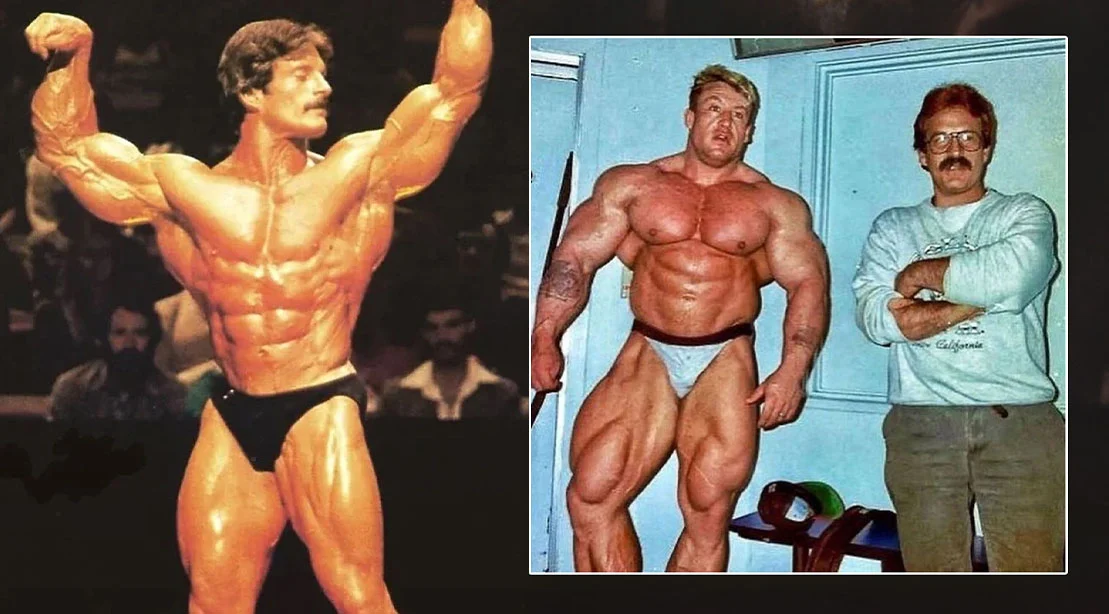
June 10, 2026, marked a somber yet significant milestone in the annals of physical culture: the 25th anniversary of the passing of Mike Mentzer. A visionary who transformed the very fabric of bodybuilding, Mentzer was far more than a decorated athlete; he was a philosophical disruptor who challenged the status quo of the fitness industry. To commemorate the life and enduring influence of the "Mr. Heavy Duty," six-time Mr. Olympia champion Dorian Yates took to social media to pay tribute to a man who fundamentally altered the trajectory of his career and the lives of countless iron athletes worldwide.
The Philosophical Rebel of Iron
Mike Mentzer (1951–2001) occupies a singular space in the history of professional bodybuilding. Known for his intellectual depth and refusal to accept conventional wisdom, Mentzer emerged during an era dominated by high-volume training—a methodology characterized by hours of repetitive, grueling sets. Mentzer, however, saw through the noise. Drawing inspiration from the revolutionary theories of Arthur Jones, the inventor of Nautilus equipment, Mentzer championed the "Heavy Duty" system: a low-volume, high-intensity approach that prioritized mechanical stimulation over sheer training duration.
Mentzer’s impact was not merely theoretical; it was cemented in gold. In 1978, he achieved the impossible, earning a perfect score of 300 at the Mr. Universe competition. He carried that momentum into the 1979 Mr. Olympia, where he dominated the heavyweight class. His ability to practice what he preached provided the necessary legitimacy for his methodology, turning "Heavy Duty" from a niche theory into a global movement.
A Chronology of a Heavy Duty Pioneer
The legacy of Mike Mentzer can be viewed through several distinct stages, each reflecting his evolution as a thinker and athlete:
- 1951–1970: The formative years. Growing up in Pennsylvania, Mentzer was captivated by the physical prowess of athletes in magazines. His early dedication led him to compete, but it was his analytical mind that set him apart from his peers.
- 1978: The peak of competitive perfection. Achieving a perfect score of 300 at Mr. Universe, Mentzer announced to the world that his training philosophy was not just an alternative—it was the future.
- 1980: Retirement and transition. Following a controversial finish at the 1980 Mr. Olympia, Mentzer stepped away from the stage to focus on coaching, writing, and refining his philosophical approach to training.
- 1990s: The mentorship era. Mentzer’s influence reached its zenith when he began advising a young, hungry bodybuilder named Dorian Yates.
- 2001: The passing of a legend. Mentzer died on June 10, 2001, leaving behind a vacuum in the fitness world that has yet to be filled.
- 2026: The Silver Anniversary. Twenty-five years later, the "Heavy Duty" philosophy is experiencing a digital renaissance, with younger generations rediscovering Mentzer’s work via social media.
The "Blood & Guts" Connection: A Tribute from The Shadow
For Dorian Yates, the "Shadow" who would go on to win six consecutive Sandow trophies, meeting Mentzer was a turning point. In his recent Instagram tribute, Yates reflected on the profound intellectual and physical synergy between the two men.
"I’d seen Mike’s training stuff long before I ever met him, and I was impressed," Yates shared. "He was an interesting person and was incredibly intelligent. With Mike, it goes beyond his physique, although his physique was incredible—especially with that muscle thickness; big forearms and calves. In the end, it turned out that we shared those traits. Plus, he had that strongman mustache which was unrivaled!"
Yates credits Mentzer with teaching him to question the "pressures of conformity." In the 1990s, when the industry was still obsessed with volume, Mentzer taught Yates that if you are not training for maximum results, you are merely engaging in a habit. This mindset gave birth to Yates’s own legendary "Blood & Guts" training style, which emphasized failure-threshold training and absolute intensity.
"What Mentzer did was ask the question: ‘Am I training in a certain way due to habit and the pressures of conformity, or am I doing everything to ascertain the best ways of approaching bodybuilding to get maximum results?’" Yates noted. "Just by being around a free thinker like Mike was a great source of energy and inspiration for me."
Supporting Data: Why "Heavy Duty" Still Works
The efficacy of Mentzer’s methods is supported by the physiological reality of muscle adaptation. High-intensity, low-volume training operates on the principle of the "Stimulus-Recovery-Growth" cycle. Mentzer argued that because intense exercise causes significant systemic stress, the body requires substantial recovery time to synthesize protein and repair tissue.
Scientific research in the decades following Mentzer’s death has largely validated his intuition regarding the limits of human recovery. While the traditional "volume" approach often leads to overtraining and diminishing returns, the high-intensity method ensures that each rep is performed with maximum effort, triggering the necessary hypertrophic response without exhausting the central nervous system.
The results speak for themselves:
- Six-consecutive Sandow trophies (1992–1997): Won by Dorian Yates using a refined version of Mentzer’s principles.
- IFBB Hall of Fame: Mentzer was rightfully inducted, honoring his contributions to the sport.
- Digital Resurgence: Mentzer’s training videos and excerpts from his books currently command millions of views across platforms like YouTube and Instagram, proving that his message transcends generations.
Addressing the Human Element: Mental Health
While honoring Mentzer’s athletic achievements, Dorian Yates took a moment to address a deeply human aspect of his mentor’s life. Mentzer struggled with mental health issues, a reality that was often stigmatized or misunderstood during his time.
"I do want to say that Mike did suffer from mental health issues, which back then were probably not so well recognized or taught about as they are now," Yates remarked. "I think it’s important to mention this, and to recognize men’s mental health."
By bringing this into the conversation, Yates is helping to destigmatize the struggles of high-performance athletes. It serves as a reminder that behind the legendary physiques and iron-clad discipline, these men were human, and their legacy includes the responsibility to care for one’s mental well-being as diligently as one cares for their muscles.
Implications for Modern Bodybuilding
The "Heavy Duty" resurgence is not just nostalgia; it is a rejection of modern industry trends that prioritize gimmicks and social media spectacle over fundamental biology. As Yates pointed out, he is seeing more "Mr. Heavy Duty" content online than ever before. This indicates a shift in the younger generation, who are increasingly seeking evidence-based training over "bro-science."
The implications are clear:
- Efficiency over Duration: Athletes are realizing that spending two hours in the gym is often counterproductive.
- Focus on Intensity: Quality of contraction and depth of effort have replaced the "more is better" mentality.
- Intellectual Engagement: Bodybuilders are once again becoming students of the craft, analyzing the "why" behind their workouts rather than blindly following celebrity trends.
As we look back at the 25 years since Mike Mentzer left us, it is evident that his influence is not static. It is a living, breathing methodology that continues to evolve. Through the mentorship he provided to champions like Dorian Yates, and the digital archive of his philosophies, Mentzer remains the "architect of intensity."
In the words of the man himself, "The mind is the primary tool of the body." Twenty-five years later, that mind is still training the world.
For those interested in exploring the life and methods of the legend, visit the MentzerHit Instagram channel. To keep up with the legacy of Dorian Yates, follow his journey at The Dorian Yates Instagram.
 Lina Hope
 rifanmuazin
 Laily UPN
