

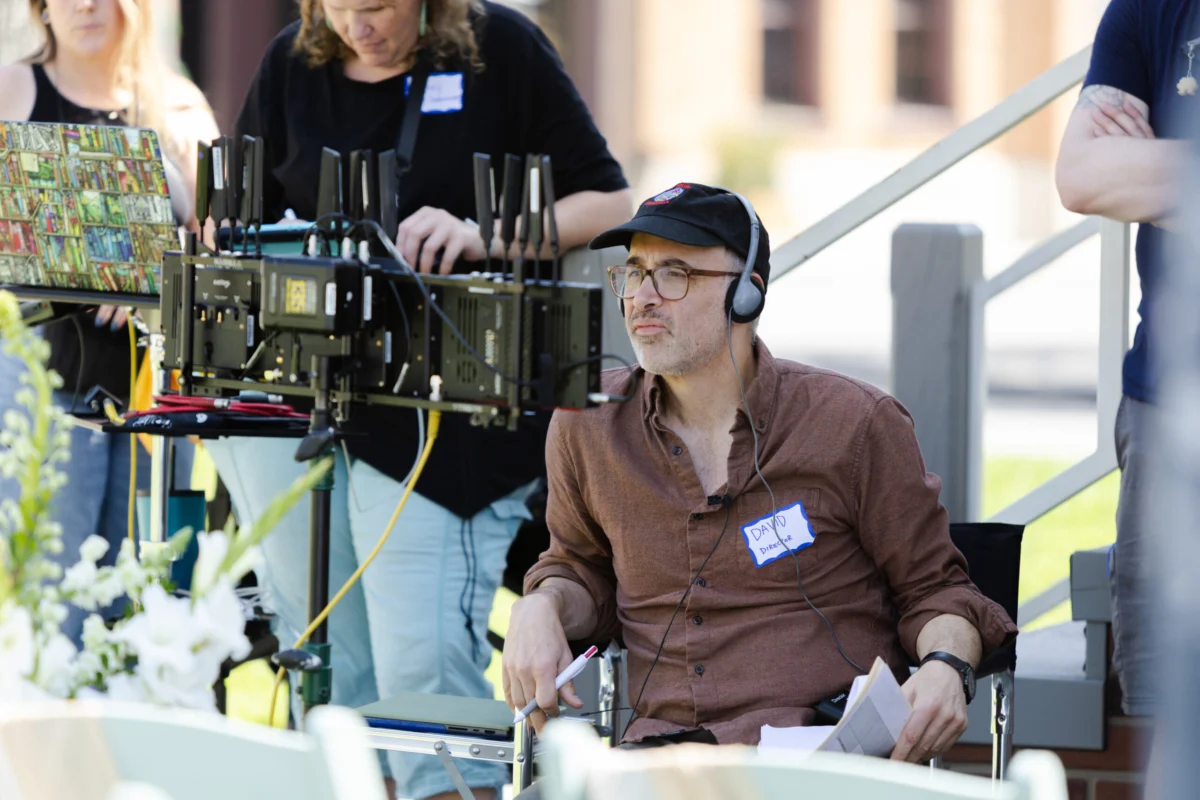
The specific brand of absurdist comedy pioneered by David Wain and Ken Marino is often described by critics and fans alike as "loose," "chaotic," or "slapdash." Since their days in the 1990s alt-comedy troupe The State, the duo has cultivated an aesthetic that feels as though it might fly off the rails at any moment. However, as their latest collaboration, Gail Daughtry and the Celebrity Sex Pass, hits theaters via Sony Pictures Classics, the creators are pulling back the curtain on a surprising reality: their "breezy" cinematic chaos is the result of rigorous, iron-clad screenwriting and a brutal post-production process.
Main Facts: The Illusion of Improvisation
At the heart of David Wain’s directorial filmography—which includes cult classics like Wet Hot American Summer, Role Models, and They Came Together—is a fundamental paradox. While the performances often feel off-the-cuff, the narrative skeleton is meticulously engineered. Speaking on IndieWire’s Filmmaker Toolkit Podcast, Wain and his long-time co-writer and star Ken Marino emphasized that the "slapdash" feeling is a deliberate stylistic choice rather than a reflection of the production’s organization.
"The goal is it feels sort of breezy and off the cuff, but if you look at it just one more layer, you see that we’ve really put in a lot of effort and thought," Wain explained. "It’s not nearly as much improv as one might think based on the feel of the material. We’ve figured it out in the script."
Gail Daughtry and the Celebrity Sex Pass stars Zoey Deutch as the titular Gail, a wide-eyed innocent from Kansas who travels to Los Angeles to exercise her "celebrity sex pass" with Jon Hamm. The film serves as both a satirical takedown of Hollywood culture and a spiritual reimagining of a classic American odyssey. By anchoring their absurdist detours to a familiar narrative structure, Wain and Marino ensure that the audience remains grounded even when the logic of the world begins to fray.
Chronology: From Kansas to the "Old Western Town"
The development of Gail Daughtry followed a specific creative trajectory that began with a foundational text: L. Frank Baum’s The Wizard of Oz.

The Conceptual Phase
The writers began by mapping the 1939 film’s archetypes onto the modern landscape of the film industry. The protagonist’s name, Gail Daughtry, is a phonetic inversion of Dorothy Gale. The journey from the black-and-white (or sepia) innocence of the Midwest to the Technicolor (and eventually grimy) reality of Hollywood mirrored Dorothy’s arrival in Oz.
Marino noted that the character building started with identifying the "missing pieces" of their ragtag ensemble. "We thought, ‘Who needs a brain? Who needs a heart? Who needs courage?’" he said. This led to the creation of Ben Wong’s character—a man who believes he needs a "brain" to succeed as a high-powered agent, despite already possessing the necessary tools—and Marino’s own character, Vincent, a paparazzi photographer who is perceived as heartless but proves to be the emotional core of the group.
The Production Phase
The shoot was an ambitious undertaking, squeezed into a tight 21-day production schedule. Despite the logistical pressures of indie filmmaking, Wain and Marino insisted on shooting in Los Angeles to capture the "Oz-like" transition of the city.
The chronology of the film’s visual style was designed to evolve alongside Gail’s disillusionment. The opening sequences were filmed on an LA backlot to represent a "movie version" of Willowbrook, Kansas. As Gail moves deeper into the industry to find Jon Hamm, the aesthetic shifts. Wain described the transition: "Then [Los Angeles] becomes a little bit bloodier, a little dirtier, a little grimier, and the climax takes place at the old Western town."
The Post-Production Phase
Once filming wrapped, the project entered what Wain calls a "very additive and creative process." The initial cut of the film clocked in at a staggering 140 minutes. Over months of editing in Wain’s Los Angeles home, the duo applied a "brutal" eye to the material, eventually whittling the film down to a lean 90 minutes.

Supporting Data: The "Comedy Nerd" Ecosystem
A significant factor in the success of Wain and Marino’s "structured absurdity" is their reliance on a recurring ensemble of performers who share a specific comedic shorthand.
The Hamm-Slattery Connection
The film’s premise required two specific actors to play satirical versions of themselves: Jon Hamm and John Slattery. The Mad Men stars were not just casting choices but prerequisites for the script. Wain’s relationship with Hamm predates the actor’s rise to superstardom; the director revealed that he "semi-lived" with Hamm just before Mad Men premiered.
"He was always a comedy nerd from day one," Wain said. This shared history allowed the writers to push the actors into ridiculous territory without fear of breaking the tone. Because Hamm and Slattery "get the music of the comedy," the production saved valuable time that would otherwise be spent calibrating the performances.
The "Shorthand" Ensemble
The 21-day shoot was only possible because of the "collaborative shorthand" built over decades. The cast features a blend of The State alumni and new faces like Zoey Deutch and Ben Wong. For Wain, the "litmus test" for a new collaborator is how quickly they identify the "vibe" of the world. After decades in the industry, Marino and Wain noted that they can now identify "who gets it" almost instantly during the casting process.
Official Responses: The Philosophy of the "Left Turn"
During their interview, the creators addressed the common misconception that their films are merely collections of sketches. Wain pointed to his 2001 cult hit Wet Hot American Summer as the primary example of this misunderstanding.

"People looked at Wet Hot American Summer like it’s just a strung-together series of skits, but I think people who appreciate it see that it’s really not," Wain stated. He argued that the "left turns"—such as the famous scene where camp counselors go into town and descend into a heroin-fueled spiral in a matter of seconds—are only effective because they are "purposeful" interruptions of a solid narrative.
Marino echoed this sentiment, emphasizing that the search for Jon Hamm provides the "forward thrust" necessary to allow for absurdist detours. Without the structural integrity of the "search," the jokes would lack the friction required to land.
Implications: The Evolution of Alt-Comedy in the Streaming Era
The release of Gail Daughtry and the Celebrity Sex Pass comes at a pivotal moment for mid-budget comedy. As major studios increasingly pivot toward tentpole action franchises, the "Wain-ian" model offers a blueprint for how independent comedy can survive and thrive.
1. The Importance of Structural Discipline
The primary implication of Wain and Marino’s process is that successful absurdity requires more discipline, not less, than traditional storytelling. By adhering to the Wizard of Oz framework, the duo proves that subverting a trope is only effective if you first respect the mechanics of that trope. This "cinematic architecture" allows them to experiment with tone without losing the audience’s emotional investment.
2. The Survival of the "Comedy Troupe" Model
In an era where comedy is often siloed into solo stand-up specials or social media sketches, Wain and Marino’s continued collaboration highlights the enduring power of the "troupe" mentality. Their ability to pull in actors like Jon Hamm and John Slattery suggests that there is a deep hunger among dramatic actors to participate in high-concept, low-stakes absurdity, provided the creative environment is built on trust and shared history.

3. The "Kill Your Darlings" Mandate
The reduction of the film from 140 minutes to 90 minutes serves as a masterclass in modern editing. Marino’s comment about "saying goodbye to some of the babies" reflects a shifting landscape where audience attention spans are shorter, and the "fastest and funnier" cut usually wins. Wain’s "10,000th time" litmus test—ensuring a joke is still funny after thousands of viewings—is a rigorous standard that separates lasting cult classics from disposable content.
Conclusion
Gail Daughtry and the Celebrity Sex Pass is more than just a comedy about a Midwesterner chasing a movie star; it is a testament to the craft of "invisible" screenwriting. By meticulously planning their "slapdash" world, David Wain and Ken Marino have created a film that feels like a chaotic fever dream but operates with the precision of a clock. As it continues its theatrical run, the film stands as a reminder that in the world of absurdity, the funniest moments are often the ones that were most carefully planned.
A Sony Pictures Classic release, "Gail Daughtry and the Celebrity Sex Pass" is now playing in theaters nationwide. For the full interview with David Wain and Ken Marino, listeners can subscribe to the IndieWire Filmmaker Toolkit podcast on all major platforms.
 Jia Lissa
 Lina Irawan
 Iffa Jayyana
