

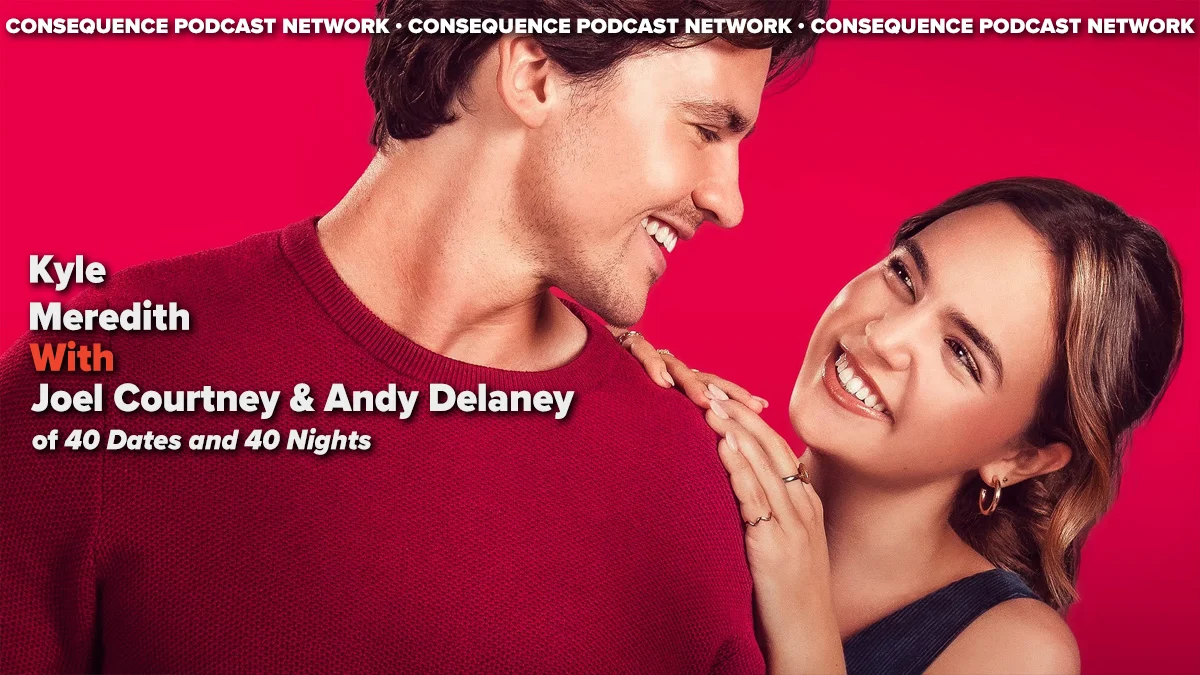
The romantic comedy, once the undisputed titan of the multiplex, has undergone a fascinating evolution over the last decade. After a period of relative dormancy, the genre is currently enjoying a robust renaissance, moving away from the high-concept, glossy artifice of the late 1990s toward a more intimate, "grounded" aesthetic. Leading this charge is the new film 40 Dates and 40 Nights, a project that seeks to reconcile the classic tropes of the rom-com with the messy, nuanced reality of modern dating.
To dissect the film’s unique approach and its place in the current cultural landscape, director Andy Delaney and lead actor Joel Courtney recently joined Kyle Meredith on his podcast, Kyle Meredith With…. The conversation, which spanned the transition from music video direction to feature filmmaking and the delicate alchemy of on-screen chemistry, offers a rare behind-the-scenes look at how a contemporary love story is built from the ground up.
The Premise: High Stakes, Human Problems
At the heart of 40 Dates and 40 Nights lies a premise that feels both like a classic rom-com "hook" and a genuine exploration of personal growth. The narrative follows a protagonist who enters into a high-stakes agreement: she will complete 40 dates in exchange for a year of rent. It is a setup that promises comedic mishaps and structural absurdity, yet both Delaney and Courtney are quick to emphasize that the film’s true conflict is internal.
"The challenge isn’t necessarily the dates themselves," Delaney notes. "It’s the internal resistance. It’s about getting out of one’s own way."
For audiences accustomed to the whirlwind romances of the past, the film serves as a reminder that the most significant obstacles in love are rarely external circumstances. Instead, the film prioritizes the "micro-moments"—the awkward pauses, the missed signals, and the quiet realizations—that define modern relationships.
From Music Videos to Emotional Rhythms: The Andy Delaney Approach
To understand the directorial style of 40 Dates and 40 Nights, one must look at Andy Delaney’s storied background. Having helmed iconic music videos for artists such as Tori Amos, Lauryn Hill, Seal, and The Wallflowers, Delaney spent decades mastering the art of the three-minute emotional arc. This background has proven invaluable in his transition to feature films.
The Philosophy of the "Micro"
Delaney argues that directing music videos provided a masterclass in economy and emotional resonance. When a director has only a few minutes to convey a complex narrative or mood, they learn to rely on the "micro-moment."
"We were interested in the journey," Delaney explains to Kyle Meredith. "The moment-to-moment nuance, the laughter, and the heartache. Working in music videos liberates you to focus on the micro. It teaches you that if you nail the smaller beats, the larger narrative naturally carries the weight it needs to."
This philosophy was the guiding star for the production. Rather than forcing the actors into rigid blocking or overly theatrical deliveries, Delaney encouraged an improvisational spirit. By allowing the ensemble cast—which includes Bailee Madison and the legendary Annie Potts—to discover their characters in real-time, the film maintains a level of naturalism that separates it from the more sterile entries in the genre.
The Chemistry of Authenticity: Joel Courtney’s Performance
Joel Courtney, who portrays the reserved but quietly charming Mason, brings a grounded sensibility to the film that anchors its more whimsical moments. Mason is not a caricature of the "perfect man" but a complex character navigating his own vulnerabilities.
Drawing from Reality
Courtney’s approach to the character was informed by a life that, ironically, stands in stark contrast to his character’s dating marathon. Having married the only woman he ever seriously dated, Courtney’s own romantic life has been remarkably straightforward.
"Mason feels super grounded, very relatable," Courtney says. "Even though my personal experience with love was very direct and uncomplicated, I had to tap into those universal experiences of heartbreak and the terrifying vulnerability that comes with reconnection. Everyone knows what it feels like to fall in love, even if the paths to get there look different."
The chemistry between Courtney and Bailee Madison is the engine of the film. According to Delaney, the synergy was evident from the very first day of production. "There’s always a moment of uncertainty when you’re building a cast," the director admits. "But watching Joel and Bailee together on those first few days? That was the moment I realized, ‘Okay, we’re not going to screw this up.’ It was all there."
The Writer’s Blueprint: Sarah Howard’s Influence
A film is only as grounded as its script, and 40 Dates and 40 Nights owes much of its "recognizable truth" to writer Sarah Howard. The script is heavily inspired by Howard’s own experiences in the dating trenches, ensuring that even the most "wild" scenes in the film remain tethered to reality.
By weaving real-world dating frustrations into the dialogue and character beats, the film avoids the pitfalls of cynicism. Instead, it positions dating not as a chore to be completed for rent, but as a series of encounters that force the protagonist to confront her own identity. This is where the film finds its heart: it is less about the "40 dates" and more about the evolution of the person enduring them.
The Reviving Rom-Com: Why Now?
The resurgence of the romantic comedy in the 2020s is not an accident. As streaming services and theatrical distributors look for content that balances escapism with emotional depth, the genre has found a new home. 40 Dates and 40 Nights is a prime example of the "Grounded Comedy" sub-genre—films that prioritize character study over slapstick, and emotional intelligence over grand, sweeping gestures.
Industry Implications
The success of this new wave of rom-coms suggests that audiences are craving stories that feel intimate and tactile. The "glossy" era of the genre, while beloved for its nostalgia, often feels disconnected from the digital age of dating. By incorporating the realities of modern life—the financial pressures, the digital anxieties, and the shift in gender dynamics—filmmakers like Delaney are proving that the rom-com is not dead; it has simply grown up.
Conclusion: A Lesson in Connection
As Joel Courtney and Andy Delaney concluded their discussion on the Kyle Meredith With… podcast, the underlying theme remained clear: the power of the rom-com lies in its ability to mirror the audience’s own experiences. Whether it is the frantic pace of 40 dates in a single year or the quiet, steady love that Courtney describes in his own life, the genre serves as a laboratory for human connection.
40 Dates and 40 Nights stands as a testament to the idea that even in a world of high-concept hooks and digital fatigue, there is no substitute for a grounded performance and a story that isn’t afraid to focus on the small, beautiful, and occasionally messy moments that make us human.
For those looking to explore the deeper nuances of the film, the full interview with Kyle Meredith is available on Apple Podcasts, Spotify, and Amazon Music. As the conversation suggests, the "revival" of the rom-com isn’t just about bringing back the old; it’s about refining the craft to ensure that the genre continues to speak to the complexities of the modern heart.
 Asro
Asro
 Lina Irawan
 rifanmuazin
