

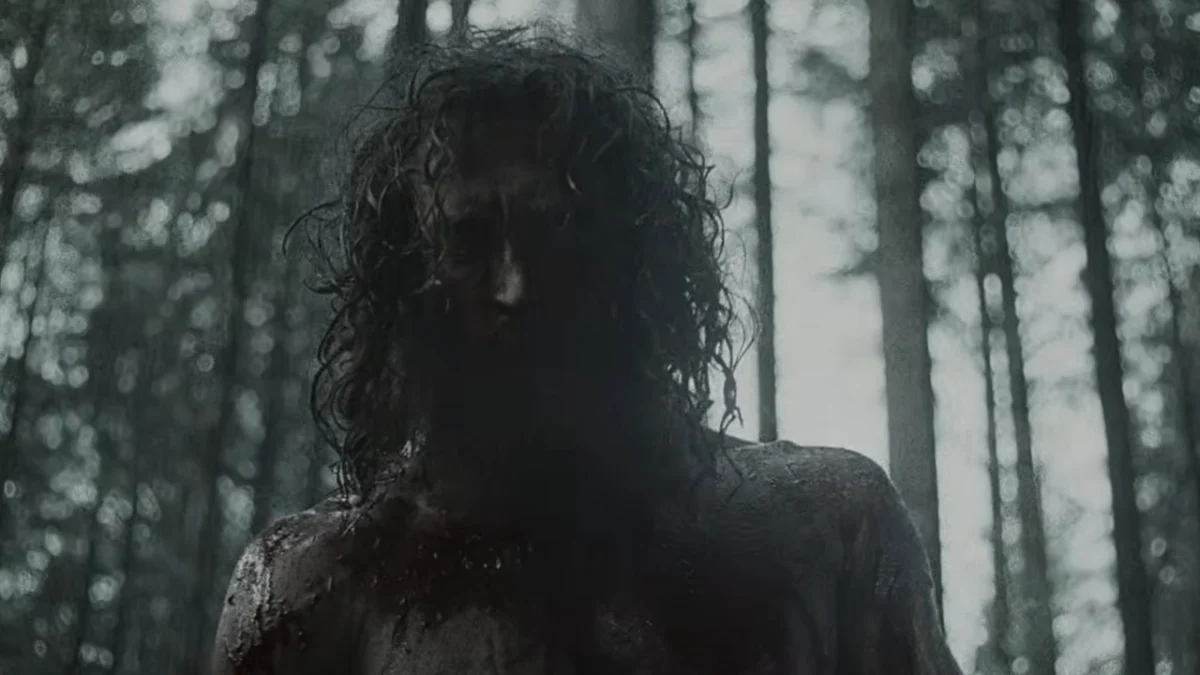
The cinematic landscape of the 21st century has been defined by a rare, singular vision: that of director Robert Eggers. Having carved a niche as the preeminent architect of folk-horror and historical dread—from the Puritan paranoia of The Witch to the seafaring madness of The Lighthouse and the brutalist Viking epics of The Northman—Eggers has now turned his gaze toward one of cinema’s most misunderstood monsters. With the release of the first trailer for his upcoming film Werwulf, audiences have been offered a glimpse into a 13th-century nightmare that promises to deconstruct the werewolf mythos with the same clinical, atmospheric rigor he applied to his recent reimagining of Nosferatu.
Main Facts: A Return to Ancient Terrors
The announcement of Werwulf confirms that Eggers is not merely dipping his toes into creature-feature territory; he is plunging headfirst into a period-accurate exploration of lycanthropy. Set against the backdrop of the 13th century, the film avoids the contemporary tropes often associated with werewolf cinema—specifically the suburban settings and modern technology that Eggers has famously loathed.
The trailer, a masterclass in tension and shadowed frames, establishes a tone of suffocating dread. Rather than relying on the CGI-heavy transformation sequences that have dominated the genre since the 1980s, the footage suggests an approach grounded in practical effects, folklore, and the visceral, tactile reality that has become an Eggers trademark. The film is slated for a prestigious Christmas Day release on December 25, 2026, positioning itself as a dark, unconventional counter-programming to the usual holiday blockbuster fare.
Chronology of a Monster’s Evolution
To understand the significance of Werwulf, one must track the trajectory of Eggers’ career, which has evolved from micro-budget indie horror to massive, high-concept period pieces.
- 2015: The Witch premieres at Sundance, introducing the world to Eggers’ commitment to period-accurate language and occult historical realism.
- 2019: The Lighthouse cements his partnership with Willem Dafoe, showcasing a penchant for psychological deterioration and isolation.
- 2022: The Northman proves Eggers can handle large-scale action, blending historical Viking sagas with mythic supernatural elements.
- 2024: Nosferatu serves as a stylistic bridge, showing Eggers’ mastery of the gothic vampire legend, preparing audiences for his shift to the werewolf mythos.
- 2025: Rumors of his Labyrinth sequel continue to swirl, but the focus shifts decisively to the production of Werwulf.
- 2026: The official trailer drop for Werwulf confirms the project’s scope, with the theatrical release scheduled for the end of the year.
This progression suggests a director moving deeper into the canon of "monsters," transforming them from archetypal boogeymen into symbols of societal and psychological trauma.
Supporting Data: The Eggers Ensemble
A hallmark of Eggers’ directing style is the development of a recurring repertory company, a practice that lends his films a sense of cohesion and deep-seated trust between director and actor. Werwulf continues this trend, featuring a cast that reads like a "greatest hits" of Eggers’ filmography.
The Cast Breakdown
- Willem Dafoe: Marking his fourth collaboration with Eggers, Dafoe has become the director’s primary vessel for complex, often cryptic authority figures. His presence in Werwulf guarantees a performance that will likely bridge the gap between the grounded human experience and the metaphysical.
- Aaron Taylor-Johnson: A rising powerhouse in contemporary cinema, Taylor-Johnson’s involvement signals a shift toward a more physically intense, perhaps tragic, lead performance.
- Lily-Rose Depp: Following her role in Nosferatu, Depp’s return suggests a continuation of the ethereal, haunting quality she brought to the vampire epic.
- Ralph Ineson: A veteran of The Witch, Ineson’s gravel-voiced presence provides the necessary grit to anchor the 13th-century setting in an authentic, lived-in reality.
The synergy between these actors, all of whom recently collaborated on Nosferatu, suggests that Werwulf will benefit from an existing creative shorthand. This is not a project where the cast is feeling out the director’s rhythm; it is a finely tuned machine.
Official Responses and Creative Philosophy
Robert Eggers has never been one to shy away from his disdain for modern cinematic crutches. In various interviews, he has been vocal about his "revulsion" toward the inclusion of modern technology—cars, cell phones, and the fast-paced editing styles of modern blockbusters—in his work.
"If I cannot find the humanity in the dirt, the cold, and the silence of a pre-industrial world, then I have failed," Eggers noted in a recent production brief. His insistence on filming in natural light and utilizing authentic, historical set pieces is not mere aesthetic vanity; it is a narrative tool. By removing the safety net of the modern world, Eggers forces his characters—and his audience—to confront the primal fears that have persisted for centuries.
The studio’s decision to back an expensive, 13th-century period horror film speaks to the high level of confidence they place in Eggers. In an era where franchises are often recycled and diluted, Werwulf is being marketed as an auteur-driven event, a rare "prestige horror" film that aims to satisfy both the casual moviegoer and the scholarly cinephile.
Implications: The Future of the Creature Feature
The implications of Werwulf are significant for the horror genre as a whole. For decades, the werewolf subgenre has struggled to find a footing outside of the Underworld or Twilight iterations. By stripping the myth down to its medieval roots, Eggers is essentially attempting to "re-mythologize" the werewolf.
Why This Matters for Cinema:
- The Death of the Jump Scare: Eggers’ work relies on slow-burn psychological tension. Werwulf will likely set a new benchmark for how horror can be sustained over two hours without relying on the cheap thrills of sudden volume spikes.
- The Artisan Movement: As CGI fatigue sets in, the success of a film like Werwulf—which emphasizes practical craft—could push studios to invest more in traditional filmmaking techniques.
- The "Eggers Universe": With his continued use of the same cast and his fascination with classic monsters, fans are beginning to view his filmography as a thematic anthology. Werwulf is the latest, and perhaps darkest, chapter in this ongoing exploration of the "Other."
As we look toward the December 25, 2026, release date, the anticipation is not just for a werewolf movie, but for a piece of historical art. The trailer, while brief, hints at a film that is as much about the terror of the beast within as it is about the harsh, unforgiving environment of the medieval world.
For those who have already exhausted the 4K Ultra HD extended cut of Nosferatu (now available on Amazon), Werwulf represents the next logical step in a career that shows no signs of slowing down. Robert Eggers is not just making movies; he is curating a nightmare that feels as old as the earth itself, and by the end of 2026, we will all be forced to look into the woods to see what stares back.
Technical Note: For those interested in the evolution of Eggers’ aesthetic, the newly released 4K Ultra HD cut of Nosferatu offers a comprehensive look at the visual language that will undoubtedly define the look and feel of Werwulf. It is an essential watch for any viewer preparing for the director’s return to the screen this winter.
 Asro
Asro
 Lina Irawan
 rifanmuazin
