

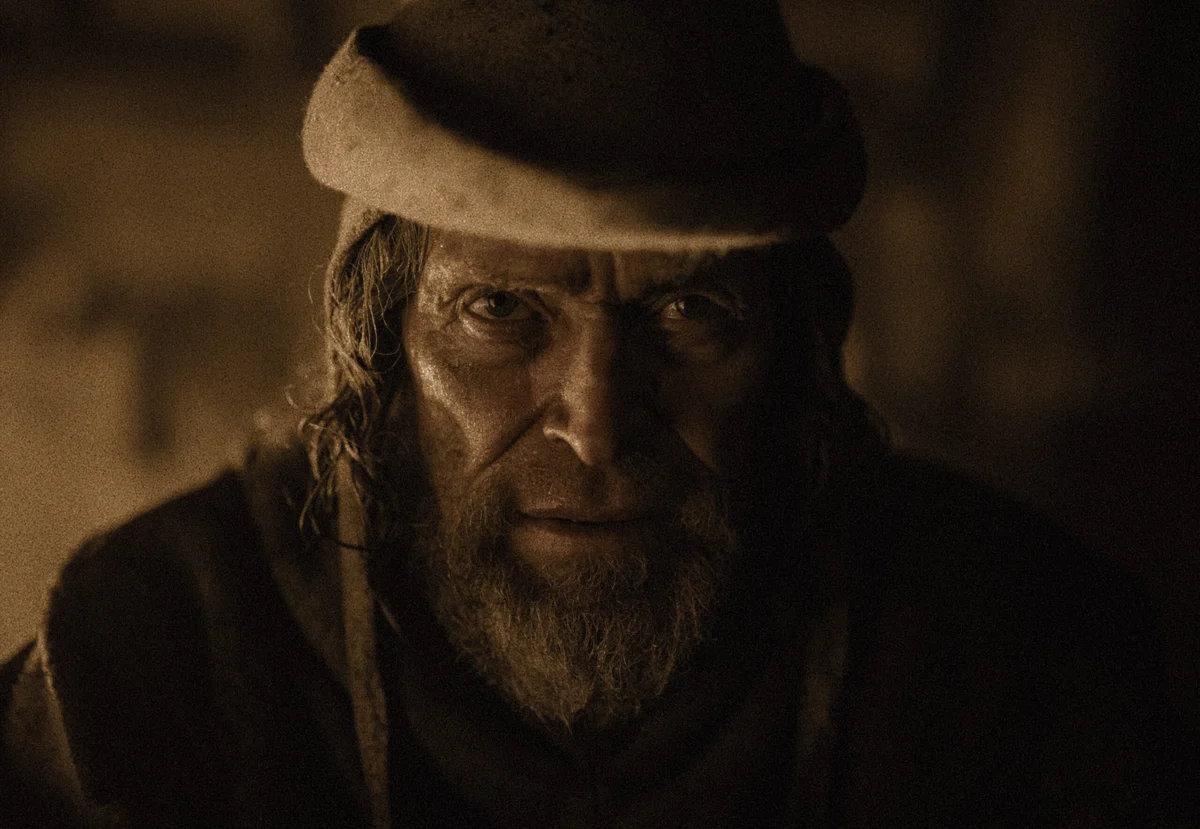
The harvest moon has arrived, and with it, the long-awaited unveiling of Werwulf, the latest cinematic nightmare from visionary auteur Robert Eggers. Known for his uncompromising commitment to historical authenticity and atmospheric dread, Eggers has set his sights on the foundational mythology of the creature feature. With a new trailer providing the most visceral look yet at his 14th-century English landscape, the film is already positioning itself as the most terrifying entry in the director’s acclaimed, folk-horror-steeped filmography.
The Premise: A Descent into Medieval Damnation
Werwulf transports audiences to the isolated, mud-caked reality of 14th-century England—a world where the veil between the divine and the demonic is paper-thin. The narrative centers on a man, identified only as "Man" (Aaron Taylor-Johnson), who struggles to reconcile his domestic existence with a bestial, cursed reality. Through haunting, fragmented flashbacks, the audience learns of his dark initiation into the world of lycanthropy, an affliction forced upon him by an ominous elder.
In the film’s present day, the protagonist attempts to protect his family within an insular, superstitious community that is being slowly torn apart by an unseen, predatory force. As the studio’s official synopsis promises: "Witness Robert Eggers’ most visceral and haunting experience yet. Focus Features presents Werwulf, a harrowing tale of devotion, damnation, and the devil within."
The film’s marketing campaign has leaned heavily into its grim, period-accurate aesthetic, utilizing chilling taglines like, "Thy soule is cursid" and "Devoureth all mankynde." By eschewing the polished, CGI-heavy tropes of modern monster movies, Eggers appears to be grounding the supernatural horror in the visceral, tactile reality that defined his previous masterworks.

A Chronology of the Hunt
The road to Werwulf has been as deliberate as the director’s meticulous production process. The project was first announced in January 2025, just as the industry was beginning to grasp the full scale of Eggers’ then-upcoming Nosferatu. Even in its infancy, Eggers characterized the screenplay as his "darkest" and most challenging work to date. To ensure the linguistic texture of the era, Eggers collaborated with two Oxford scholars to incorporate authentic Middle English dialogue, a hallmark of his dedication to immersive world-building.
Principal photography commenced in September 2025 at the famed Sky Studios Elstree in England, utilizing the studio’s expansive facilities to replicate the unforgiving terrain of the medieval English countryside. Production continued with extensive location shooting across the United Kingdom, wrapping in January 2026.
The first glimpse of the film was granted to attendees of CinemaCon 2026, where the footage was met with gasps and critical acclaim, with exhibitors billing it as the most "horrifying motion picture" the director has ever crafted. A public teaser followed on June 29, 2026, and the latest, more revealing trailer debuted this past Saturday, perfectly timed to coincide with the harvest moon—a nod to the lunar themes intrinsic to the werewolf mythos.
The Creative Engine: A Trusted Ensemble
Werwulf reunites a formidable creative team that has become synonymous with the "Eggers style." The director co-wrote the screenplay with Icelandic poet and author Sjón, with whom he previously collaborated on the visceral Viking epic The Northman.

Behind the camera, the film boasts a "dream team" of collaborators who have worked on every Eggers feature since his breakout debut, The Witch (2015). Cinematographer Jarin Blaschke returns to lend his signature moody, natural-light-focused photography to the project, while editor Louise Ford, production designer Craig Lathrop, and costume designer Linda Muir ensure the film’s visual language remains consistent with the director’s exacting standards.
The cast is equally impressive, anchored by Aaron Taylor-Johnson in the physically demanding lead role. He is joined by a troupe of Eggers stalwarts, including Lily-Rose Depp as the woman caught in the web of the protagonist’s curse, the ever-menacing Willem Dafoe—who portrays a seasoned hunter dispatched by the king to neutralize the beast—and Ralph Ineson, whose voice and presence have become a staple of modern elevated horror.
Official Perspectives and Production Philosophy
Robert Eggers has long been vocal about his disdain for modern "popcorn" horror, preferring instead to tap into the primal, folkloric roots of fear. During early press discussions regarding Werwulf, Eggers noted that his approach to the werewolf was not to reinvent the genre, but to excavate the cultural anxieties that birthed it.
"The werewolf is the ultimate representation of the loss of self," Eggers noted in a recent brief statement to the press. "In the 14th century, you didn’t have the luxury of psychology to explain your demons. You had the Devil, the Church, and the wild."

Focus Features, having seen the massive critical success of Nosferatu, has leaned fully into Eggers’ vision. By giving him the resources to build massive, practical sets and the time to cultivate a period-accurate atmosphere, the studio is betting that the audience’s hunger for "elevated" horror will continue to grow. The decision to release the film on Christmas Day—a date usually reserved for prestige dramas or high-octane blockbusters—suggests a high degree of confidence in the film’s quality and its potential to capture both the critics and the holiday box office.
Implications: The Quest for Gold
The parallels between Werwulf and Nosferatu are impossible to ignore. Both films share a director, a core creative team, and a release strategy that targets the heart of the awards season. If Werwulf follows the trajectory of Eggers’ previous work, it is poised to be a major contender in the technical categories at the Academy Awards.
Given the emphasis on 14th-century authenticity, the film is already being whispered about for nominations in:
- Best Cinematography: Jarin Blaschke’s work is expected to be a masterclass in low-light and period-appropriate color palettes.
- Best Production Design: The creation of an entire, decaying 1300s village is a feat that rarely goes unnoticed by the Academy.
- Best Costume Design: Linda Muir’s work on textiles and historical accuracy has historically been a high point for Eggers’ films.
- Best Makeup and Hairstyling: With a title like Werwulf, the practical effects and transformation sequences will be under intense scrutiny, and early reports suggest a heavy reliance on physical makeup rather than digital trickery.
Beyond the technical accolades, the film represents a significant test for Aaron Taylor-Johnson. While he has proven his range in a variety of roles, Werwulf requires a performance that is both physically exhausting and emotionally nuanced—a balancing act that often separates leading men from true character actors.

The Cultural Impact of the Creature Feature
Why return to the werewolf now? The genre has seen dozens of iterations since Lon Chaney Jr. first donned the fur in 1941. However, Eggers’ contribution arrives at a moment when horror is moving away from jump-scares and toward the "slow-burn" experience. By anchoring the horror in historical fact—the actual, terrifying reality of life in the Middle Ages—Eggers is essentially asking the audience to believe that the werewolf is not just a monster, but a manifestation of the era’s genuine struggle against starvation, plague, and religious hysteria.
The film’s reception will likely serve as a bellwether for the future of "prestige horror." As the industry continues to consolidate and prioritize intellectual property, a film like Werwulf—a singular vision from an uncompromising director—is a rare commodity. Whether it manages to redefine the werewolf sub-genre or simply stands as a beautifully crafted, terrifying companion to his previous works, one thing is certain: come December 25, the woods will be far less safe than they were before.
As the marketing campaign continues to ramp up, anticipation is reaching a fever pitch. With its blend of legendary folklore, top-tier talent, and an uncompromising creative vision, Werwulf is not just a movie; it is an event. It is a testament to the idea that some stories, no matter how old, are never truly dead—they are simply waiting for the right moment to emerge from the shadows.
 Ammar Sabilarrohman
 Siti Muinah
 Iffa Jayyana
