

Welcome to Taste Test, where every week our critic Jonah Flicker explores the most buzzworthy and interesting whiskeys in the world. Check back each Sunday for his latest whiskey review.
The global spirits industry is currently navigating a period of profound recalibration. While industry analysts often attempt to soften the narrative, the reality facing the whiskey sector is undeniably sobering. Following years of exponential, pandemic-fueled growth, the market is currently experiencing a cooling phase. Consumption rates have dipped, inventories are swelling, and some of the industry’s largest producers have been forced to pause production or reduce shifts to manage the resulting glut of aging spirits.
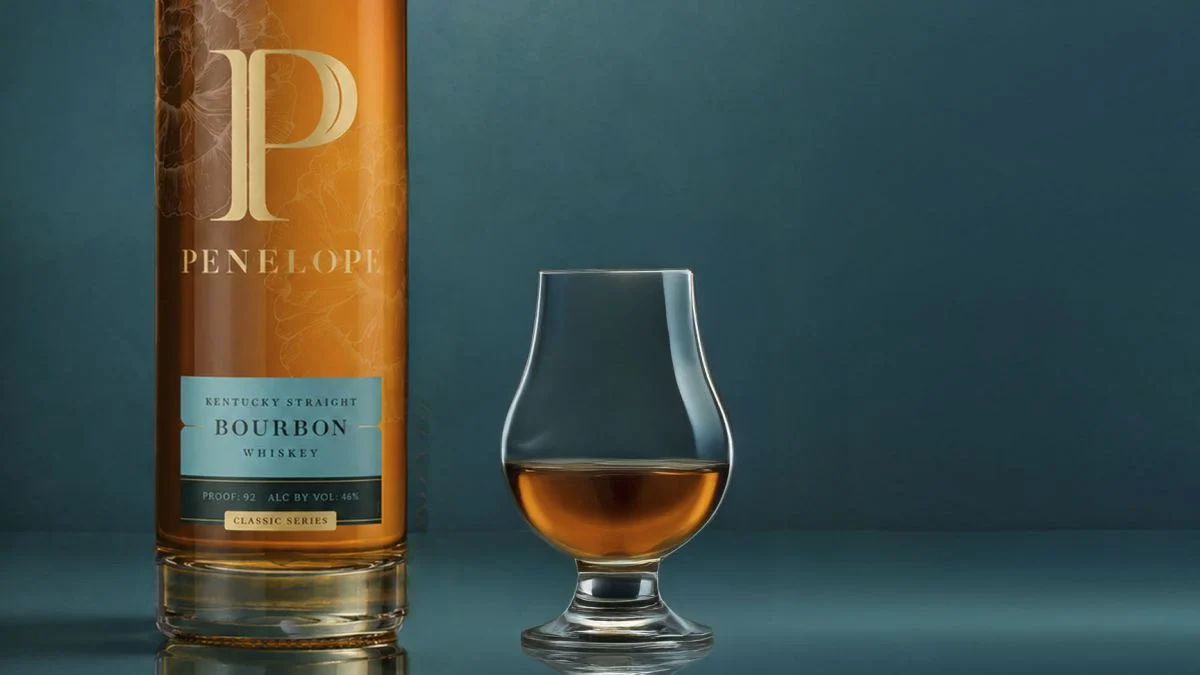
In this climate of uncertainty, one brand stands out for its counter-intuitive strategy: Penelope Bourbon. Rather than pulling back, Penelope—now a marquee asset under the MGP Ingredients umbrella—is doubling down on expansion. With the launch of its new "Classic Series," the brand is signaling a return to foundational principles, proving that even in a saturated market, there is always room for a high-quality, competitively priced pour.
The Evolution of Penelope: From Boutique to Big League
Founded in 2018 by New Jersey natives Mike Paladini and Danny Polise, Penelope Bourbon began as a nimble, consumer-focused operation. Named after Paladini’s daughter, the brand quickly garnered a reputation for its unique approach to sourcing and blending. By leveraging the vast, high-quality stocks of Indiana’s MGP distillery and partnering with the Bardstown Bourbon Company for technical blending and bottling, Penelope established a distinct profile that resonated with enthusiasts who had grown weary of the same "legacy" flavors.
The brand’s rapid ascent caught the attention of industry titan MGP Ingredients, which acquired Penelope in 2023 for a sum exceeding $100 million. This acquisition was a strategic masterstroke; MGP, long the "whiskey maker for the whiskey makers," realized that Penelope had captured a specific, desirable demographic that MGP’s own bulk-supply model could not reach. By bringing Penelope into the fold, MGP secured a premium consumer-facing brand that could serve as a vehicle for their vast, diverse stocks of aging distillate.
A Strategic Shift: The Classic Series
In an era where many brands are obsessed with hyper-aged, cask-finished, or gimmicky limited releases, Penelope’s latest move is refreshingly traditional. The "Classic Series" represents the brand’s first major foray into large-scale straight Kentucky bourbon.
While Penelope has historically leaned on the high-rye mashbills associated with Indiana production, the Classic Series Kentucky Bourbon pivots to a classic, balanced recipe. The mashbill consists of 78 percent corn, 10 percent rye, and 12 percent malted barley. This deviation from their standard four-grain profile is a calculated risk. By moving toward a traditional three-grain structure, the brand is positioning itself to compete directly with established Kentucky heavyweights like Jim Beam, Four Roses, Wild Turkey, and Heaven Hill.
Though the brand remains characteristically tight-lipped about the exact source of this distillate, industry insiders point toward Lux Row in Bardstown—a facility also under the MGP umbrella—as the likely point of origin. Bottled at a sturdy 92 proof and holding the "straight bourbon" designation (implying a minimum of four years in new charred oak barrels), this release is a testament to the brand’s commitment to quality over mere age statements.
Supporting Data: Why the Market Matters
The decision to release a $45, "entry-level" premium bourbon is not accidental. Current market data shows that while ultra-premium, high-priced collector bottles are seeing a slowdown in velocity, the "premium-plus" category remains the backbone of the industry.
According to recent reports from the Distilled Spirits Council of the United States (DISCUS), consumers are becoming more discerning. They are no longer buying bottles based solely on the rarity of a finish or the prestige of a name; they are looking for "everyday sippers"—bottles that offer versatility, reliability, and an approachable price point.

Penelope’s timing is impeccable. As MGP faces a surplus of aged stock, turning that inventory into a product that competes in the $40–$50 price bracket allows the company to move volume while building long-term brand loyalty. It is a pivot from the "hype-driven" release model toward a "volume-sustainable" model, which is essential for any brand hoping to survive the current market correction.
Official Stance and Brand Strategy
In official statements, the Penelope team frames the Classic Series as a culmination of long-term planning rather than a reaction to market pressures. "We wanted to create a bourbon that respects the Kentucky tradition while maintaining the Penelope signature style," noted a spokesperson for the brand.
However, observers note that this series serves a dual purpose. It satisfies the brand’s need to maintain momentum without overwhelming the consumer with high-priced experimental finishes. Furthermore, the inclusion of a straight rye whiskey—made with a 93 percent rye grain/7 percent malted barley mashbill—within the same series suggests a desire to control the "cocktail shelf" of the home bar enthusiast. By providing both a core bourbon and a core rye, Penelope is attempting to become the default choice for the classic cocktail maker.
Implications for the Future of Whiskey
What does this mean for the whiskey enthusiast? First, it signals that the era of "anything goes" pricing may be coming to a close. Brands are realizing that consumers have a limit, and those who can deliver a high-quality product at a fair price will win the coming years.
Second, the success of the Classic Series will likely dictate how MGP manages its massive warehouses. If this move proves successful, we may see more of MGP’s partner brands pivoting away from "exotic" finishes and back toward the foundational profiles that built the American whiskey industry.
Finally, for the consumer, this is a win. The Penelope Classic Series Kentucky Bourbon is a testament to the fact that you do not need 20 years in a barrel or a proprietary finishing technique to make an exceptional spirit. With its notes of vanilla, maple, honey, and subtle stone fruit, it is a versatile performer. Whether enjoyed neat, over a large cube, or as the foundation for a well-constructed Old Fashioned or Boulevardier, it hits all the right marks.
Conclusion: A Bar Shelf Essential
Penelope could have easily rested on its laurels, continuing to release limited-edition stave-finished bottles or golf-themed collaborations. Instead, by choosing to engage with the bedrock of Kentucky bourbon, they have shown a level of maturity that is often missing in modern whiskey branding.
At $45, the Penelope Classic Series Kentucky Bourbon is not just a tasty pour—it is a smart purchase. It competes with the best of the legacy names and offers a level of consistency that is hard to find in the current landscape. As the industry faces its "rough patch," Penelope has managed to find the light, offering a bottle that reminds us why we fell in love with bourbon in the first place: it’s reliable, it’s delicious, and it’s meant to be shared.
Score: 87
Technical Breakdown: The Tasting Profile
- Proof: 92
- Mashbill: 78% Corn, 10% Rye, 12% Malted Barley
- Category: Straight Kentucky Bourbon
- Tasting Notes: The nose opens with a warm, inviting bouquet of toasted vanilla and maple syrup. On the palate, a soft entry of honey and peach gives way to a mid-palate complexity defined by black pepper, subtle oak, and a hint of stone fruit. The finish is clean and medium-length, with a lingering caramel sweetness that invites a second pour.
- Versatility: Excellent. Its proof point makes it ideal for classic cocktails, while its flavor profile is balanced enough to be enjoyed neat by enthusiasts of all levels.
 Ali Ikhwan
 Laily UPN
 Raul Delapena Setiawan
