

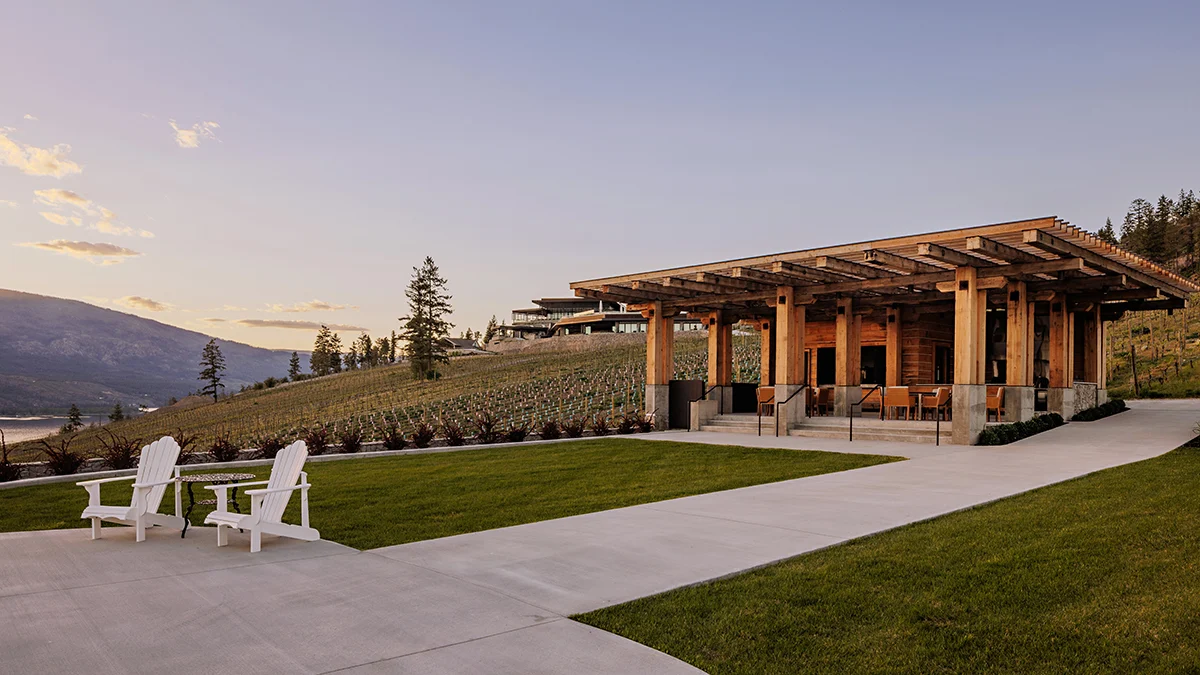
When cataloging the primary exports of Canada, the mind typically drifts toward the industrial and the iconic: vast reserves of crude oil, intricate automotive components, precious minerals, and the powerhouse pop vocals of Celine Dion. Wine, historically, has rarely cracked the top 20 list. However, a quiet revolution is currently underway in the Okanagan Valley, a stunning, glacial-carved region just a 45-minute flight from the urban bustle of Vancouver. While it may not yet command the instant, household-name recognition of California’s Napa Valley or Oregon’s Willamette Valley, the Okanagan is currently experiencing a metamorphosis, driven by visionary investment and a stubborn commitment to world-class viticulture.
The region is rapidly transforming into a playground for the world’s elite oenophiles, particularly centered around the eastern shores of Okanagan Lake in Kelowna. As the valley matures, it is moving beyond the "hidden gem" narrative to assert its position as a serious contender on the international stage.
The Genesis of a New Titan: O’Rourke Family Estate
This summer marked a pivotal moment in the valley’s history with the grand opening of the O’Rourke Family Estate. The property, a decade-long architectural and viticultural endeavor, stands as a testament to the ambitions of its proprietor, Dennis O’Rourke. A veteran of the construction industry, O’Rourke brought a builder’s precision and a developer’s scale to the project.

"I don’t have much fun sending my money to New York, to investment bankers, and looking at it down there," O’Rourke says of his pivot from traditional finance to physical legacy. "I have much more fun building something, creating something."
The resulting estate is a triumph of design, executed in collaboration with John Taft of the renowned firm Backen & Backen. The architecture does not merely sit on the land; it is integrated into it. The centerpiece is a colossal granite outcropping that defines the property’s aesthetic and geological soul. As Taft explains, "This is the geology of the space. The rock is that monolith left over from glaciation, but it is also what is in the vineyard—that rock and everything is what makes their vines struggle, which is, of course, what makes really, really intense and great fruit."
A Chronology of Growth: From Fledgling to Fine Wine
The rise of the Okanagan is not a flash in the pan; it is a decades-long evolution.

- 1981: Anthony von Mandl, the billionaire visionary behind White Claw and Mike’s Hard Lemonade, establishes Mission Hill Family Estate. This move served as the foundational spark for the region’s modern wine industry.
- 2016: The opening of Martin’s Lane Winery, an architectural marvel designed by Olson Kundig, marks a shift toward hyper-specialization in Pinot Noir and Riesling.
- 2014–2024: A decade of intensive infrastructure development, culminating in the construction of massive, high-end hospitality hubs and luxury guest accommodations.
- 2024: The release of the 2020 Mission Hill Oculus vintage, which secures the first-ever 100-point score for a Canadian red wine, signaling that the region has reached "top-tier" global status.
- 2026: The grand opening of the O’Rourke Family Estate, representing the current peak of investment and hospitality scale in the valley.
Supporting Data: The Geography of Flavor
The Okanagan’s success is rooted in its unique climatic diversity. The valley is not a monolith; it is a collection of distinct microclimates. The northern end, home to Kelowna, remains relatively temperate, providing the cool-climate conditions necessary for elegant, nuanced Chardonnay and Pinot Noir. Conversely, the southern reaches of the valley are arid and warm, creating a perfect environment for robust, structured reds like Merlot, Cabernet Sauvignon, and Syrah.
The economic footprint of these wineries is equally impressive. The O’Rourke Family Estate alone boasts 220,000 square feet of interior space, designed to function as a full-service hospitality ecosystem. Beyond the cellars, the property includes Row 188 (fine dining), the Granite Café (casual fare), and a multi-purpose event center. With plans for up to 100 bedrooms, the estate is positioning itself as a luxury destination for international travelers, further evidenced by the recent hosting of an exclusive Rolls-Royce client event, where the brand’s new Spectre E.V. was driven directly into the winery’s custom-built wine caves.
The Visionaries: Official Perspectives
The industry is currently defined by a "founder-led" model. Men like Anthony von Mandl and Dennis O’Rourke have provided the capital and the aesthetic vision to elevate the region’s profile.

Von Mandl’s influence cannot be overstated. Mission Hill, designed by Olson Kundig, is more than a winery; it is a cultural institution. With its outdoor amphitheater—which has hosted icons like Melissa Etheridge, Sarah McLachlan, and Lyle Lovett—and an on-site boutique carrying rare luxury goods like vintage Louis Vuitton and Goyard trunks, von Mandl has successfully blurred the lines between high-end viticulture and the broader luxury lifestyle market.
When asked about the future of the region, these proprietors speak in terms of "legacy." O’Rourke refers to his estate as a "family legacy project," intended to be nurtured by his children for decades to come. This long-term thinking is the defining characteristic of the Okanagan’s current phase of development.
Implications: The End of the Hidden Gem Era
The implications of this massive influx of capital and attention are twofold. First, it ensures that the Okanagan will no longer be considered a niche destination for Canadian wine enthusiasts. As the quality of the juice continues to climb—evidenced by the 100-point accolades—the international wine press is forced to take notice.

Second, the region is successfully positioning itself as an elite hospitality hub. By incorporating Michelin-level dining, luxury accommodation, and high-end event spaces, these wineries are creating a destination that competes directly with the likes of Napa, Tuscany, or Bordeaux.
However, this growth brings challenges. The transition from a quiet agricultural valley to a high-end tourist destination requires careful management of land use and local infrastructure. Yet, the momentum is undeniable. With the current trajectory, the Okanagan Valley is shedding its image as a cold-weather underdog and emerging as a sophisticated, high-altitude, and high-quality wine powerhouse.
As Dennis O’Rourke looks out over his valley, he sees not just vines and barrels, but a future that rivals the greatest wine regions of the world. For the global oenophile, the message is clear: the Okanagan is no longer a hidden secret; it is the next great frontier. The next time you find yourself planning a trip to a premier wine region, look north. The granite, the lake, and the climate are waiting—and the wine, as the scores now prove, is as world-class as the landscape.
 Ali Ikhwan
 Laily UPN
 Raul Delapena Setiawan
