

In a media landscape increasingly defined by polarizing commentary and the battle over cultural narratives, few moments have captured the friction between political spheres as vividly as the latest installment of The Megyn Kelly Show. On Monday’s episode, host Megyn Kelly launched a scathing, 12-minute critique of former First Lady Michelle Obama, describing her as “scripted and artificial.” The monologue, which has since ricocheted across social media platforms, was prompted by comments made by Mrs. Obama regarding the media’s historical focus on her appearance during her husband’s initial presidential campaign.
The exchange marks a deepening divide in political commentary, where the intersection of personal branding, media scrutiny, and the legacy of the Obama administration remains a high-voltage subject.
Chronology of the Conflict
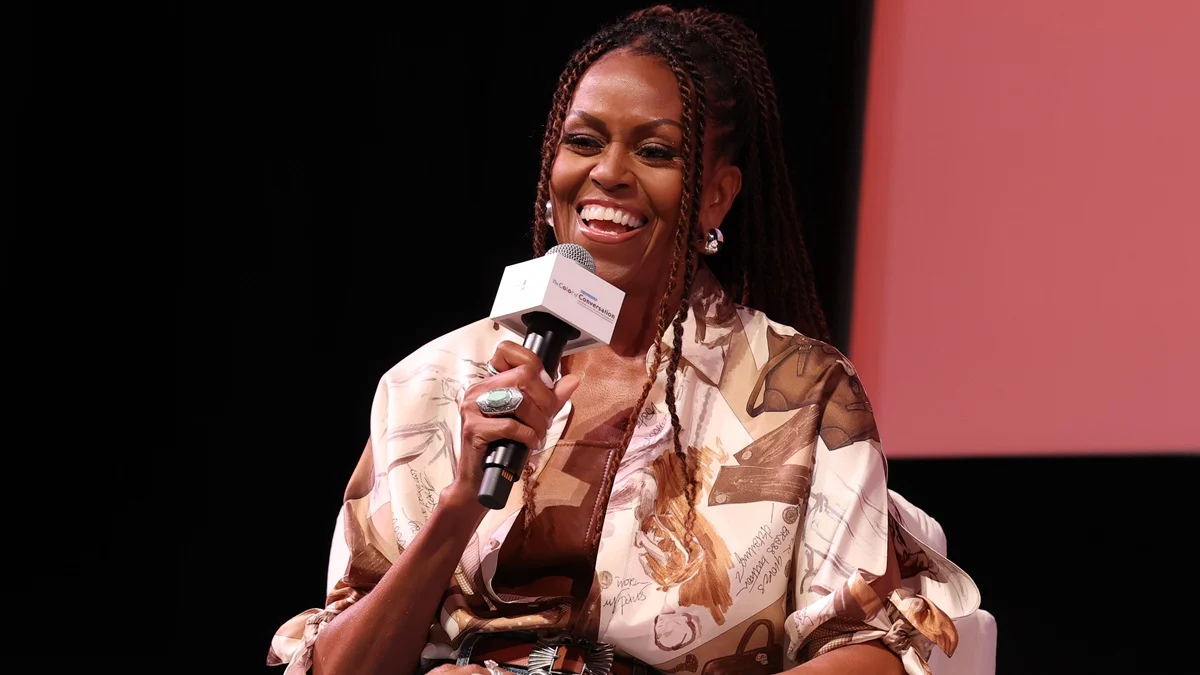
The tension stems from a recent appearance by Michelle Obama at the Essence Festival, where she sat down with actress and media personality Keke Palmer. During this conversation, the former First Lady reflected on the early days of Barack Obama’s 2008 presidential bid.
The Essence Festival Remarks
During her discussion with Palmer, Mrs. Obama recounted the trajectory of her early public speaking engagements. She noted that her initial events in Iowa were met with unexpectedly high attendance, often drawing larger crowds than the events held by her husband’s political rivals at the time. According to the former First Lady, this burgeoning popularity was not met with purely celebratory coverage; instead, she argued that the media machine began to view her as a "threat."
Mrs. Obama posited that as her influence grew, so did the efforts to undermine her impact. She specifically pointed to the frequency with which early articles about her public appearances focused on her fashion choices—her wardrobe, her accessories, and her aesthetic—rather than the substance of her policy discussions or the content of her speeches. She suggested that this focus was a calculated effort to marginalize her contributions, framing her as an accessory rather than a serious political actor.
Kelly’s Monday Monologue
Responding to these claims on her podcast, Megyn Kelly did not mince words. The segment, which spanned nearly a dozen minutes, was characterized by an intense focus on what Kelly perceived as a contradiction in the former First Lady’s narrative.
Kelly began the segment by framing Mrs. Obama’s recent media appearances—including her podcast work—as a deliberate effort to curate a specific public image. "Michelle Obama has been everywhere, trying to build her brand and her very sad little podcast," Kelly remarked, before pivoting to the Essence Festival footage. Kelly argued that the former First Lady’s narrative relies on a recurring theme: the simultaneous assertion of her own brilliance and the claim that she has been systemically victimized by a biased press.
Supporting Data: The Intersection of Media and Perception
To understand the weight of this exchange, one must look at the historical context of media coverage regarding First Ladies. The tension between the "fashion icon" narrative and the "policy advocate" narrative is a well-documented phenomenon in political science.
The "Fashion vs. Substance" Debate
Historically, First Ladies have navigated a complex double-bind. When a First Lady focuses on policy, she is often criticized for overstepping her bounds; when she focuses on her role as a cultural figure or fashion icon, she is accused of lacking intellectual depth. Michelle Obama’s tenure was marked by a heavy, often invasive, focus on her style choices—a reality that many scholars have analyzed as a reflection of both racial and gendered biases in the American press.
However, Kelly’s critique focuses on the reception of these critiques. Kelly suggests that Mrs. Obama’s recent reflections on her past experiences are less an objective account of historical sexism and more a strategic "reframing" of her time in the White House. By highlighting what she describes as "smugness," Kelly is challenging the former First Lady’s claim to victimhood, suggesting that Mrs. Obama uses these anecdotes to maintain a level of moral authority that, in Kelly’s view, is unearned.
The Role of "Authenticity" in Modern Politics
The debate also touches upon the modern requirement for "authenticity" in public figures. Michelle Obama has often been praised by her supporters for her relatable, down-to-earth persona. Conversely, critics like Kelly argue that this persona is highly manufactured. The term "scripted and artificial," as used by Kelly, implies a perception that the former First Lady’s public-facing personality is a product of high-level PR strategy rather than spontaneous, genuine expression.
Official Responses and Public Reaction
As of the time of this writing, there has been no official statement from the Office of Michelle Obama regarding Megyn Kelly’s specific remarks. This silence is consistent with the standard operating procedure for the former First Lady’s team, which generally avoids engaging directly with commentators from the conservative media spectrum.
The public reaction, however, has been sharply divided. Supporters of Mrs. Obama have taken to social media to defend her, arguing that the focus on her clothing in 2008 was a documented fact of the media cycle and that her recent reflections are an accurate assessment of the hurdles women face in the public eye. Critics, echoing Kelly’s sentiment, have suggested that the former First Lady is out of touch with the concerns of the average American and that her discussions of "victimhood" fail to resonate with those facing economic and social hardships.
The Implications: A Persistent Cultural Divide
The confrontation between Kelly and Obama is emblematic of a broader, systemic divide in the American media landscape. It raises significant questions regarding how we evaluate the narratives of powerful political figures.
The Polarization of Truth
This incident serves as a case study in how the same set of facts—the media’s focus on a First Lady’s clothes—can be interpreted through two entirely different prisms. To one side, it is evidence of a misogynistic and racist media infrastructure attempting to diminish a woman of color’s intellectual agency. To the other side, it is an example of an elite figure weaponizing her status to create a narrative of grievance that is detached from the realities of the public.
The Future of Political Commentary
As digital media continues to favor high-engagement, provocative content, the space for nuanced discussion appears to be shrinking. Megyn Kelly’s decision to dedicate 12 minutes to this critique suggests that there is a significant audience appetite for direct, unfiltered challenges to established liberal icons. Conversely, the continued platforming of Michelle Obama indicates that her narrative remains a cornerstone of the Democratic party’s cultural appeal.
Ultimately, the clash between Kelly and Obama is not just a disagreement over a speech or a wardrobe choice; it is a fundamental battle over who gets to define the narrative of the last two decades of American history. As both figures continue to command massive followings, the friction between their worldviews is likely to persist, serving as a reminder that in the modern era, the most potent battlefield is not in the halls of Congress, but in the court of public opinion.
Whether one views Mrs. Obama’s recollections as a brave truth-telling or a calculated performance, and whether one sees Megyn Kelly’s critique as a necessary rebuke or an unhinged attack, the intensity of this exchange underscores the profound polarization defining the American discourse today.
 Neng Nana
 Azzam Bilal Chamdy
 Nana
Nana
