

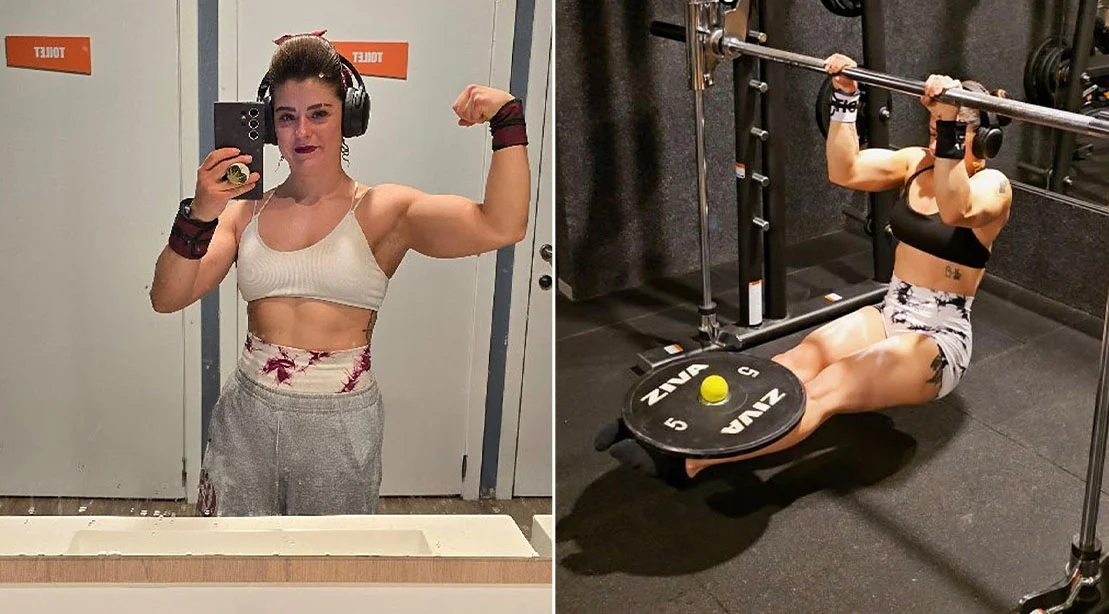
In the ever-evolving world of social media fitness, where trends often prioritize vanity over substance, professional pole dancer and calisthenics expert Laura Verberne has carved out a niche for herself by pushing the boundaries of human biomechanics. Recently, Verberne sent shockwaves through the fitness community with her latest creation: the "Diabolical Hanging Leg Raise Challenge."
Combining the raw intensity of advanced calisthenics with the precision of a classic dexterity game, this exercise is being hailed as one of the most grueling core stabilization tests ever documented. For those looking to move beyond standard crunches and planks, Verberne’s viral demonstration serves as a stark reminder of what the human body is capable of when strength, focus, and stability are perfectly aligned.
Main Facts: A Convergence of Stability and Strength
The challenge, which Verberne introduced via her Instagram handle (@x.hellnokitty.x), is deceptively simple in theory but nightmarishly difficult in execution. The setup requires a pull-up bar, a standard weight plate (typically an Olympic plate with a center hole), and a tennis ball.
The athlete hangs from a pull-up bar with a weight plate balanced precariously across their shins. A tennis ball is then placed on top of the plate. The objective is to perform a full hanging leg raise—keeping the legs completely straight—while manipulating the hips and core to guide the tennis ball toward the center hole of the plate.
This exercise forces the abdominal wall, obliques, and hip flexors to engage in a continuous, high-tension isometric hold. Any sudden movement or loss of tension results in the ball rolling off the plate, forcing the athlete to reset. It is a masterclass in proprioception—the body’s ability to sense movement, action, and location—paired with the grueling physical demand of sustained suspension.
Chronology of the Viral Sensation
The trend gained traction in mid-2026, following a surge of interest in "hybrid training"—a discipline that blends traditional strength training with skill-based mobility work.
- The Inspiration Phase: Verberne, known for her expertise in pole fitness and high-level calisthenics, was inspired by fellow fitness influencer Emanuela, who introduced the concept of the "ball in a maze" challenge.
- The Development: Recognizing the potential for a supreme core test, Verberne adapted the movement for a hanging position. She spent several weeks refining the technique, noting that the weight of the plate and the friction of the surface played massive roles in the success rate of the movement.
- The Launch: On her social media platforms, Verberne posted a compilation of her attempts, including the "bloopers"—a move that humanized the process. By showcasing the failures alongside the ultimate success, she highlighted the steep learning curve of the movement.
- The Community Reaction: Within 48 hours of the video going live, the fitness community responded with a mixture of awe, intimidation, and competitive drive. The hashtag associated with the movement began to circulate, with users sharing their own attempts at the "diabolical" feat.
Anatomy of the Challenge: Supporting Data
To understand why this move is so taxing, one must look at the physiological demands it places on the human frame. Unlike a standard hanging leg raise, where gravity acts as a consistent vertical load, the "Diabolical" variation introduces an unpredictable dynamic variable: the tennis ball.
1. Core Engagement and Stabilization
The rectus abdominis is responsible for the leg raise, but the obliques are the primary stabilizers. As the athlete shifts their hips to navigate the ball toward the center, the obliques must fire in a rotational, non-linear fashion. This recruits deep-tissue muscle fibers that are rarely targeted in traditional machine-based ab workouts.
2. The Kinetic Chain
The movement relies on a complete kinetic chain:
- Grip Strength: The forearms and hands remain under constant tension for the duration of the set.
- Latissimus Dorsi: The lats are responsible for keeping the body suspended and preventing excessive swinging, which would make the ball impossible to balance.
- Hip Flexors: The psoas major and the iliacus are pushed to their limit, acting as the primary levers that lift the weight of the legs and the plate.
- Quadriceps: As the athlete steers the plate, the quads must maintain a static hold to keep the lower limbs locked, preventing the plate from tilting prematurely.
Official Responses and Expert Commentary
Fitness professionals have weighed in on the exercise, noting that while it is an exceptional display of control, it is not for the faint of heart.
"What Laura has done here is essentially ‘gamify’ the core workout," says a leading strength and conditioning coach. "We often tell clients that the core is meant to stabilize, not just move. This challenge forces the athlete to stabilize under extreme fatigue. However, I would caution beginners. Without the prerequisite strength to hold a dead-hang for at least 60 seconds, attempting this could lead to shoulder impingement or lower back strain."
Verberne herself has been vocal about the difficulty. In her post, she stated, "This was unnecessarily difficult and took me a LOT of tries." Her transparency regarding the difficulty level has been a key factor in why the video resonated so deeply; it did not present a "perfect" influencer moment, but rather an honest representation of the struggle required to master a new skill.
Implications for Future Fitness Trends
The rise of the "Diabolical Hanging Leg Raise" signals a shift in what consumers are looking for in their fitness journeys. We are moving away from the era of mindless repetition and into an era of "skill-based fitness."
The Move Toward Functional Dexterity
People are no longer satisfied with just having "big" muscles; they want to demonstrate control over their body. Movements that combine strength with balance—like the one popularized by Verberne—offer a sense of achievement that a standard set of bicep curls cannot match. This trend mirrors the growth of parkour, gymnastics-style training, and elite-level calisthenics, all of which prioritize body awareness.
Social Media as a Training Laboratory
The democratization of fitness through social media allows for the rapid iteration of exercise techniques. What starts as a creative idea in a private gym can, within a week, become a global benchmark for strength. This feedback loop is fostering a more creative approach to home and gym workouts, encouraging enthusiasts to think outside the box and question traditional training methodologies.
The "Difficulty Ceiling"
As we look toward the future, the "diabolical" nature of this challenge suggests that we are approaching a peak in what can be expected of the average fitness enthusiast. While professional athletes will continue to push the envelope, the emergence of such difficult challenges highlights a growing divide between casual exercise and high-performance training. The implication is clear: if you want to stay at the cutting edge of fitness, you must be prepared to fail, adjust, and re-attempt.
Conclusion: Is It Worth the Effort?
Laura Verberne’s "Diabolical Hanging Leg Raise Challenge" is more than just a viral moment—it is a testament to the power of combining traditional strength foundations with creative, movement-based constraints.
For the average gym-goer, the takeaway is not necessarily that they must succeed at this exact move to be "fit." Instead, the message is one of exploration. By integrating elements of instability, precision, and focus into one’s routine, one can transform a boring ab workout into a rewarding, mentally stimulating endeavor.
As for Verberne, she continues to serve as an inspiration to her 100,000+ followers. Whether she is performing on the pole or hanging from a bar with a tennis ball on her shins, she proves that the most "diabolical" challenges are often the ones that yield the most impressive results. If you are feeling bold, grab a 10-pound plate, a tennis ball, and a pull-up bar—but be warned: as Verberne’s fans have noted, "my core is trained just looking at it."
 Lina Hope
 rifanmuazin
 Laily UPN
