

By International Affairs Desk
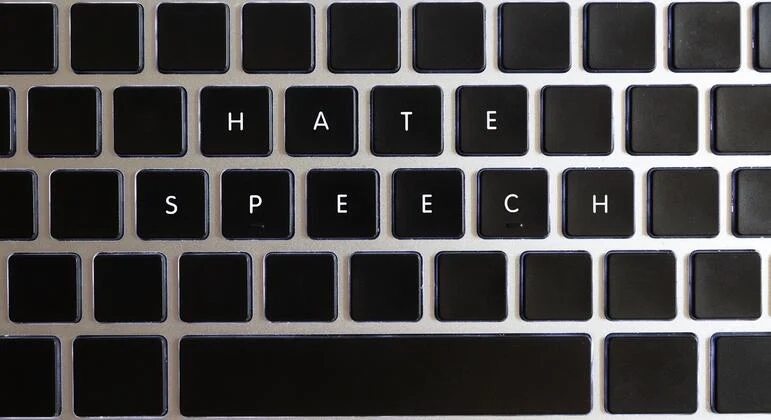
At the United Nations Headquarters in New York, the global community gathered this Thursday for a critical summit on promoting interreligious and intercultural dialogue. Amidst a backdrop of rising geopolitical tension and fractured social landscapes, UN Secretary-General António Guterres delivered a stark, uncompromising warning: the digital era has transformed hate speech from a localized social ailment into a systemic threat to global peace, security, and the very foundation of human rights.
As technology evolves, so too does the machinery of intolerance. Guterres warned that the rapid proliferation of hate speech across digital platforms—amplified by sophisticated algorithms and increasingly by artificial intelligence—is no longer merely a byproduct of social media usage. Instead, it has become a weaponized tool used to erode trust, dehumanize vulnerable populations, and incite violence that threatens to spiral into atrocity crimes.
The Escalating Crisis: A Historical Perspective
The Secretary-General’s remarks were rooted in the foundational ideals of the UN Charter, which mandates that the world’s citizens “practice tolerance and live together in peace with one another as good neighbours.” Yet, Guterres noted that this vision is being systematically dismantled.
“In its worst forms, hate speech incites violence, drives conflict, and contributes to the perpetration of atrocity crimes—including genocide, crimes against humanity, war crimes, and ethnic cleansing,” Guterres stated. He emphasized that these are not hypothetical dangers. History provides a blood-stained ledger of what happens when dehumanizing rhetoric goes unchecked. From the radio broadcasts that fueled the Rwandan genocide to the digital propaganda campaigns that have preceded ethnic cleansing in the 21st century, the trajectory of unmitigated hate is predictable, lethal, and fundamentally preventable.
Weaponizing Innovation: The Digital Transformation of Hatred
For decades, hate speech was largely confined to physical rallies, localized media, or sectarian pamphlets. Today, the geography of hate has shifted to the borderless expanse of the internet. Guterres highlighted a critical inflection point: the weaponization of new technologies.
The Algorithmic Echo Chamber
Modern digital platforms are designed to maximize engagement, a metric that often favors provocative, inflammatory, and divisive content. Algorithms, often operating in opaque environments, frequently push users toward increasingly radicalized content, creating echo chambers that reinforce prejudices.
The AI Multiplier
The emergence of generative Artificial Intelligence adds a new layer of complexity. AI tools now allow for the rapid, low-cost production of high-quality, deceptive content—including deepfakes and automated disinformation campaigns—that can be used to target religious and ethnic minorities at an unprecedented scale.
The Secretary-General noted that this toxic message is “spreading fast and striking deep.” By automating the dehumanization process, these technologies allow bad actors to bypass traditional social barriers, normalizing racism, misogyny, and xenophobia in digital spaces that were once thought to be neutral.
Testing the Fabric of Human Society
The implications of this shift are profound, testing the limits of “shared humanity.” Guterres identified several key areas where the social contract is fraying:
- Erosion of Trust: As societies become more polarized, the capacity for democratic debate is diminished. When neighbors are portrayed as existential threats, the political middle ground evaporates.
- Normalization of Bigotry: Antisemitism, anti-Muslim hatred, and discrimination against minority Christian communities are no longer relegated to the fringes. They are increasingly being normalized in mainstream political and social discourse.
- The Attack on Empathy: Perhaps the most insidious effect is the psychological toll. Constant exposure to dehumanizing rhetoric weakens the collective capacity for empathy, understanding, and respect for diversity, effectively hardening societies against the suffering of others.
The Delicate Balance: Freedom vs. Harm
A central challenge addressed by the Secretary-General is the frequent invocation of “freedom of expression” to shield hate speech. Guterres was unequivocal in his stance: “Reining in hate speech does not mean extinguishing freedom of expression, but freedom of expression must never be an excuse for causing or compounding harm.”
This distinction is vital for international law. The UN framework distinguishes between speech that is protected (even if offensive) and speech that constitutes incitement to violence or discrimination. The current crisis, however, involves the latter—content designed to provoke real-world harm. The Secretary-General’s call to action is not a call for censorship, but for accountability and responsibility within the digital ecosystem.
Collective Responsibility: A Global Strategy
The Secretary-General stressed that the international community already possesses the tools to combat this trend, pointing to the UN Strategy and Plan of Action on Hate Speech and the Plan of Action to Safeguard Religious Sites. However, these policies are only as effective as the political will behind them.
A Multi-Stakeholder Approach
Guterres outlined a framework for a coordinated, global response that goes beyond governmental policy:
- Governments: Must enact legislation that protects vulnerable groups without infringing on democratic rights, while ensuring judicial independence to handle cases of incitement.
- Private Sector: Tech companies and digital platforms must accept responsibility for their role in the dissemination of hate speech. This includes transparent algorithmic auditing and robust content moderation that accounts for cultural and linguistic nuances.
- Civil Society and Academia: These sectors serve as the "early warning systems," identifying shifts in rhetoric and documenting the impact of hate speech on local communities.
- Faith Communities: Religious leaders hold a unique position to promote interfaith dialogue and counter the narratives of extremism that seek to hijack religion for political ends.
Implications for the Future
The implications of failing to address this crisis are clear: a more fractured, volatile world where the cycles of fear and violence become self-perpetuating. As societies become more interconnected through technology, the distance between a hateful post on a screen and an act of violence on the ground has effectively collapsed.
The Secretary-General’s appeal is an urgent call for a “new social compact” within the digital age. It demands a shift from passive observation to active engagement. Whether through the regulation of digital spaces, the promotion of digital literacy, or the strengthening of inclusive social dialogue, the goal remains the same: to build stable, cohesive societies as envisioned in the UN Charter.
Conclusion: A Call for Unity
As the global conference concludes, the message from the UN Secretary-General remains a haunting reminder of the fragility of peace. "We cannot conquer hate speech on our own," he concluded. "Governments, regional and multilateral organizations, the private sector, and civil society—including faith communities, academia, and the media—have a shared responsibility."
The challenge ahead is not merely technical or legal; it is deeply moral. The "tragic cycles of fear, hatred, and violence" that have plagued humanity for centuries now have a faster, more efficient engine. The task for the international community is to ensure that our common humanity proves more resilient than the algorithms designed to divide us. The time for reactive measures has passed; the era of proactive, collective, and determined action must begin now.
 Lina Hope
 Asro
Asro
 Layla Zulfa
