

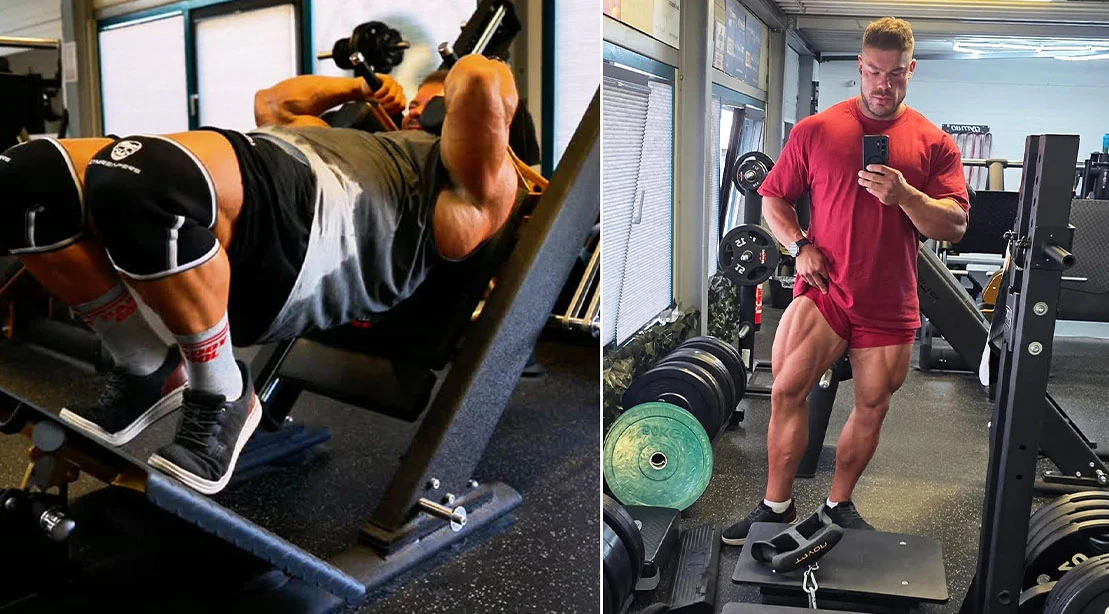
As the 2026 Olympia looms, the landscape of the Men’s Classic Physique division is shifting. Among the elite contenders, none have generated quite as much buzz as Wesley Vissers, the Dutch powerhouse known affectionately as the "Dutch Oak." Fresh off a dominant campaign that saw him claim top honors at the Arnold Classic and the Detroit Pro, Vissers is not merely relying on his established aesthetic—he is actively refining his foundation.
In a recent reveal, Vissers pulled back the curtain on one of his most effective, yet frequently overlooked, training secrets: the sissy squat. While many bodybuilders chase heavy compound movements to build mass, Vissers has doubled down on this "quad crusher," arguing that its unique mechanical advantages are the missing link for athletes looking to achieve the extreme leg development required for the Olympia stage.
Main Facts: The Anatomy of a Winning Leg Day
For Vissers, the secret to his recent leg transformation lies in precision over pure weight. The sissy squat, a movement often relegated to the back pages of bodybuilding literature, has become a cornerstone of his hypertrophy protocol.
The movement itself is distinct from the standard back squat. Unlike the traditional squat, which requires an upright torso and emphasizes hip-hinging, the sissy squat demands a forward-leaning, elongated path. As the lifter descends, they transition onto their toes, allowing the knees to travel far past the toes while the back remains in a more horizontal alignment. This specific trajectory removes the glutes and lower back from the equation, placing an unparalleled, isolated load on the quadriceps.
Vissers utilizes a variation performed on a hack squat machine, which provides the stability needed to push the muscle to complete failure. "Not only does it stretch the quads all the way to the top," Vissers explained in a recent training breakdown, "it also stretches the hips and ankles at the same time."
Chronology of a Champion’s Evolution
The rise of Wesley Vissers in the 2026 season was not accidental. Following his previous competitive outings, the Dutch bodybuilder identified a clear objective: bringing more "sweep" and detail to his lower body.
- Early 2025: Vissers began experimenting with unconventional quad-focused movements, prioritizing deep-stretch protocols over heavy load.
- Arnold Classic 2025: His win at the Arnold Classic served as the first major validation of his updated training philosophy. Judges and fans alike noted a significant improvement in his leg separation and quad density.
- Mid-2026: Following a successful defense of his conditioning at the Detroit Pro, Vissers took to social media to document his specific "sissy-hack" technique, signaling that this exercise would be his primary driver heading into the Olympia final.
- Present Day: Vissers is currently in the "fine-tuning" phase of his preparation, where the intensity of his leg sessions remains high, but the focus has shifted toward metabolic stress—the kind induced by his signature supersets.
Supporting Data: Why the Sissy Squat Works
The biomechanical efficacy of the sissy squat is rooted in the concept of "lengthened partials" and deep-tissue stretching. Most traditional leg exercises, such as the standard barbell squat or leg press, provide peak tension when the quads are in a shortened or neutral position.
The sissy squat, conversely, places the quadriceps under maximal tension while they are in a fully stretched state. Research in hypertrophy science suggests that training a muscle in its lengthened position can lead to superior sarcomerogenesis—the addition of muscle fibers in series—compared to standard ranges of motion.
Furthermore, by integrating the sissy squat into a superset with a traditional hack squat, Vissers is utilizing a "pre-exhaustion" strategy. By fatiguing the quads with the isolated, difficult sissy squat first, he forces the muscle fibers to work harder during the subsequent, heavier hack squat set. This ensures that even with a lighter weight, the stimulus on the quadriceps is profound, effectively "toasting" the muscle in a way that traditional volume training often fails to achieve.
Official Insights: The Vissers Philosophy
In his own words, Vissers is a proponent of the "mind-muscle connection" as much as he is a devotee of brute strength. During his recent Instagram demonstration, he emphasized the importance of the eccentric phase—the descent.
"More range of motion, more stretch equals more muscle development," Vissers noted. He advises followers to treat the movement with respect, noting that it is not for the faint of heart. His protocol is simple yet brutal: push the sissy squat to absolute failure, then immediately transition to a standard hack squat to squeeze out every remaining drop of energy from the quads.
"Try these before any normal squat or leg press movements and you’ll be surprised," he challenges. This philosophy flies in the face of the traditional "big lifts first" mantra, suggesting that if your goal is quad-specific hypertrophy, you should prioritize the movement that places the most direct tension on the target muscle, even if it forces you to use less weight on your primary compound lifts.
Implications for the 2026 Olympia
The implications of Vissers’ training shift are significant for the Classic Physique division. As the category continues to evolve, the standard for leg development has risen sharply. Gone are the days when a tight waist and wide back were enough to secure a victory; modern judges are looking for the "total package," which includes deep, striated quads that hold their own against the heavyweights.
By adopting the sissy squat as a centerpiece of his training, Vissers is demonstrating a level of tactical maturity that sets him apart. He is not just training harder; he is training smarter. If his performance at the 2026 Olympia reflects the growth he has achieved in the gym over the past six months, the rest of the field may have to rethink their own leg day routines.
A Call to Action for Aspiring Athletes
For those inspired by the Dutch Oak’s approach, the message is clear: do not be afraid to revisit the "old school" exercises that have been pushed aside by modern machine-centric training. The sissy squat is brutal, it is humbling, and it is uncomfortable. But, as evidenced by Vissers’ recent success, it is also highly effective.
Whether you are a professional bodybuilder or a recreational lifter looking to break through a plateau, the Vissers-style superset offers a blueprint for growth. By marrying the intense stretch of the sissy squat with the mechanical overload of the hack squat, you can create a stimulus that forces your legs to adapt and grow.
As we look toward the Olympia stage, all eyes will be on Vissers. Will his dedication to this unconventional "quad crusher" pay off with the ultimate prize? If the current trajectory of his career is any indication, the answer is a resounding yes. The Dutch Oak has laid his foundation; now, he is ready to show the world the result of his labor.
To follow the continued journey of Wesley Vissers as he prepares for the Olympia, fans can stay tuned to his regular updates on his official Instagram channel, where he continues to share the technical nuances of his championship-level preparation.
Frequently Asked Questions (FAQ)
1. Is the sissy squat safe for the knees?
While the movement puts the knees in a forward-traveling position, when performed with proper form and a controlled tempo, it is a safe exercise. However, those with a history of patellar tendonitis or severe knee injury should consult a professional or start with bodyweight-only variations before adding external load.
2. Can I do sissy squats without a machine?
Absolutely. The traditional sissy squat can be performed by anchoring your feet under a heavy object or using a specialized sissy squat bench. Vissers prefers the hack squat machine for the added stability, which allows him to focus entirely on the quad tension.
3. Why does Vissers put the sissy squat before the hack squat?
This is a classic pre-exhaustion technique. By performing the more difficult, isolation-focused movement first, he ensures his quads are fully fatigued. This makes the subsequent hack squat more effective for hypertrophy because the quads are the limiting factor, rather than the secondary muscles.
4. How often should I train legs like this?
Vissers suggests that this level of intensity is best reserved for dedicated leg days. Given the demand on the central nervous system and the degree of muscle damage, most athletes should limit this specific superset to once per week, ensuring adequate recovery time for the legs to grow.
 Lina Hope
 rifanmuazin
 Laily UPN
