

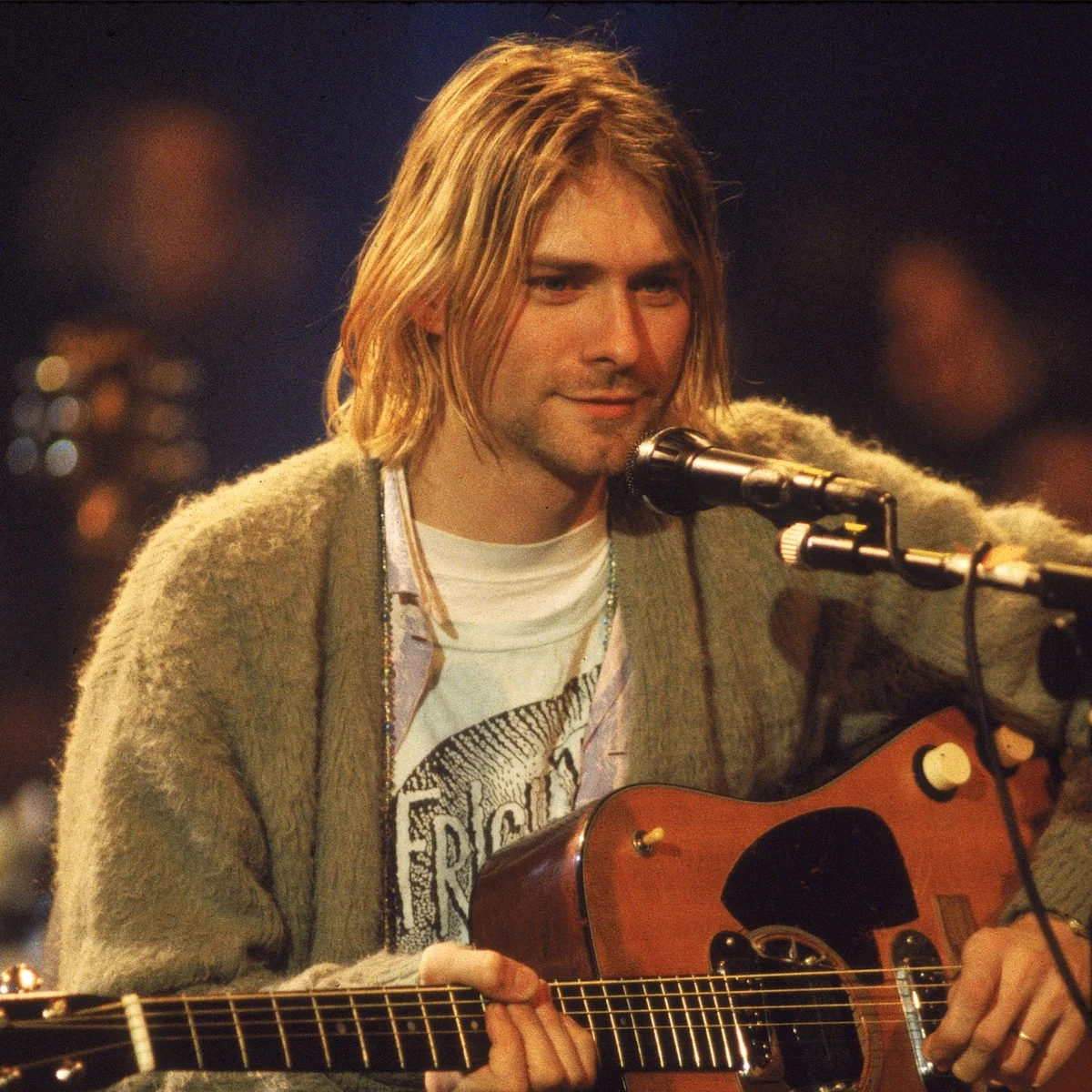
As the music world prepares to honor Nirvana with the Video Vanguard Award at the 2026 MTV VMAs, the legacy of Kurt Cobain remains as haunting and complex as the day he left us. More than three decades after his tragic passing, the frontman who defined a generation continues to be a subject of intense fascination, forensic scrutiny, and unresolved grief.
The Discovery: A Quiet End to a Global Phenomenon
On April 8, 1994, the music industry was brought to a standstill. Gary Smith, an electrician dispatched to the Seattle residence of the Nirvana frontman to install a security system, ventured into the greenhouse situated above the property’s garage. What he found there would permanently alter the landscape of rock history: the lifeless body of Kurt Cobain, a 20-gauge shotgun resting across his chest, and a handwritten note that spoke of exhaustion, artistic integrity, and a profound, aching detachment from the fame that had swallowed him whole.
The King County Medical Examiner eventually ruled the death a suicide, citing a self-inflicted gunshot wound. The toxicology report revealed a high concentration of heroin and traces of Valium in his bloodstream, leading authorities to estimate that Cobain had been dead for approximately two days. Despite the official verdict, the circumstances surrounding his final days have become a breeding ground for persistent conspiracy theories, recently revitalized by a 2026 report from a private sector team of forensic scientists who suggest that the official narrative may be incomplete—or even fundamentally wrong.
A Chronology of Descent
To understand the end of Kurt Cobain, one must trace the trajectory of a man who rose from the fractured home of an eight-year-old in Aberdeen, Washington, to the pinnacle of global stardom.
The Rise and the Addiction
Following the 1991 release of Nevermind, Nirvana—comprised of Cobain, bassist Krist Novoselic, and drummer Dave Grohl—became the voice of a disaffected youth. The album, which sold over 10 million copies, thrust Cobain into an uncomfortable spotlight. Having struggled with substance abuse since his early teens, the pressures of fame accelerated his decline. By the time he met Courtney Love in the early 90s, his heroin addiction had transitioned from a "dabbling" habit to a full-blown crisis.
The Rome Incident
The downward spiral gained momentum in early 1994. While on tour in Europe, a show in Germany was canceled due to Cobain’s failing health. He traveled to Rome to reunite with Love and their daughter, Frances Bean. On March 4, following a night of mixing champagne and the sedative Rohypnol, Cobain lapsed into a coma. Though officially presented as an accidental overdose, Love later characterized it as his first true suicide attempt, noting that he had left a note and consumed dozens of pills.
The Failed Intervention
Upon his return to Seattle, a desperate intervention was staged on March 25, 1994. Friends, including Novoselic and Dylan Carlson, gathered with a counselor to urge Cobain toward sobriety. Love threatened to leave him, and the band threatened to dissolve. While he initially agreed to seek help, the cohesion of the intervention fractured within hours.
The Final Days
By March 30, Cobain had reached out to his friend Dylan Carlson to help him acquire a shotgun, citing fears of trespassers on his property. Carlson, unaware of the gravity of the situation, purchased the weapon for him. Shortly thereafter, Cobain checked into the Exodus Recovery Center in California, only to scale a six-foot wall and vanish on April 1. He flew back to Seattle, effectively disappearing from the public eye. On April 4, his mother, Wendy O’Connor, filed a missing-persons report, sensing the tragedy that would soon be confirmed.
Supporting Data and Forensic Inconsistencies
The discourse surrounding Cobain’s death has remained alive due to a series of anomalies that researchers continue to dissect. Forensic experts, including those involved in the 2026 independent study, have pointed to the unusually high levels of heroin in his system—levels that, according to some toxicologists, would have rendered a user incapable of operating a firearm.
Furthermore, the lack of readable fingerprints on the shotgun—a detail often cited by proponents of the "foul play" theory—has fueled decades of speculation. While the Seattle Police Department has consistently maintained that the evidence supports a suicide, the digital age has allowed these questions to move from underground zines to global social media platforms. The department’s public affairs unit continues to receive weekly requests to reopen the case, a testament to the fact that for many, the story of Kurt Cobain feels unfinished.
Official Responses and Institutional Stance
The Seattle Police Department has long held that there is no credible evidence of a murder. Over the years, they have released various files—including long-hidden photos of the scene and FBI reports—in an effort to provide transparency. However, the release of these documents often serves to generate more questions rather than providing closure.
Courtney Love, who has lived under the scrutiny of the public eye for three decades, has maintained a complex relationship with the narrative of her late husband’s death. While she has spoken openly about the toxicity of their relationship and the pain of their shared struggles, she has frequently been the target of unfounded accusations regarding her involvement. In February 2026, amidst the renewed buzz surrounding the independent forensic report, Love appeared to address the ongoing obsession with her late husband’s life by posting an image of a guide to "becoming alive," a subtle, perhaps weary, signal of her desire to move beyond the shadow of 1994.
Implications: The Legacy of a Lost Voice
The implications of Cobain’s death extend far beyond the legalities of a closed police file. He was a man who, as Frances Bean Cobain once noted, sought to create a family that would be a sanctuary from the chaos of their own childhoods, only to find that the cycle of trauma is difficult to break.
The upcoming Video Vanguard Award for Nirvana at the 2026 MTV VMAs serves as a poignant reminder of the cultural void Cobain left behind. He was an iconoclast who changed the sonic fabric of the 20th century, yet his greatest impact may have been in the raw, unvarnished honesty he brought to the concept of mental health.
As Dave Grohl noted in a 2009 interview, those closest to Cobain had long been preparing for the inevitable. It was a tragedy that felt "entirely avoidable, yet perhaps inevitable." This duality—the genius of his music contrasted with the fragility of his existence—is what keeps the world looking back at that greenhouse in Seattle.
Ultimately, the story of Kurt Cobain is not just about how he died, but about the profound, haunting power of the music he left behind. As a new generation discovers Nevermind and In Utero, they are not just listening to songs; they are engaging with a dialogue about pain, authenticity, and the price of fame that remains as relevant today as it was in 1994. Whether or not the mystery of his final moments is ever fully solved, the man behind the guitar remains a permanent, if painful, fixture of the American cultural consciousness.
 Sagoh
Sagoh
 Siti Muinah
 Nana
Nana
