

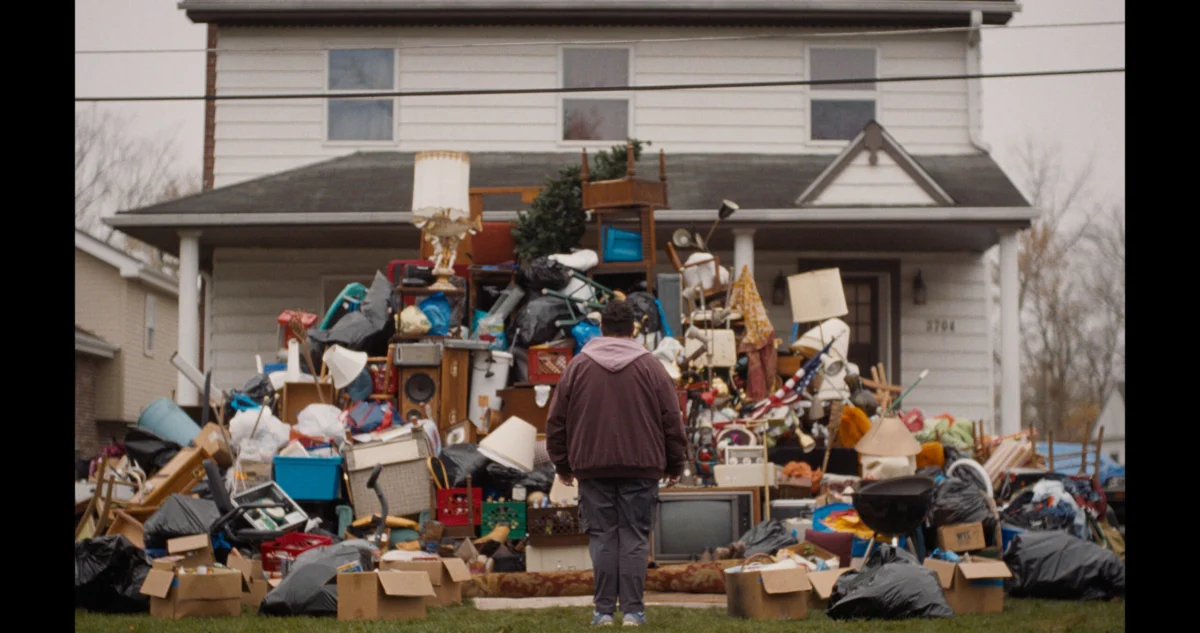
In the landscape of contemporary independent cinema, the "homecoming dramedy" is a well-worn genre, often defined by the tropes of estranged siblings and dusty childhood bedrooms. However, in Trash Mountain, director Kris Rey and star-writer Caleb Hearon manage to breathe new, aching life into the form. Premiering at the 2026 Toronto International Film Festival, the film serves as both a showcase for Hearon’s burgeoning range and a poignant meditation on the literal and metaphorical debris we inherit from our parents.
Main Facts: A Portrait of Found Family and Legacy
Trash Mountain centers on Gavin (Caleb Hearon), a Missouri transplant who has carved out a vibrant, if chaotic, existence in Chicago. As a sardonic drag night host and a self-appointed den daddy to his local found family, Gavin’s life is defined by the community he built for himself—a necessary departure from the small-town roots he abandoned in his young adulthood.
The narrative pivot occurs when a series of missed calls from his older half-sister, Abbie (Zooey Deschanel), culminates in the devastating news of their father’s passing. What begins as a planned quick trip to rural Missouri for funeral arrangements rapidly descends into an existential endurance test. The siblings are forced to confront the overwhelming reality of their father’s home—a house so consumed by hoarding that it becomes the titular "trash mountain." Co-written by Hearon and Ruby Caster, the film is a masterclass in balance, teetering between the hilarity of a fish-out-of-water return and the crushing weight of grief.
Chronology of a Homecoming
The film’s pacing is deliberate, grounding the audience in Gavin’s Chicago life before thrusting them into the claustrophobic anxiety of his return to Missouri.
- The Departure: We are introduced to Gavin through his stand-up comedy and his role as a performer/host. This establishes his wit and his comfort in the spotlight—a sharp contrast to the silence and stagnation of his father’s house.
- The Catalyst: The phone call from Abbie serves as the inciting incident. The urgency of the situation is established not through tragedy, but through the mundane, frantic administrative burdens that follow a death.
- The Arrival: Upon reaching rural Missouri, Gavin and Abbie find themselves trapped in a web of bureaucratic nightmares and eccentric locals. The film effectively uses the "weekend visit" structure as a pressure cooker; what should be a two-day trip stretches into an indefinite stay, forcing the characters to stop running from their past.
- The Excavation: The second act is defined by the physical labor of cleaning the house. As they sort through the hoarded remnants of their father’s life, the siblings are forced to engage with their own unresolved histories.
- The Resolution: The climax is not a dramatic explosion of secrets, but a quiet, realistic acceptance of loss. The siblings find their way to a new understanding, not through grand gestures, but through the shared, gritty work of moving on.
Supporting Data: The Craft of the "Trash Mountain"
The technical execution of the film reinforces its grounded, often raw aesthetic. Production designer Matt Hyland faces the monumental task of creating a hoarder’s home that feels authentic rather than caricatured. The result is a space that is genuinely overwhelming, contrasting sharply with the warm, lived-in comfort of Abbie’s own family home.

The ensemble cast provides the necessary friction for the story. Zooey Deschanel delivers a heartbreaking, restrained performance as Abbie, anchoring the film’s emotional core. Meanwhile, Jacki Weaver’s turn as the siblings’ grandmother adds a layer of surreal, broad comedy. While Weaver’s performance occasionally feels as though it belongs to a different genre, her presence serves as a reminder of the chaotic, sometimes absurd nature of family reunions. The inclusion of Jaboukie Young-White as a potential paramour offers a glimpse of the life Gavin left behind, providing a romantic counterpoint to the domestic decay he is currently navigating.
Official Responses and Production Context
The film’s journey to the screen has been long and evolving. Notably, Lilly Wachowski was initially attached to direct the project and remains a key producer, a testament to the script’s strength. For director Kris Rey, Trash Mountain represents a return to form following her 2020 feature I Used to Go Here. Critics have noted the thematic parallels between the two works; both exhibit a tender, observational style that prioritizes character intimacy over high-concept plot points.
Hearon’s transition from online comedic skits to a full-length feature lead is the film’s most significant triumph. He brings an inherent affability to Gavin, yet he is unafraid to portray the character’s petulance and anger. By co-writing the script with Ruby Caster, Hearon imbues the story with a personal, lived-in candor that avoids the histrionics often found in similar dramas. The dialogue flows with the rhythm of real-world sibling dynamics—frequently funny, occasionally cutting, and always authentic.
Implications: The State of the Independent Feature
The critical reception of Trash Mountain at TIFF highlights a broader conversation within the film industry. The festival circuit was once flush with intimate, mid-budget character studies—films that favored "realism" over "prestige" stakes. As the industry leans further into massive, tentpole franchises, there has been a noticeable vacuum for films like this one.
Trash Mountain acts as a vital reminder of the power of the medium when it is focused on human-scale stories. Its "predictable" nature—in that it follows a well-understood emotional arc—is arguably its greatest strength. It does not rely on shocking plot twists or "MacGuffins" to maintain interest. Instead, it relies on the audience’s empathy. The resolution of the search for their father’s Social Security card, for example, is handled with a grounded, anti-climactic grace that reflects how life actually proceeds.

The film is currently seeking U.S. distribution, and its potential impact on the market is significant. It is a calling card for Hearon’s capabilities as a writer-actor and confirms Rey’s position as a vital voice in American indie film.
In its final assessment, Trash Mountain is more than just a story about cleaning a house. It is a reflection on the transition into adulthood, the complexity of family bonds, and the ways in which we eventually find the strength to clear away the debris of our past. It is an honest, often painful, and ultimately life-affirming journey. For those who lament the loss of the quiet, character-driven festival darling, Trash Mountain is a welcome and necessary climb.
Grade: B
 Nila Kartika Wati
 Lina Hope
 Asep Darmawan
