

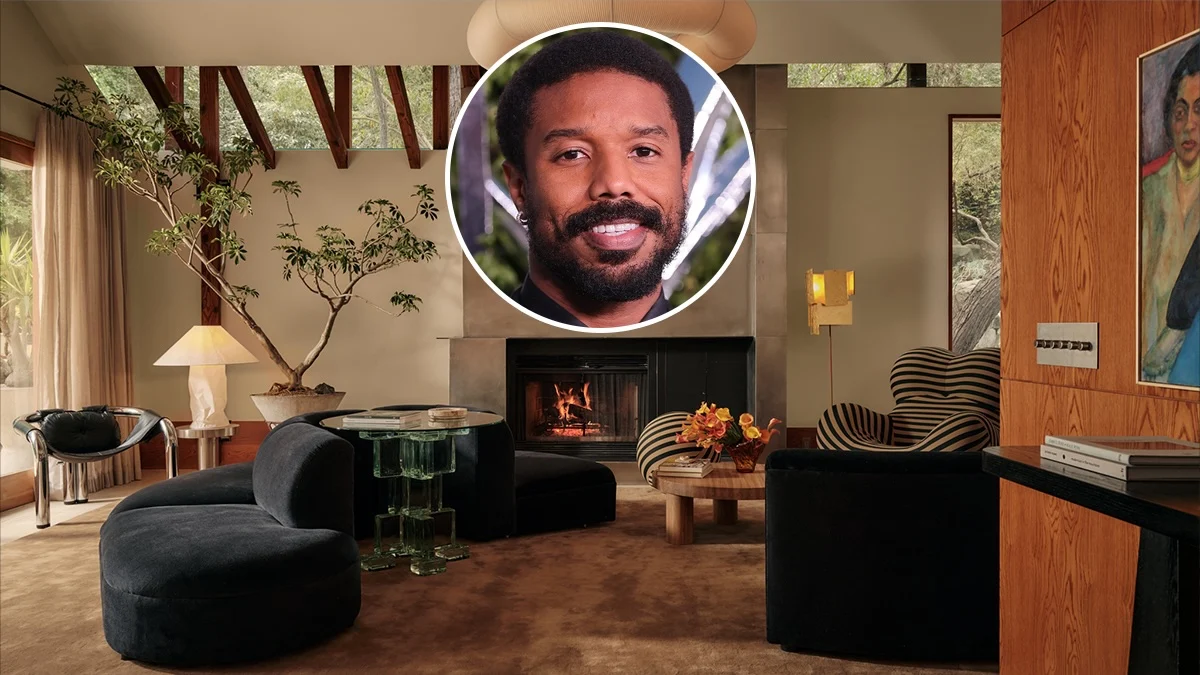
In the rarified air of Los Angeles’ “celebrity row”—a stretch of real estate along Upper Nichols Canyon that has long served as the sanctuary for Hollywood’s elite—few properties have undergone as dramatic an evolution as the four-bedroom architectural marvel at 7728 Woodrow Wilson Drive. Once the discreet, brutalist-inspired retreat of Oscar-winning actor Michael B. Jordan, the property has recently returned to the market with a staggering $14 million price tag, marking a new chapter in a storied history of ownership, design, and cultural reinvention.
The Chronology of an Architectural Landmark
The history of 7728 Woodrow Wilson Drive is a testament to the shifting tides of design and the evolving tastes of Tinseltown’s A-listers. Designed in 1997 by architect Jeffrey Mills, the structure was envisioned as a fusion of disparate styles: the raw, imposing edges of modernism and brutalism tempered by the organic, inviting warmth of a French country estate.
The home’s journey through the celebrity real estate ecosystem began in earnest in 2005, when television host Daisy Fuentes secured the property for $4.5 million. It would remain a private sanctuary for years before catching the eye of Michael B. Jordan. In September 2019, Jordan acquired the home in an off-market deal for $5.8 million. During his tenure, the property served as a quiet refuge for the actor, well before his critically acclaimed, Academy Award-winning turn in Ryan Coogler’s 2025 film, Sinners.

Jordan parted ways with the residence in May 2022, selling it for $6.95 million. The property then underwent its most significant metamorphosis at the hands of the founders of the design and development studio Ome Dezin, Joelle Hutner and Jesse Rudolph, who purchased the estate for $5.25 million in July 2025.
Architectural Philosophy and the Ome Dezin Restoration
Since launching their firm in 2020, Hutner and Rudolph have established a reputation for sensitive, detail-oriented restoration. Their portfolio includes the revival of an iconic A. Quincy Jones residence in Brentwood and a whimsical Tudor-style cottage formerly owned by the legendary burlesque performer Lili St. Cyr.
When Ome Dezin acquired the Woodrow Wilson Drive property, they faced a unique set of challenges. The home had previously been utilized as an art gallery, a configuration that prioritized vast, open volume over domestic intimacy.

“The existing architecture and surrounding landscape were the key inspirations for our design direction,” the duo explained in a statement to the Robb Report. “The home has a lot of volume, so our biggest challenge was to add warmth, depth, and a sense of intimacy to each space.”
The restoration process, which spanned a year and a half, saw the infusion of natural materials and a palette of earthy tones intended to bridge the gap between the house’s brutalist roots and a modern, livable luxury. By balancing the cold, architectural bones of the original design with tactile finishes—stone, wood, and curated textiles—Ome Dezin successfully transitioned the space from a clinical art exhibition to a warm, inviting residential sanctuary.
A Detailed Tour of the Modernized Estate
Situated on a private, gated acre, the home is a masterclass in spatial layering. The great room is anchored by a dramatic, asymmetrical brushed stainless-steel fireplace, which draws the eye upward toward exposed beams and soaring clerestory windows that flood the space with natural Southern California light.

The dining room features an integrated, professional-grade wet bar, signaling the home’s suitability for high-end entertaining. For more casual moments, the library offers a sanctuary of comfort, centered around a bespoke built-in L-shaped sofa. The kitchen, arguably the heart of the home, is equipped with a premium La Cornue range, a professional-grade pizza oven, and a natural stone backsplash that ties into the home’s earthy aesthetic.
The property spans five full bathrooms and a powder room. The primary suite is a testament to privacy and indulgence, featuring its own fireplace, a sprawling terrace, and a custom dressing room. The en-suite bathroom is a highlight of the renovation, boasting a marble freestanding tub and a shower sheathed in swirling, dramatic blue-and-white marble that feels more like an art installation than a utility space. Two additional guest bedrooms, each equipped with private baths, walk-in closets, and balconies, ensure that the home remains as functional as it is aesthetic.
The Outdoor Oasis: Inspired by "Mirage"
The grounds of the property are as significant as the structure itself. Beyond the swimming pool and spa, Ome Dezin added a striking, mirror-clad pavilion. Inspired by Doug Aitken’s famous “Mirage” installation—a structure that famously vanished into the landscape of the Southern California desert—the cubic pavilion at 7728 Woodrow Wilson Drive functions as a reflective focal point. It houses a state-of-the-art sauna and a vibrant, chartreuse-tiled bath, creating a wellness retreat that feels entirely disconnected from the bustle of nearby Hollywood.

Additional exterior features include a sophisticated fire pit lounge, an outdoor kitchen, and a tiered waterfall that provides a constant, calming acoustic backdrop to the garden. The combination of these features creates a seamless indoor-outdoor flow, essential for the quintessential Los Angeles lifestyle.
Implications for the Hollywood Hills Market
The jump in valuation from $5.25 million in July 2025 to the current $14 million listing price is a direct reflection of the premium placed on “turn-key” architectural properties in the Hollywood Hills. The work performed by Ome Dezin serves as a case study in value-add real estate development. By respecting the original vision of Jeffrey Mills while updating the home for contemporary luxury standards, the developers have elevated the property into a higher tier of the luxury market.
The listing is currently held by Charles Derenne, Silk Fernald, and Dominique Madden of the ACME Team at Serhant. Their target buyer is likely an individual who values both the pedigree of the home’s former occupants and the structural integrity of its recent restoration.

Conclusion: A Legacy of Luxury
The home at 7728 Woodrow Wilson Drive remains a quintessential example of how a piece of architecture can live multiple lives. From a brutalist experiment to a minimalist gallery space, and finally to a refined, warm, and hyper-luxurious modern residence, the property mirrors the evolution of the city around it.
As the real estate market continues to shift, properties with such a distinct provenance—linked to the creative success of actors like Michael B. Jordan and the architectural craftsmanship of firms like Ome Dezin—remain among the most coveted assets in the global property portfolio. Whether or not the estate fetches its $14 million asking price, it stands as an indelible marker of the intersection between Hollywood culture and high-end design. For the next owner, the home offers not just a residence, but a piece of modern architectural history, meticulously preserved and reimagined for the next era of luxury living.
 Ali Ikhwan
 Laily UPN
 Raul Delapena Setiawan
