

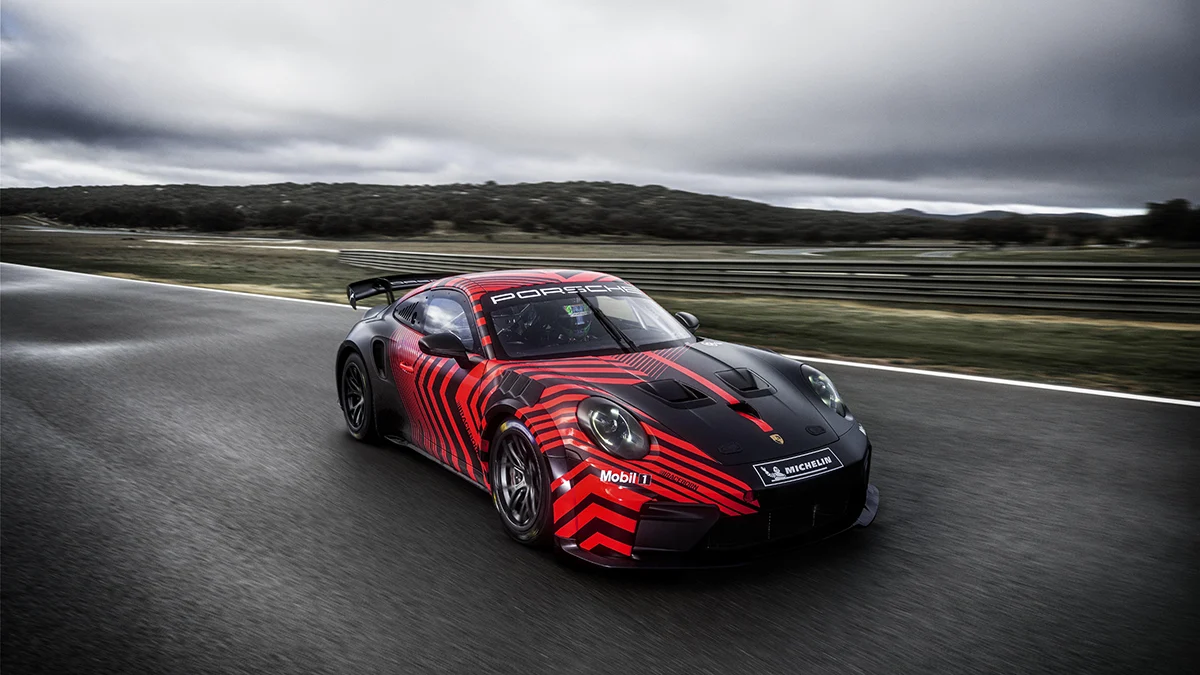
For more than six decades, the Porsche 911 has served as the quintessential template for automotive evolution. It has been the base for desert-crossing rally cars, Le Mans-winning prototypes, and track-day icons. Now, Porsche is proving that the world’s most recognizable sports car still has untapped potential, announcing the 2027 Porsche 911 GT4 R—a race car that marks a seismic shift in the brand’s motorsport strategy.
By migrating the GT4 racing program from the now-retired 718 Cayman to the 911 platform, Porsche is not merely replacing a vehicle; it is elevating the accessibility and performance standards of one of the most competitive entry-level racing categories in the world.
Main Facts: A New Era for GT4
The 2027 Porsche 911 GT4 R is a purpose-built, non-street-legal track weapon designed to dominate the global GT4 landscape. Unlike previous iterations of the GT4, which were inextricably linked to the mid-engine 718 Cayman, the "R" variant borrows its structural and mechanical DNA from the track-tested 911 Cup.
At the heart of this machine lies a high-revving 4.0-liter naturally aspirated flat-six engine. This powerhouse is capable of producing up to 513 horsepower and 346 ft-lbs of torque. Power is delivered to the rear wheels through a sophisticated six-speed dog gearbox operated by steering-wheel-mounted paddle shifters. While these figures represent a formidable baseline, Porsche has engineered the car with flexibility in mind; performance metrics can be tuned to meet the Balance of Performance (BoP) requirements of various racing series, ensuring that the 911 GT4 R remains a versatile tool for privateer teams.

Beyond the engine, the car is a masterclass in motorsport engineering. It features dual-adjustable dampers and three distinct selectable spring rates, allowing engineers to dial in the suspension for tracks ranging from the tight, technical corners of Laguna Seca to the high-speed straights of Spa-Francorchamps.
A Chronological Perspective: From Cayman to 911
To understand the significance of this move, one must look back at the trajectory of Porsche’s "accessible" racing program.
- 2016: Porsche officially enters the GT4 class, identifying it as the ideal bridge between club racing and professional GT3 competition. The 718 Cayman platform is selected as the standard-bearer, praised for its mid-engine balance and approachable handling.
- 2016–2025: The 718 Cayman GT4 Clubsport becomes a staple of global grids, winning championships and helping train a generation of professional drivers.
- 2026: As the automotive industry pivots toward electrification, the 718 Cayman is pulled from production. With the platform reaching the end of its lifecycle, Porsche faces a critical decision: abandon the lucrative and popular GT4 segment or find a new host for the program.
- Spring 2026: Porsche unveils the latest 911 Cup car, signaling a renewed commitment to its rear-engine heritage.
- June 2026: The official announcement of the 911 GT4 R is made, confirming that the 911 will serve as the successor to the Cayman in the GT4 class starting in 2027.
This transition marks a full-circle moment for the manufacturer, effectively bringing the most successful racing nameplate in history into the segment where enthusiasts first learn to race competitively.
Supporting Data: Engineering and Aerodynamics
The 911 GT4 R is more than just a transplant of an engine into a new chassis. It is a comprehensive redesign that leverages advanced materials to optimize weight and downforce.

Advanced Materials
Weight reduction is the primary goal of any racing program. The 911 GT4 R utilizes natural-fiber-reinforced plastic for critical components, including the doors, engine cover, and several key aerodynamic elements. This material choice not only reduces weight but also offers significant sustainability benefits, a growing priority for modern motorsport organizations.
Aerodynamic Dominance
The most striking feature of the vehicle is its rear wing. Designed to be manually adjustable to 11 distinct positions, the wing allows teams to fine-tune downforce levels to suit specific track layouts and weather conditions. This adjustability is complemented by a wider, more aggressive stance compared to its predecessor, providing improved mechanical grip through high-speed cornering sequences.
Driver Interface
The interior of the 911 GT4 R is a stripped-down, ergonomic environment designed for high-stakes focus. The cockpit features a 10.3-inch high-resolution color display that serves as the central hub for the driver. This screen is fully integrated with an advanced data logger and GPS system, enabling teams to analyze telemetric data in real-time—a crucial feature for developing driver performance during practice and qualifying sessions.
Official Responses: The Philosophy of the Shift
Thomas Laudenbach, the vice president of Porsche Motorsport, framed the decision as a strategic evolution rather than a reactionary measure.

"The combination of iconic 911 DNA and the tried-and-tested GT4 concept creates a unique offering in the market," Laudenbach said in a press statement. "Our decision to bring the 911 platform into the GT4 category underlines the growing importance of this class in international motorsport. We aren’t just filling a gap left by the Cayman; we are upgrading the entire experience for our customers."
Porsche’s internal messaging emphasizes that the 911 platform offers a level of durability and "race-readiness" that is unmatched. By utilizing components derived from the 911 Cup car, privateers are essentially buying into a proven racing ecosystem that is easier to maintain and faster to set up.
Implications: What This Means for Global Motorsport
The shift to the 911 for the GT4 class will have several immediate impacts on the racing world.
1. Market Consolidation
By standardizing the 911 across both the Cup and GT4 categories, Porsche is creating a logical career path for drivers. A young driver can now begin their career in a 911 GT4 R, understand the handling characteristics of the 911, and transition seamlessly into the 911 Cup car, and eventually, the 911 GT3 R. This streamlined ladder is a powerful recruiting tool for the brand.

2. Pricing and Accessibility
With a starting price of $375,000 for the U.S. market—a fee that encompasses import, logistics, and delivery—the car is positioned firmly in the premium segment of GT4 racing. While this represents a significant investment, the inclusion of factory support and the long-term reliability of the 911 platform are expected to drive high demand among wealthy privateers and professional customer racing teams.
3. Increased Competition
The GT4 class has always been defined by its proximity to road-going sports cars. By bringing the 911 into the fold, Porsche is challenging competitors—such as Aston Martin, Toyota, and BMW—to keep pace with a platform that has been refined over six decades. The technical sophistication of the 911 GT4 R, specifically its aerodynamic adjustability and data-logging capabilities, will likely force a technological arms race in the GT4 category.
4. The Future of the "Icon"
Perhaps most importantly, this move reinforces the 911’s status as a living, breathing race car. In an era where internal combustion engines face an uncertain future, Porsche’s continued investment in the 911 platform serves as a reassurance to purists that the brand remains dedicated to the thrill of mechanical racing.
As the 2027 season approaches, all eyes will be on the starting grids. The 911 GT4 R is not just another car; it is the next chapter in the most storied history in sports car racing. Whether it will match the legacy of the 718 Cayman or forge a new, even more successful path remains to be seen, but one thing is certain: the competition has been put on notice.
 Evan Lee Salim
 Asep Darmawan
 Laily UPN
